

























































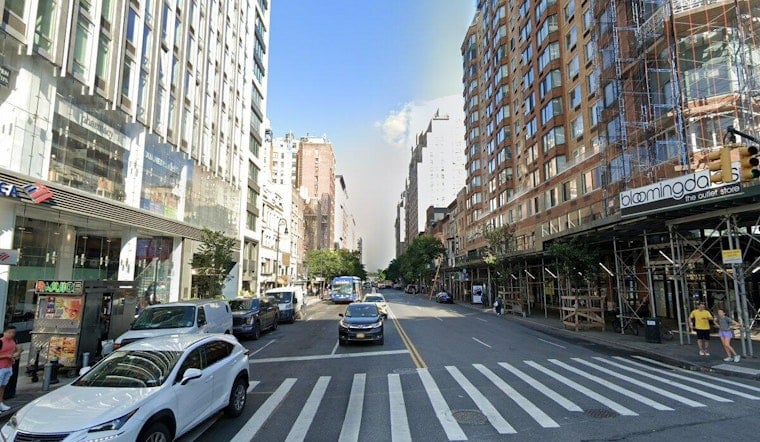
A person was hit and killed by a train at the West 72nd Street subway station on the Upper West Side Monday morning, according to officials, triggering delays across several Manhattan subway lines during the morning commute. The incident happened around 9:20 a.m. near 2079 Broadway, and the victim was pronounced dead at the scene.
The strike, reported by PIX11, forced the MTA to slow or reroute service across the 2 and 3 lines, with the 2 and 3 trains making local stops. The A, C and D lines were also delayed as a result of the incident, per the outlet's report. West 72nd Street sits on the IRT Broadway–Seventh Avenue Line, an express hub with two island platforms and four tracks that serves the 1, 2 and 3 trains, according to Wikipedia.
Monday's fatality is the second deadly person-on-track incident to snarl New York City subway service in less than a week. Four days earlier, on September 3, a person was fatally struck by a train at the 161st Street–Yankee Stadium station in the Bronx, an incident that disrupted B and D line service in a similar way.
Why One Strike Cascades Across So Many Lines
Emergency responses to a person struck on the tracks require crews to cut power to the electrified 625-volt DC third rail before first responders can approach, a step that routinely cascades service holds across interconnected lines, according to AEE Law. That is part of why a single strike at a hub station like West 72nd Street can contribute to delays on several subway lines, even though those trains run on different tracks through different parts of Manhattan.
This is not the first fatal strike at this particular station. In March 2024, a 59-year-old woman was fatally struck by a northbound 1 train at West 72nd Street, an incident in which police found no indications of criminality, according to a report from iLovetheUpperWestSide.com. The same outlet has also reported that elevator replacement at the station was scheduled to begin around August 25, 2025.
A Systemwide Safety Challenge
AEE Law cited 241 people struck by trains in 2023, with 97 of those strikes proving fatal, while a separate analysis by the Manhattan Institute recorded 88 subway track deaths in 2022.
A study cited by AEE Law identified 838 subway-related incidents between 2008 and 2021. The available sources do not specify how those incidents were classified.
MTA Safety Measures Still Limited At Stations Like This One
The MTA had installed waist-high steel barriers at more than 100 subway stations by the end of 2025, according to the agency. It has also discussed laser systems and AI cameras for detecting track intrusions.
Full-height platform screen doors are not in widespread use. That leaves high-volume express stations like West 72nd Street reliant on partial barriers and detection technology rather than full physical separation from the tracks.
A plan has called for expanding the MTA's Subway Co-Response Outreach Teams from two to 10, with $20 million in support. NYPD transit crime figures were reported in June 2025. The system carried 1.2 billion riders in 2024, according to AEE Law.
The NYPD asks anyone with information related to subway safety incidents to contact Crime Stoppers by calling 1-800-577-TIPS (8477), texting 274637 (CRIMES) and entering TIP577, or visiting crimestoppers.nypdonline.org. Spanish-speaking callers can reach Crime Stoppers at 1-888-57-PISTA (74782). Tips may also be submitted through the NYPD Crime Stoppers mobile app.



