

























































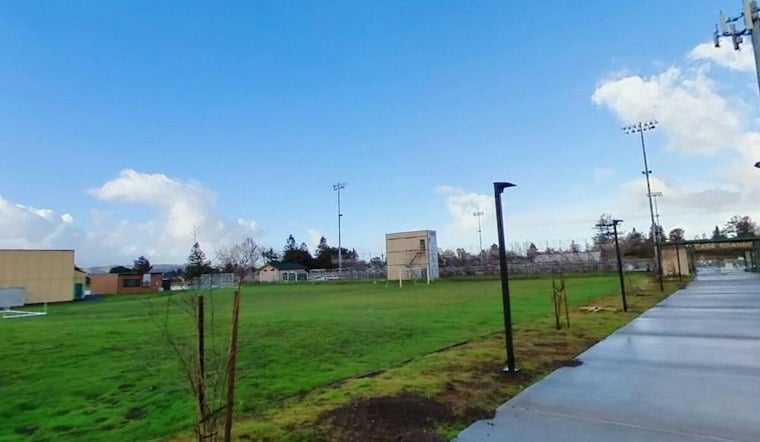
Petaluma City Schools trustees are on track to vote October 6 on a resolution that would ban cell towers from every district campus and prohibit extensions or renewals of existing wireless leases — including an active T-Mobile tower near the football field at Casa Grande High School, whose current lease brings the district $18,000 a year and would remain in place until it expires. The board debated the proposal, Resolution 2627-06, on September 15, with a majority appearing to support the ban even as one trustee pushed back hard on the science behind it.
A Trustee's Last Push Before Leaving the Board
The resolution was proposed by trustee Caitlin Quinn, who told the board it was one of the things she wanted to complete before leaving, according to The Press Democrat. Quinn is not seeking reelection to the board and is instead running for a seat on the Sonoma County Office of Education board after eight years as trustee, per the same report. She argued that the $18,000 in annual lease revenue from the Casa Grande tower is not worth the health risk, framing the district's financial upside against what she and other parents describe as an unresolved danger to students.
Trustees Ellen Webster and Joanna Paun also backed Quinn's push to put the resolution on the agenda. Webster said a resolution would help keep cell towers away from students and that she saw no benefit to having them on school campuses, the outlet reports. Paun, who is leaving the Petaluma school board at the end of 2026 to run for a seat on the Sonoma County Board of Supervisors, said cell service near the Casa Grande football field is poor — an observation that sits alongside the district's push to remove the same tower generating that signal. Paun is competing in a November runoff for the county board's 2nd District seat after advancing from the June primary, a race in which fewer than 1,000 ballots remained in the county's processing queue, according to Hoodline.
Parents Cite Cognitive Risks, One Board Member Pushes Back
Multiple parents spoke in support of the ban during public comment, according to the same account. Heather Gallagher asked the board to approve the resolution to prevent additional cell towers on campuses. Another parent, who said they work for Jonas Philanthropies — an organization that helps fund children's environmental health and radiation research — told trustees that cell towers pose cognitive and learning risks as well as liability, property and construction hazards, adding that the science on the issue is growing daily.
Not every trustee was convinced. Ryan Williams disagreed with the proposed ban, saying he had not seen public evidence that cell towers were a top safety issue and that more studies were needed before the district acted. He also said the resolution contained over-broad statements about cell towers and that he had no evidence wireless companies specifically target school sites or that infrastructure had been deployed without adequate justification. When fellow trustee Mady Cloud offered him a chance to revise the resolution alongside Quinn, Williams declined, saying he could not support any version of it.
Federal Law Limits What Districts Can Actually Do
The debate runs into a legal wall that predates the resolution by three decades. Under Section 332(c)(7)(B)(iv) of the federal Telecommunications Act of 1996, state and local authorities are barred from restricting the placement or modification of wireless facilities based on the health or environmental effects of radiofrequency emissions, so long as the installation meets Federal Communications Commission safety guidelines, according to Justia Law. That statute creates a direct tension between parents' health-based demands and the federal preemption school boards actually operate under.
The scientific picture is contested as well. In August 2021, the U.S. Court of Appeals for the D.C. Circuit ruled that the FCC failed to reasonably explain how its 1996 exposure limits protect against non-cancer health risks and effects on children — a ruling that led the FCC to open a new public comment proceeding in September 2026 to refresh its scientific record, as reported by Inside Towers.
Petaluma Isn't the First to Push Back on Towers
Petaluma has been among the localities pursuing ordinances to limit where small-cell devices may be placed, according to the Bohemian.
The District Weighs a Financial Trade-Off
The $18,000-a-year T-Mobile lease is one financial consideration for the district as it weighs the proposed policy. If the lease is not extended or renewed, the district would eventually lose that annual revenue.
What Changes Before the October Vote
Trustees are expected to take a final vote on Resolution 2627-06 at the October 6 meeting, set for 6 p.m. at the district boardroom at 200 Douglas St.
The cell tower debate also arrives alongside another districtwide shift in how Petaluma schools handle wireless technology. Trustees voted unanimously in 2025 to make all campuses phone-free, per Petaluma City Schools. Whether the board extends that wariness of wireless technology to the infrastructure sitting on district property will become clear when trustees cast their votes.




