

























































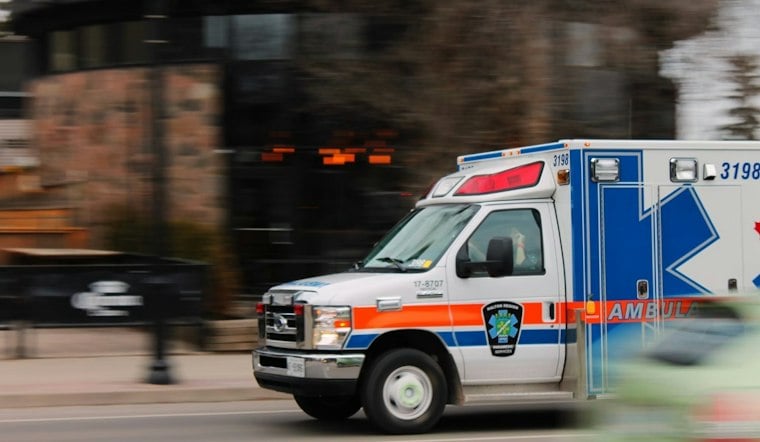
Sonoma County supervisors are scheduled to consider a 9% increase in ambulance billing rates for Sonoma County Fire District, the county's largest provider. The proposal would raise listed charges for ambulance services, with its direct billing impact focused on privately insured residents; the board is set to review it Tuesday, according to The Press Democrat.
County health officials rejected the district's larger request and staff are recommending a financial audit. The district sought a 16.36% cumulative increase in July, proposing an initial 9.9% bump followed by another 6.46% increase in January 2027. Sonoma County health officials rejected that request in August, according to The Press Democrat.
The Press Democrat reported that Gabriel Kaplan, assistant director of the Sonoma County Department of Health Services, said the district's financial pressures justified bringing the proposal to the board. District officials have said the increase is needed to cover higher-than-expected labor costs, emergency dispatch expenses and an unfavorable mix of paying versus non-paying patients.
What Riders Would Actually Pay
As reported by The Press Democrat, under the proposed 9% increase, the advanced life support transport charge would rise from $3,174 to $3,460, while the basic life support charge would climb from $2,919.32 to $3,182. Other ambulance services would also increase 9% across the board. The charges apply broadly, but the increase is aimed specifically at privately insured residents, since Medicare and Medi-Cal ambulance rates are fixed by the federal government and cannot be raised through this process.
Sonoma County Fire District Chief Ron Busch has said a 16.36% increase in charges was expected to yield only about a 4.5% revenue increase — below the general inflation rate — in part because some ambulance bills are never collected. As noted by The Press Democrat, the district became the county's largest ambulance provider in 2024, when it took over exclusive service in Sonoma County's urban core under a five-year contract worth $30 million annually, covering Santa Rosa, Oakmont, Kenwood, Rohnert Park, Cotati, Sebastopol, Graton, Occidental and Freestone. That contract includes advanced and basic life support transport, mileage, oxygen, IV supplies and 12-lead cardiogram care.
A Second Attempt at a Bigger Hike
This marks the fire district's second attempt since the 2024 takeover to secure a significant ambulance rate increase. The district first sought a 25% rate increase from the county in 2025, which ultimately resulted in supervisors granting a 2.4% cost-of-living adjustment rather than the full amount requested. The latest request, filed in July, again sought a steep hike before being scaled back following the health department's rejection.
Rate increases greater than 10% trigger an extensive operations and financial audit under the ambulance contract, and county staff are recommending the board proceed with that review, according to The Press Democrat. Sonoma County has not conducted such an audit of the fire district since the 2024 takeover, and the county is working with the Auditor-Controller-Treasurer-Tax Collector's Office to identify an audit company to analyze the district's financials. Busch has said the district welcomes an outside review and expects an independent EMS reviewer to validate its operations and financial reporting.
How the Vote Will Unfold
Sonoma County Executive David Guhin said the 9% increase was placed on the board's consent calendar as a routine item, though he noted the board can remove it for further discussion if supervisors choose. Tuesday's meeting will be the first time the board publicly reviews the proposed 9% increase.
The fiscal pressures behind the request reflect a broader pattern in local emergency medical funding. The fire district's ambulance program is projected to generate about $40.2 million in revenue during the current fiscal year, but expenses are projected to total $42.7 million, leaving a shortfall the district attributes largely to fixed government reimbursement rates and rising labor costs, as previously reported by The Press Democrat. Privately insured patients make up only a small share of calls but account for a disproportionate share of billing revenue, a dynamic that has shaped how the district has structured its rate requests toward that group.
The fire district's predecessor, American Medical Response, held Sonoma County's exclusive ambulance contract for three decades before losing it to the district in January 2024, and had proposed a $3,900 base ambulance rate during that bidding process. California has separately moved to limit how much privately insured patients can be charged for ambulance rides, after a Kaiser Family Foundation analysis found that 73% of ground ambulance transports in the state resulted in out-of-network charges for people with large-employer insurance in 2018, according to CalMatters. A legislative analysis cited by that outlet estimated Californians with commercial insurance could save roughly $44.5 million annually in direct ambulance charges under the state's surprise-billing protections.
How Reimbursement and Contract Oversight Work
Medi-Cal ambulance reimbursement is not set by this county billing vote. A California Department of Health Care Services state-plan amendment submitted for federal review proposes a $220.80 add-on for eligible Medi-Cal emergency ground transports from July 1, 2026, through June 30, 2027, while leaving base rates unchanged; the filing excludes public providers eligible for the separate PP-GEMT IGT program from the add-on, according to DHCS. The ambulance agreement describes a program audit of compliance with its financial and operational terms. According to the Sonoma County Fire District agreement packet, an auditor could review invoices, contract amendments, regulatory requirements, accounting records, financial reports and correspondence.





