

























































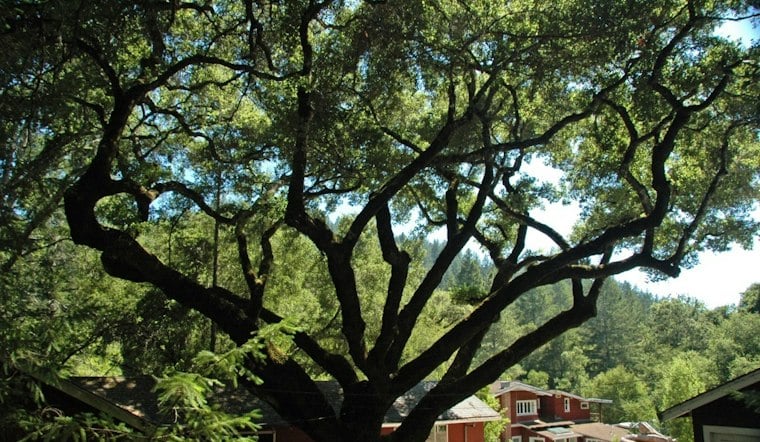
A Petaluma nonprofit is on the final stretch of an ambitious plan to plant 750 oaks and other native trees on bare city-owned land, and the whole effort starts with something as small as an acorn. ReLeaf Petaluma has roughly 250 oaks left to plant toward that goal, with staff and volunteers expecting to wrap up the work by the end of the coming fall-to-winter planting season.
The nonprofit's ReOaking program launched in 2024 with a grant from the U.S. Forest Service, according to petalumavoice.org, with the goal of reclaiming open spaces and re-establishing oak trees across the city. As reported by Sonoma Magazine, ReLeaf planted approximately 500 oaks during its first two years, leaving about 250 to go. Petaluma Voice reported that Carolyn Lacerra, ReLeaf's programs manager, said the planted areas will look amazing 20 or 30 years from then.
From Fallen Acorn to Planted Sapling
Every fall, ReLeaf staff and volunteers fan out across a wide swath of the North Bay, collecting coast live oak, black oak and valley oak acorns from as far north as Windsor to as far south as San Rafael, per the same account from Sonoma Magazine. Mid-October is acorn season, and each acorn carries the stored nutrients a young tree needs to get started.
Indigenous Californians have long processed acorns by shelling, grinding and leaching them to produce a mash, a practice tied to the broader cultural and ecological importance of oaks in the region, the article notes. ReLeaf's own process is more clinical: viable acorns get sprayed with alcohol and sanitized with a bleach-water solution to guard against sudden oak death, a disease caused by a non-native pathogen that has killed tens of millions of trees from Big Sur to southwest Oregon in recent decades.
Cold Storage, a Backyard Nursery and Two Planting Methods
After sanitizing, ReLeaf stores the acorns in plastic bags and chills them for two to three months to mimic winter and cue later germination. Some of the collected acorns go through a similar cold stratification in a moist medium for one to two months before planting, according to petalumavoice.org's separate reporting on the program. The resulting saplings are maintained at an informal nursery at Lacerra's house until they're ready for the ground, where ReLeaf plants potted saplings that winter or the following fall. Other acorns skip the nursery step entirely and go three to a hole directly in the soil, without cold stratification or pre-germination, per Sonoma Magazine.
Earlier this month, ReLeaf's small staff of four corralled 20 volunteers to plant another 70 trees, petalumavoice.org reported. The group had 48 more trees, a mix of seedlings and acorns, slated for the East Side Connector Trail, with 100 additional trees planned for the sprawling Westridge Open Space. All 750 trees planted through the ReOaking program will be watered through December 2028 to help them survive the critical early years.
Why Oaks, Specifically
ReLeaf has framed oaks as a keystone species that support unusually high biodiversity, with root systems that help hold soil in place and protect nearby waterways, according to petalumavoice.org. Much of Petaluma's historical oak savanna was developed or converted to grassland for farming and ranching over the past 150 years, the same source notes, which is part of the reason bare city-owned parcels now stand in place of what was once oak woodland. ReLeaf plants trees at schools and parks throughout Petaluma as part of its broader push to increase the city's urban tree canopy.
The ReOaking program sits inside a much larger local push. ReLeaf Petaluma, founded in 2020, had planted 3,000 trees across the city as of May 2026, according to releafpetaluma.org. In its first 12-month planting season, volunteers put 748 trees into parks and schools, and the 2025/26 season alone added 548 native California trees, according to petalumanews.com. Volunteers logged 1,136 hours at planting events that season and another 1,722 hours on maintenance and other tasks, the outlet reported.
ReLeaf's work also echoes efforts elsewhere in the state. The California Native Plant Society launched a statewide push in 2018 to restore native oak populations, including a Re-Oak Wine Country effort aimed at planting tens of thousands of saplings back in the areas their acorns came from, according to cnps.org, which noted that oak species statewide face unprecedented decline from habitat loss, disease and development.
Not every acorn makes it to maturity. ReLeaf uses both direct acorn planting and potted saplings raised at Lacerra's backyard nursery before they reach a city parcel.





