

























































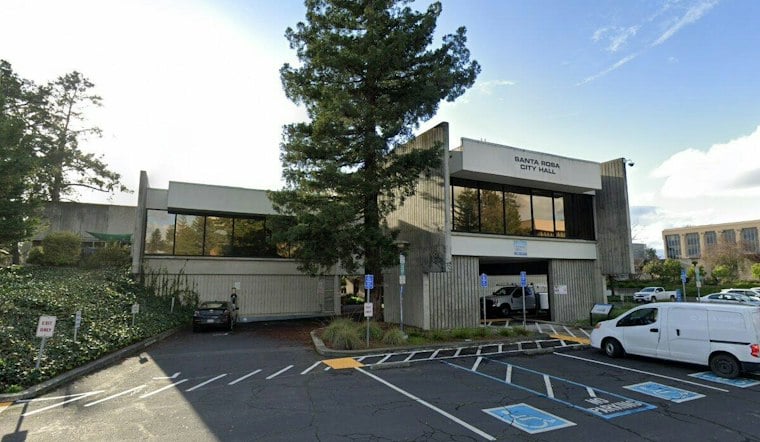
Santa Rosa city leaders are weighing a tougher response to federal immigration enforcement after a city council meeting grew so tense that proceedings had to pause to clear the chambers. The Santa Rosa City Council will consider both an ordinance addressing how city property can be used for immigration enforcement and a resolution laying out a policy framework for how staff should handle requests from immigration authorities for access, records or information.
The push follows a contentious study session on immigration policy that the council held in October, according to The Press Democrat. That Oct. 27 meeting drew more than 60 community members, and the council temporarily halted proceedings to clear the chambers amid the unrest, the newspaper reported. Attendees sang “We Shall Not Be Moved” and “We Are Fighting For Our Children” during the gathering, underscoring how personal the stakes have become for many in the room.
A Resolution First, With an Ordinance Possibly to Follow
Vice Mayor Jeff Okrepkie told the crowd the council recognized calls for urgency and said Santa Rosa should represent people who are afraid to speak out, per the same Press Democrat account. He said a resolution could put policy in place quickly while the city studies what a stronger ordinance might look like down the road, adding that a resolution “in the short term can do a lot” and that the council should investigate further options later.
Councilmember Eddie Alvarez, who in September asked city staff to report on existing immigrant safeguards and staff education, said the council stands with residents regardless of whether the final measure is a resolution or an ordinance. Still, he added that a resolution would be a step in the right direction but not the end goal, signaling that pressure for something firmer is likely to continue.
City Manager Jason Nutt explained why staff initially proposed a resolution rather than an ordinance: an ordinance, he said, would bring more severe repercussions for employee missteps, create misdemeanors and civil liability, and shift authority over staff away from personnel rules and toward the city's authority under the ordinance itself. Nutt said the resolution would instead govern staff behavior, training, city programs and employee interactions with both the public and immigration authorities.
What the Proposed Protocols Would Require
Under the proposed council policy, staff would have to notify the city manager or a designee whenever immigration authorities seek facility access, records, information or help locating someone — a requirement that would apply whether or not agents present a judicial warrant. Staff would also be required to request identification and agency information from agents and to make copies or photographs of any documents presented, while the city attorney would evaluate whether compliance with a given request is legally required.
The proposed policies would separately prohibit city leaders, board and commission members, and employees from authorizing the use of city property for federal immigration-law enforcement, and would bar them from contacting immigration authorities or responding to federal-agent requests — including confirming city-employee information — except where state law allows it. The policy would also direct the city manager to work with the city attorney, police chief and department heads on staff training. City officials say the latest proposal aims to establish clearer city responsibilities when confronted by immigration authorities and to align local policy with guidance recently issued by the state attorney general's office.
That state guidance, issued by the California Department of Justice, Office of the Attorney General, notes that immigration authorities may request a range of information from state and local agencies — including details about individuals, agency operations, public-benefit or employment records, addresses, schedules or photographs. The guidance offers recommendations and model policies for agencies to identify, evaluate and respond to data requests.
Advocates Say a Resolution Alone Falls Short
Members of the Sonoma County Sanctuary Coalition who attended the October meeting argued that a noncooperation resolution has no teeth, calling instead for an ordinance they said could carry stiffer penalties for any cooperation with immigration agents. The coalition has also called for clearer employee protocols for handling immigration requests, rules governing city contractors, and signs designating city facilities as ICE-free zones.
Community groups and civil rights activists have campaigned since 2024 for stronger local measures to shield immigrants from federal enforcement. Santa Rosa already has a 2017 Indivisible-City resolution limiting some cooperation with federal authorities, and California law separately restricts cooperation with federal immigration officers except in certain circumstances.
Earlier City Property Restrictions and Their Limits
Santa Rosa has already enacted regulations, dating to April, barring federal agents from staging large-scale enforcement operations on city property. According to city materials, that earlier ordinance — introduced by the City Council on March 24 — establishes that civil immigration enforcement is not a city purpose and prohibits officials and employees from allowing city property to be used in ways that disrupt city operations or discourage people from accessing city services, unless the use clearly serves a city purpose, according to the City of Santa Rosa. The city has also said its police department does not conduct immigration enforcement.
Importantly, the ordinance carves out an exception: it does not apply to city property that is open for general public use when that use does not interfere with city operations. The policy restricts use of city property for civil immigration enforcement when it disrupts city operations or discourages access to services; such use is defined as exclusive occupancy through a permit or similar approval. Property open for general public use is exempt when operations are not interfered with. Santa Rosa City Attorney Teresa Stricker said at the time that an outright ban on ICE from all public spaces likely would be unenforceable and would not survive a legal challenge.
Accounts of that earlier ordinance's timeline differ: the city's own announcement said the council would consider adoption at its April 7 meeting, with the measure taking effect 31 days later if fully adopted, while the Press Democrat reported the ordinance would take effect 30 days after a second reading and final vote on the same date. Separately, the council adopted a resolution on Feb. 10 urging Congress to establish standards, oversight and accountability for federal immigration enforcement officers operating in local communities.
Santa Rosa's Debate Mirrors a Regional Pattern
The earlier city-property ordinance was modeled after San Francisco's ban and followed a wave of similar ICE-free-zone policies adopted across the Bay Area, the Press Democrat has reported. Both Sonoma County and the city of Petaluma have adopted similar noncooperation measures this year. Petaluma's City Council unanimously approved its own resolution after discussing it at a Sept. 28 meeting, according to Petaluma News. That measure bars federal immigration agencies from establishing staging areas on city property, limits voluntary assistance and disclosure of city information except when legally required, includes database safeguards and staff training, and bans ICE from entering non-public areas of city property without a judicial warrant or court order.
Elsewhere in the region, a report cited by Patch noted that Alameda, San Mateo and Santa Clara counties completely prohibit jail personnel from honoring ICE detainer or notification requests without a criminal warrant signed by a judge — a stricter standard than what Santa Rosa is currently considering.
The Economic Backdrop Driving Urgency
The debate carries real economic weight for Sonoma County. A Bay Area Council Economic Institute report found that more than 21,000 undocumented immigrants in the county generate an estimated $2.3 billion in economic activity and make up nearly 30% of agricultural jobs, the Press Democrat reported last month. The same report estimated that about 79,000 immigrants live in Sonoma County — roughly 17% of its population — and that immigrant adults there pay nearly $1 billion in federal, state and local taxes annually. A separate March estimate put the potential cost of mass deportations across the nine-county Bay Area at $67 billion in regional GDP and $8.4 billion in annual tax revenue.
The stakes have also played out in the streets. In October, about 60 people affiliated with the Sonoma County Sanctuary Coalition, plus a support crew, walked along Dry Creek Road near Healdsburg as part of a three-day immigrant-rights march to Cloverdale. Months earlier, in January, protesters carrying signs reading “ICE Out For Good” and “Hands Off Venezuela” crossed Third Street at Old Courthouse Square in Santa Rosa, a scene photographed at the time by Press Democrat photojournalist Kent Porter. Taken together, the protests, the march and the packed council chambers paint a picture of a community pushing local government to move faster than it has so far.




