

























































Rasheem Hall is going home for the first time since his early 20s. The 42-year-old Philadelphia man, sentenced to mandatory life without parole for a 2010 first-degree murder conviction, could be released as early as Friday afternoon after nearly 19 years behind bars, following a deal that let him plead no contest to lesser charges tied to a fatal 2007 North Philadelphia shooting.
Hall's path out of prison began with a recording nobody was supposed to hear. According to The Philadelphia Inquirer, prosecutors failed to hand over a 2009 jailhouse phone recording of their key witness, Deric Williams, to Hall's defense team during a 2013 appeal. In that call, Williams told his mother he had wrongfully implicated Hall, saying, according to transcripts introduced in court, “I [expletive] up… Like, [Hall] wasn't there.”
Williams, described by defense attorneys as an unreliable jailhouse informant, later tried unsuccessfully to recant his statements to detectives. Common Pleas Court Judge Rose Marie DeFino-Nastasi ruled that both the recording and internal prosecutorial emails detailing the relationship between prosecutors and Williams should have been turned over to Hall's defense, finding the jury at Hall's 2010 trial was denied complete context about the informant's credibility. That ruling granted Hall the right to a new trial in April 2026.
According to the Judicial System of Pennsylvania, in a July 31, 2017 opinion, the Pennsylvania Superior Court addressed Lambert’s request for a new trial based on an alleged Brady violation. In a Nov. 20, 2012 opinion, the Pennsylvania Supreme Court reiterated that due process is offended when prosecutors withhold evidence favorable to the accused.
A Shooting on West York Street
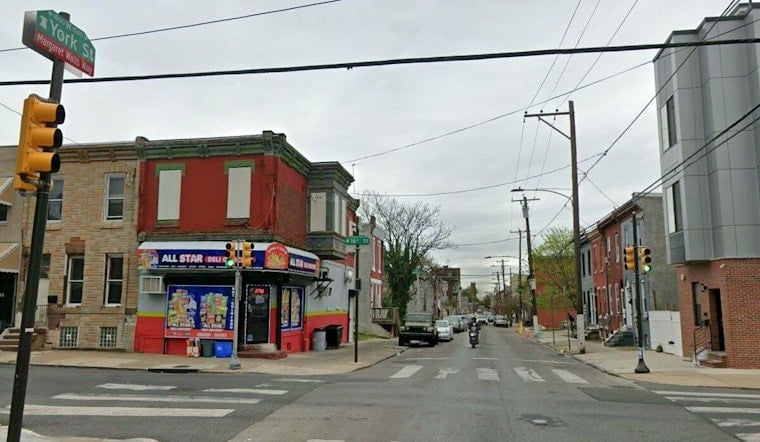
The case traces back to May 20, 2007, when 34-year-old Ronald “Hat” Kennel was fatally shot on the 1600 block of West York Street in North Philadelphia. Assistant District Attorney Trey Flynn said Hall and co-defendant David Satchell fired guns during the incident after another person shot at them first, and that individuals firing at Hall struck Kennel, an innocent bystander caught in the crossfire. Prosecutors said Hall's own gunfire struck bystander Charlene MacDonald, injuring her in the leg, though she was not killed by it.
Prosecutors would have argued Hall was responsible for Kennel's death under the legal doctrine of transferred intent, which holds a defendant responsible for injury or death based on intent to harm regardless of who was actually struck. Hall has maintained his innocence in Kennel's death throughout, and his defense has argued he was not even present on West York Street during the shootout. Following his August 2010 trial, Hall was sentenced that December to mandatory life imprisonment without parole for first-degree murder, along with concurrent sentences for criminal conspiracy and weapons offenses, having stood trial alongside Satchell.
A Deal Instead of a Retrial
Rather than retry the murder case, prosecutors agreed to conditions allowing Hall to plead no contest to aggravated assault and a firearms violation. Under Pennsylvania criminal procedure, a no-contest plea carries the same legal weight as a guilty plea for sentencing purposes while letting a defendant avoid an explicit admission of guilt — the mechanism Hall used to secure his release on a time-served sentence. Judge Diane L. Anhault approved a sentence of nine to 18 years, a term Hall had already served in custody.
District Attorney Larry Krasner personally approved the decision to accept Hall's plea, per the Inquirer's reporting. Flynn said prosecutors accepted the plea but would not have radically altered their assertions about the shooting had they retried the case, noting that jurors at Hall's 2010 trial had already heard similar remarks from Williams about his credibility. Flynn also said he spoke with Kennel's brother at length about the decision to accept Hall's plea before it was finalized.
Hall's father, Ronald Hall, said his son had almost 19 years of time lost. Hall's defense attorney, Robert Gamburg, said he was happy for Rasheem and his family. Hall, who is described as ecstatic about the opportunity to be released, learned of the chance to plead to lesser charges only the week before and will return to a daughter, nieces and nephews he has been separated from since his early 20s.
A Pattern Beyond One Case
Williams's role in Hall's prosecution was not an isolated episode. As The Philadelphia Inquirer has reported, Williams acted as a prosecution informant in at least six different Philadelphia murder cases before recanting his statements, and he grew up in the same North Philadelphia neighborhood as several defendants he later testified against — a pattern that underscores how heavily police and prosecutors leaned on a single jailhouse witness across major violent crime cases.
The case lands amid intensifying scrutiny of how Krasner's office handles old convictions. Data from the National Registry of Exonerations reported in August 2026 found that 75 convictions have been overturned in Philadelphia during Krasner's tenure since 2018, with the vast majority of those freed being Black men, the Inquirer reported. That same month, U.S. District Court Judge Paul S. Diamond held federal court hearings examining allegations of prosecutorial misconduct and conflicts of interest within Krasner's office over post-conviction relief filings, with current and former assistant district attorneys testifying about alleged pressure to misrepresent facts in appeal filings, according to the paper's reporting. In a separate post-conviction case, a federal judge said actions by city prosecutors could amount to perjury, conspiracy or obstruction of justice.
In June, the Pennsylvania Supreme Court ruled that the state Attorney General's Office must now oversee cases in which Krasner's office seeks to overturn past criminal convictions, according to Metro Philadelphia. The ruling followed mounting criticism of how the DA's office had handled old murder convictions, and it now places a state-level check on the very kind of case that freed Hall. His release, prosecutors and his attorney agree, closes out a legal fight that began with a 2007 gunfight on a North Philadelphia block and ended nearly two decades later with a taped confession that was never supposed to see daylight.



