

























































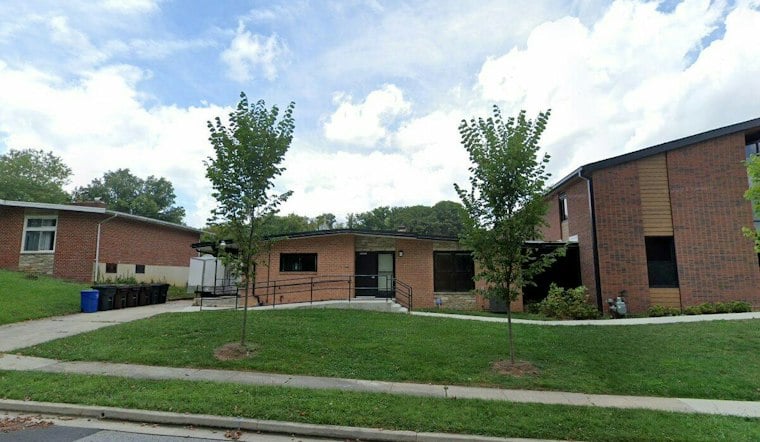
Two longtime Baltimore-area synagogues, Chizuk Amuno Congregation and Beth Israel Congregation, are weighing a merger that would relocate Beth Israel to Chizuk Amuno's Pikesville campus and create a single congregation under a shared name. If members approve the plan, the two would become Chizuk Amuno-Beth Israel Congregation, with the combined community set to launch next summer.
Chizuk Amuno first approached Beth Israel about joining forces late last year, and talks grew more serious in early 2026, according to the Baltimore Jewish Times. The congregations plan to hold formal votes on the decision in the coming months, with the merger proposed to take effect in June. Beth Israel President T.J. Casser has pointed to shifting demographics within the local Jewish community as the driving force behind the discussions, the outlet reported.
Harel Turkel, president of Chizuk Amuno Congregation, has become a public face of the process, according to a separate Baltimore Jewish Times report. Turkel grew up attending Beth Israel, joined the Chizuk Amuno board eight years ago and now lives in Pikesville with his wife and their three children, whose first child attended preschool at Chizuk Amuno. He said he is helping lead Chizuk Amuno into the future as the congregation navigates the proposed combination.
Merger, Not Acquisition, Turkel Says
Turkel emphasized that the proposal is structured as a merger rather than an acquisition, with Beth Israel's name remaining part of the new congregation's title. The plan calls for bringing over Beth Israel's Torah scrolls, ritual items and memorial plaques to the Pikesville campus. He said both congregations and their members stand to grow from combining, and described the two sides as having been in lockstep throughout the talks so far.
According to Turkel, the transition committee guiding the process has equal leadership drawn from both Beth Israel and Chizuk Amuno. He said the intent is to give all members a voice and a choice in the outcome rather than force the merger through. The congregations are planning town halls and meet-and-greets ahead of a simultaneous congregational vote scheduled for December 1.
Demographic Shifts Behind the Talks
The Baltimore Jewish community has experienced demographic and geographic changes in recent years, with Jewish families moving to Pikesville, Lutherville, Timonium and Hunt Valley. Chizuk Amuno, which was founded on Exeter Street in downtown Baltimore in 1871 before relocating to its current Pikesville campus, describes itself on its own website as an egalitarian, Conservative congregation that serves Jews of all ages and life stages. Beth Israel was founded in 1956. Chizuk Amuno has said it would retain its tradition of serving members across all ages and stages of life if the merger moves forward next summer.
Broader research into synagogue closures and combinations underscores why congregations like these are exploring the option. The Pew Research Center reported in 2021 that 57% of people raised in Conservative Judaism now identify with a different religious affiliation or tradition entirely. As Jewish populations shift toward the coasts and larger cities, older congregations elsewhere have been merging to save money and consolidate shrinking memberships, according to the Jewish Telegraphic Agency.
Lessons From Mergers Elsewhere
Synagogue mergers nationally have often stumbled over questions of whose rabbi stays, whose Torah scrolls are used, whose building gets sold and whose dues structure prevails, the same JTA report noted — complications that multiply when congregations belong to different denominations. Rabbi Daniel Freelander, vice president of the Union for Reform Judaism, has estimated that half of such merger attempts fail, largely due to an unwillingness to compromise. Mergers between congregations of similar size tend to go more smoothly than cases where a larger, thriving congregation absorbs a smaller, struggling one, Freelander told JTA.
One Corpus Christi merger built trust by first combining the congregations' religious schools before bringing in a consultant to work through disagreements over worship style and kashrut, per JTA's reporting. Even successful mergers sometimes result in two distinct worship traditions persisting under one roof for years rather than a single blended service. It remains to be seen whether Chizuk Amuno and Beth Israel will fully integrate their practices or maintain some separate traditions if members approve the plan.
Members Say Reaction Has Been Warm
Turkel said the community reaction to the proposed merger has been welcoming and open. He estimated he spoke with nearly 50 people over the Yom Kippur weekend, and said those he talked to were excited about the prospect of joining the two congregations. Chizuk Amuno members, he said, want to welcome Beth Israel members and meet them for Shabbat dinners as the two communities get to know each other ahead of the vote. Chizuk Amuno notes on its own site that its members already live throughout the greater Baltimore area, including Pikesville, Owings Mills, Baltimore City and other parts of Baltimore County — the same map of neighborhoods now drawing new Jewish families and reshaping where congregations like these are choosing to plant their futures.





