

























































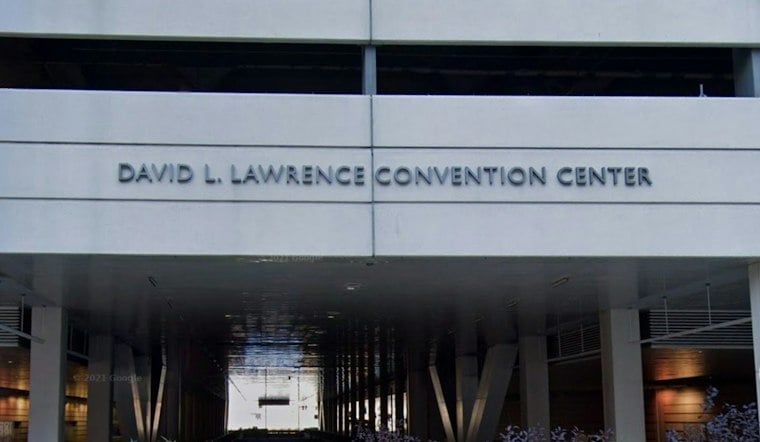
Nearly 600 students from 42 schools in six southwestern Pennsylvania counties gathered in Pittsburgh Monday for the youth-focused opening of the Eradicate Hate Global Summit. Each school received $1,000 for a student-led initiative, giving participants resources to carry anti-bias work back to their campuses while connecting them with organizations focused on understanding and combating prejudice.
The student gathering is part of the broader summit, as reported by CBS News. The youth program focuses on preventing hate-fueled violence and making schools safer. Student Lily Baumgardner told the outlet that responding to hate requires advocacy and courage. “Compassion takes courage,” she said, according to CBS.
Students Confront Pressure From Peers and Screens
Baumgardner described young people as facing pressure both to participate in hate and to fear being targeted by it, CBS reported. Fellow student Julian Jiggetts said the summit gives students tools to discuss prejudice learned from parents, peers or social media, while recognizing that the internet can either connect people or deepen divisions.
Another student, Michael Boyle, emphasized that people experiencing hate can find support from others, according to CBS News. The message complements the summit’s focus on bystander action and community response as students, educators and practitioners consider how to carry those lessons into schools.
What the Research Shows About Student Safety
Local survey data indicate that bullying remains a concern among students. According to the Pennsylvania Commission on Crime and Delinquency, 24.6% of Allegheny County students reported experiencing bullying in the previous 12 months in the 2021 Pennsylvania Youth Survey, compared with 23.2% statewide. Broader online-safety surveys offer related but not directly comparable evidence. According to Snap’s 2025 digital-well-being research, 71% of surveyed 13- to 17-year-olds in six countries said they sought help or spoke with someone after exposure to an online risk such as unwanted contact or online bullying. A separate Thorn survey of 1,000 young people ages 9 to 17 found that nearly half had accessed a platform, website or app before reaching its minimum age requirement. The international samples, differing age ranges and survey designs mean these findings cannot be used as a direct measure of the Pittsburgh students’ experiences, but they help explain why the summit treats online spaces as part of the school-safety challenge.
A Summit Born From Tragedy, Now Reaching Thousands
The Eradicate Hate Global Summit was established in Pittsburgh following the October 27, 2018, massacre at the Tree of Life synagogue, where a gunman killed 11 Jewish worshippers during Shabbat services in what remains the deadliest antisemitic attack in U.S. history, according to the Pittsburgh Post-Gazette and the Eradicate Hate Global Summit. In August 2023, a federal jury in Pittsburgh unanimously recommended the death penalty for shooter Robert Bowers after convicting him on 63 federal counts, including hate crimes resulting in death, as reported by the U.S. Court of Appeals for the Third Circuit.
Squirrel Hill's Jewish Community Has Deep Roots
The summit's connection to the Tree of Life attack also sits within a much longer history of Jewish community life in Squirrel Hill. According to the Jewish Community Center of Greater Pittsburgh, local institutional roots date to 1943, when the Irene Kaufmann Settlement established a boys' club on Forward Avenue. That history provides context for how a neighborhood with longstanding Jewish institutions became a focal point for remembrance and anti-hate efforts after the 2018 attack.
The summit was co-founded by Laura Ellsworth, partner-in-charge of global community service initiatives at law firm Jones Day, and Mark Nordenberg, chancellor emeritus of the University of Pittsburgh and former dean of its law school, according to Thiel College. Since its inaugural 2021 gathering of roughly 125 attendees during the COVID-19 pandemic, the main summit has grown to 1,532 registered attendees in 2025, with organizers expecting more than 1,600 global practitioners for this year's gathering, running September 15 through 17 under the theme “Bridging the Gaps.”
Grants Fund Student-Led Projects Against Bias
The Student Summit is co-coordinated by Eradicate Hate, the Allegheny Intermediate Unit, and the LIGHT Education Initiative of Tree of Life, with the $1,000 campus project grants financed by local philanthropic organizations including the Grable Foundation and the Benedum Foundation, according to the Eradicate Hate Global Summit. Survey results from the 2025 Student Summit showed that 96% of participating high school students felt more empowered to act as agents of change in their communities, while 77% of returning schools reported measurable improvements in school climate following previous student-led anti-hate projects, as noted by the Eradicate Hate Global Summit.
National Numbers Down, but Legal Gaps Remain in Pennsylvania
FBI crime data released in August 2026 showed that reported hate crimes in the United States decreased 7.0% year-over-year, from 11,404 incidents in 2024 to 10,606 incidents in 2025, across nearly 17,000 participating law enforcement agencies. Still, Pennsylvania's Ethnic Intimidation statute, 18 Pa.C.S. § 2710, requires an underlying predicate offense such as assault or property destruction motivated by bias against race, color, religion, or national origin, notably excluding sexual orientation, gender identity, and disability as protected categories under state law, according to the Philadelphia District Attorney's Office.
Pennsylvania Office of Attorney General data citing FBI statistics showed that the primary bias motivations in reported 2024 hate crime incidents were race, ethnicity, or ancestry at 53.2%, religion at 23.5%, and LGBTQ+ bias at 21.1%. Against that backdrop, the students gathered in Pittsburgh this week are being asked to carry the summit's lessons back into their own hallways, armed with small grants and, organizers hope, a bigger sense of responsibility.



