

























































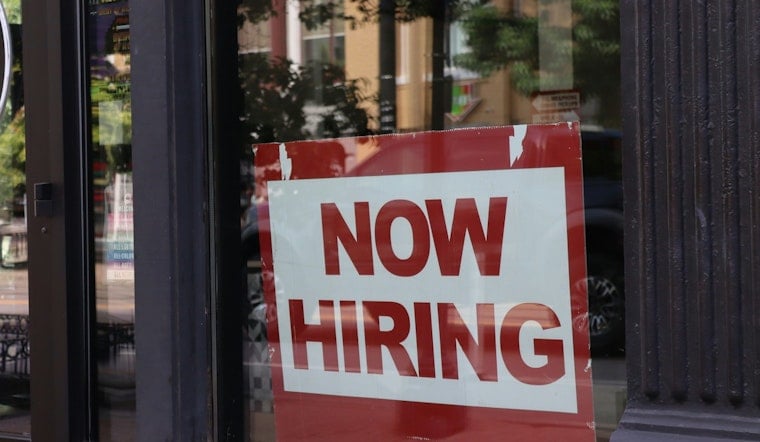
Polymarket, the prediction-market company, kept posting New York job listings without compensation ranges even after receiving at least two warnings from the state labor department, according to a new investigation. So did Rillet, an accounting software provider, and Icon, an advertising firm — all three had job ads with no pay information listed as of the week of publication. Polymarket declined to comment, Rillet did not respond to requests for comment, and Icon did not respond either.
The findings come from an exclusive investigation by Business Insider, whose reporters Sarah E. Needleman and Jack Newsham reviewed New York State Department of Labor records and ran their own LinkedIn spot check in August, turning up job listings from more than a dozen New York employers that omitted salary information. New York's pay-transparency law, which took effect in September 2023, requires employers with four or more employees to include compensation ranges in online job listings, covering ads on platforms including LinkedIn and Indeed. The law was signed by Governor Kathy Hochul in December 2022, with chapter amendments refining job description mandates and remote work scope before enforcement began, according to Cole Schotz.
The state labor department has investigated and closed complaints between 2023 and April 2026, finding more than 200 complaints valid and issuing warnings to employers, per the same investigation. Yet the department did not fine the employers named in the cited state records, the outlet notes. New York's law allows for penalties of $1,000 for a first offense, $2,000 for a second, and $3,000 for subsequent violations — figures that regulators have largely left on the table even against repeat offenders.
Warnings Without Consequences
Rogo, another company named in the records, received a warning from New York State in July 2025 and listed more than 50 New York jobs without pay ranges on its LinkedIn page, along with six more on its own website, according to the report. A Rogo spokesman blamed a third-party technical glitch for the missing pay ranges on LinkedIn, while the company left its LinkedIn ads unchanged and declined to comment on resolved administrative matters. Rogo did add pay ranges to listings on its website after Business Insider inquired.
Little Spoon posted a senior lifecycle marketing manager job without a salary range in July 2026 and received three state warnings between July 2025 and April 2026, the outlet's records show. After Business Insider contacted the company, Little Spoon updated the listing with a salary range of $125,000 to $145,000. ButterflyMX, a digital-doorman company, also posted New York jobs without compensation ranges after receiving at least two warnings from the state labor department, but told the outlet it was fully committed to compliance with New York's law and added salary ranges to its job postings — including an IT director role listed at $190,000 to $210,000 — after being contacted.
A City-State Enforcement Gap
The pattern reflects a two-tiered enforcement system. New York City's pay disclosure law, passed before the statewide statute, allows civil penalties of up to $250,000 for an uncured first violation after 30 days of notification and up to $250,000 for subsequent violations, enforced by the NYC Commission on Human Rights, according to Trusaic. The city commission has filed public actions against dozens of large employers, naming News Corp, Tesla, and Bank of New York Mellon, though notified New York City businesses came into compliance within the 30 days the law allows, meaning the commission has not actually issued penalties to those notified businesses.
New York State's comparatively modest fines stand in contrast to jurisdictions like Colorado, whose pay-transparency law took effect in 2021 and has produced six-figure settlements with employers accused of violating it, including Lockheed Martin and DaVita. In Colorado, employees are also gaining ground in court: the Colorado Court of Appeals ruled in July that state law protects workers who inquire about or discuss wages from employer retaliation even without alleging sex- or gender-based discrimination, as Hoodline reported this summer. A 2025 National Bureau of Economic Research working paper linked Colorado's law to wage gains and found it increased the share of job postings with pay information by about 30 percentage points, with no detectable decline in job postings or employment associated with the mandate.
Washington state has taken yet another route, allowing job applicants themselves to sue employers for pay-transparency violations. New York remains one of more than a dozen states that have passed pay-transparency laws in recent years, and members of the public can submit complaints to the New York State Department of Labor alleging violations. Business groups warn the rules carry tradeoffs: the Business Council of New York State has said pay-transparency laws may prompt some employers not to recruit talent from New York at all, with companies unwilling to disclose detailed pay and benefits potentially locating workers in other states instead.
Job Seekers Left Guessing
For workers, the missing numbers translate into wasted time and guesswork. Cody Walton, a 47-year-old recently laid-off creative and design professional in Texas, told the outlet that only about a quarter of the job postings he has encountered show pay ranges. He said the absence of pay ranges makes it difficult to assess job fit and relocation feasibility, noting that cost of living is a huge variable and that he does not want to complete multiple interview rounds before receiving an unaffordable offer — a risk he said he takes every time he applies without knowing what a job pays.
The stakes of that guesswork have grown alongside rising wage expectations nationally. Federal Reserve Bank of New York survey data published in August 2026 showed the average lowest salary job seekers were willing to accept for a new role reached a record high of $88,387, according to Traders Union. Meanwhile, a separate October 2025 study from the Federal Reserve Bank of New York found that nearly a quarter of job listings in jurisdictions with mandatory pay transparency laws still fail to include required salary information years after the rules took effect, suggesting New York's compliance gap is part of a broader structural pattern rather than an isolated lapse.
The disclosure debate has also become a flashpoint in New York's broader pay equity fight. State labor department figures cited during a March 2026 City Hall rally showed full-time working women in New York earned 87.3 cents for every dollar earned by men in 2023, with the gap widening to 67.7 cents for Black women and 60.6 cents for Hispanic women, as Hoodline detailed earlier this year. Advocates have pointed to pay transparency mandates as one of the few concrete tools available to narrow that gap, making continued noncompliance by employers like Polymarket, Rillet, and Icon a live concern for regulators and workers alike.





