

























































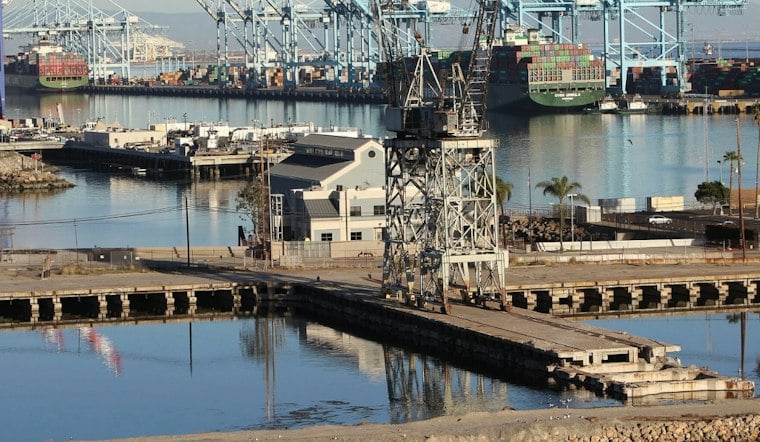
More than 120 million cyberattack attempts hit the Port of Los Angeles in August alone, according to figures cited by the nation's busiest container port for global trade. The port's cybersecurity operations team identified network exploitation, credential harvesting, malware, and intrusion attacks among the wave of digital threats, even as the facility continues to grapple with shifting tariff policies affecting its cargo flow.
The scale of the attempted breaches was detailed in a report from Bloomberg, which noted that the port's cybersecurity team forms what it describes as a seven-layer digital defense around port operations, working in coalition with private-sector businesses to fend off the constant barrage. Port of Los Angeles Executive Director Gene Seroka discussed the threat landscape in an interview with Bloomberg Television's Haslinda Amin, describing cyberattacks as a persistent threat to port operations even as artificial intelligence reshapes shipping and logistics industry-wide.
The August figure underscores the scale of the threat facing the port. Monthly attack attempts against the port climbed from roughly 7 million in 2014 to 40 million in 2022 and 60 million in 2023, according to trend data from the Center for Strategic and International Studies. The figures place August's tally in the context of rising attack volume alongside the maritime sector's increasing digitization.
A Decade-Long Head Start on Port Cybersecurity
The Port of Los Angeles has positioned itself as a pioneer in this space for more than a decade. It became the first U.S. seaport to establish a dedicated Cyber Security Operations Center in 2014, according to the Port of Los Angeles. That foundation eventually gave rise to the Cyber Resilience Center, launched in January 2022 through a $6.8 million, three-year agreement with IBM.
The port's cybersecurity efforts have evolved amid broader concerns about cyberattacks in the maritime industry. The port has continued to develop its cybersecurity capabilities.
Federal Oversight Tightens as Threats Mount
Washington has moved in parallel with the port's own upgrades. The Coast Guard has advanced cybersecurity policy in the Marine Transportation System. Just days ago, the Coast Guard established a new Office of Maritime Cybersecurity Policy to serve as the central federal authority overseeing cybersecurity compliance across the nation's ports, vessels, and waterfront facilities.
That structure reflects the broader federal focus on maritime cybersecurity. The stakes of inaction were on display elsewhere this summer: in August, a cyberattack struck North Carolina Ports' IT infrastructure, disrupting container operations and causing delays across facilities in Wilmington, Morehead City, and Charlotte, according to WECT News.
Why the Port of LA Is a Prime Target
The pressure on Los Angeles is a function of its sheer scale. The port handled 10.2 million twenty-foot equivalent units in 2025, marking its 26th consecutive year as North America's busiest container port, and the San Pedro Bay ports together handle roughly 30% of all U.S. containerized import freight, per figures reported by gCaptain. That volume makes the port's IT systems a high-value target and underscores the importance of collective cyber defense.
The cybersecurity fight comes as the port continues managing record cargo swings tied to trade policy. Hoodline has reported on importers racing the tariff clock through a second-busiest July on record, part of a broader pattern this year that included a June 2026 volume above one million container units, only the third such month in the port's history, and a strong April cargo surge earlier in 2026. The port has also locked in long-term tenant commitments, including a $200 million clean-air pledge tied to Yusen Terminals lease extensions through 2056, underscoring how deeply interconnected the port's digital, commercial, and environmental commitments have become.





