

























































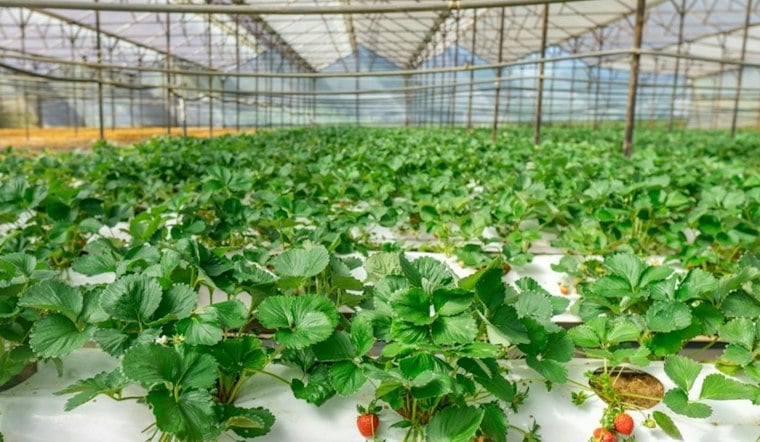
A proposed 40-acre hydroponic greenhouse could bring 413 new jobs and a $320 million capital investment to Pueblo County, if the company behind it — known for now only by the code name Project Deep Root — chooses Colorado over three competing states. The Colorado Economic Development Commission awarded the project $2.75 million in job growth incentive tax credits on Thursday, positioning Pueblo as a contender in a multi-state site search for what would become the largest controlled-environment agricultural project in Colorado history.
The greenhouse would grow lettuce hydroponically, without soil or pesticides, according to The Denver Post. Michelle Hadwiger described the project as Colorado's largest controlled-environment agricultural project if it gets built. But Pueblo isn't a lock: the company is also weighing sites in Idaho, Tennessee and Pennsylvania, meaning Colorado's incentive package is just one piece of a broader competition for the investment.
Colorado's award to Project Deep Root came as part of a larger action Thursday, when the Colorado Economic Development Commission approved nearly $8 million in job growth tax incentives spread across five companies weighing expansions in the state, as reported by The Denver Gazette. Project Deep Root's slice of that pool was relatively smaller because its proposed wages were at the low end among the five companies approved that day. The company said workers would receive an average annual wage of $56,910, a figure that matched the average wage in Pueblo County. By comparison, photonics and quantum computing firms in Boulder County have offered average wages two to three times higher than what Project Deep Root proposed.
A Company That Sounds a Lot Like Little Leaf Farms
The Denver Post's reporting suggests the applicant behind Project Deep Root is likely Little Leaf Farms, though that identification is described as an inference rather than a confirmed fact. Little Leaf Farms is based in Devens, Massachusetts, where it operates a 60-acre greenhouse complex, and it also runs a 30-acre greenhouse in McAdoo, Pennsylvania, and has an 80-acre complex under construction in Manchester, Tennessee. The company currently employs 700 people, and it raised $300 million from investors in 2022 as it works to build a national footprint and disrupt California-based lettuce growers.
The company's greenhouses lean on natural light except on cloudy days and use insulated glass designed for efficient year-round operation in colder climates. Little Leaf Farms says its automated production avoids human handling from planted seed to finished head, uses rainwater collected on greenhouse roofs and sanitized with UV treatments, and relies on ladybugs for minimal pest control. The company also claims it can produce lettuce using 90% less water than conventional open-field methods, and it aims to get product onto store shelves within 24 hours of harvest.
A Pueblo facility would target markets within a two-day drive, a distribution radius that could support the company's goal of getting product onto store shelves within 24 hours of harvest. That speed advantage matters more than it once did: U.S. average diesel prices have exceeded $6.28 per gallon, adding real cost to the long-haul shipping that has defined the lettuce supply chain for decades.
Pueblo Once Called Itself the Lettuce Capital of the World
Southern Colorado's connection to lettuce isn't new — it's a revival. South-central Colorado was a crucial produce source from the early 1920s to the mid-1950s, and Buena Vista was once called the head lettuce capital of the world in the early 1920s. The San Luis Valley and northern New Mexico became a core crisphead lettuce growing region around the same era, with Colorado fields primarily filling the summer lettuce gap when growing conditions in Arizona and California turned too hot.
That era ended once refrigeration and shipping innovations gave California growers a lasting edge, as California operators began chilling lettuce in under 30 minutes using commercial vacuum cooling technology that Colorado couldn't match. San Luis Valley farmers largely reverted to growing potatoes as the state's lettuce industry declined. Now, technological advances and elevated fuel costs are creating conditions where southern Colorado could see a lettuce comeback, according to the Post's reporting.
Indoor Farming's Boom-and-Bust Track Record
Colorado's indoor agriculture sector hasn't been immune to volatility. 80 Acres Farm shut down its Aurora, Colorado operations last month. That closure arrives against a backdrop of consolidation in the industry: 80 Acres Farms and Soli Organic are merging into a single indoor farming network that will operate under the 80 Acres Farms name and be headquartered in Hamilton, Ohio, according to Organic Produce Network. The combined company expects to serve more than 17,000 retail locations across the country, drawing on seven nationally distributed vertical farms with the capacity to grow 15 million to 20 million pounds of fresh produce annually.
Other ventures in the space have struggled more severely. Kalera, an Orlando, Florida-headquartered vertical farming company with an Aurora, Colorado mailing address that used technology and plant seeds to grow leafy greens year-round, filed for bankruptcy on April 4, 2023. Vertical farms in general burn roughly seven times the energy per unit of greens that greenhouses use, a difference that helps explain why greenhouse-style operations like the one proposed for Pueblo have drawn more staying power than fully enclosed vertical farms.
For Pueblo, the stakes are less about industry trends and more about local jobs. Project Deep Root's jobs could have a meaningful impact on Pueblo's manufacturing economy if the greenhouse ultimately lands there. Whether it does remains an open question, with Idaho, Tennessee and Pennsylvania still in the running and no site-selection decision yet announced.





