

























































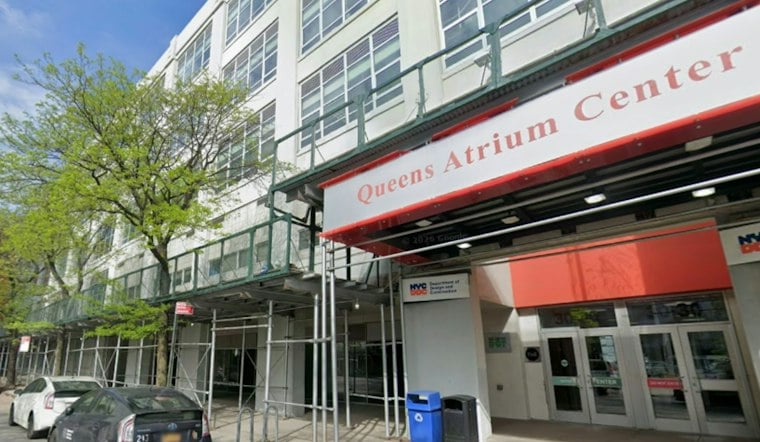
The intersection of 43rd Avenue and 34th Street in Sunnyside now has a permanent concrete traffic island where, in August 2024, a box truck driver turning right struck and killed an 18-year-old e-bike rider who was traveling eastbound in the protected bike lane. The new hardened islands, poured at key points along the parallel bike lanes on 43rd and Skillman Avenues, are designed to slow down turning vehicles and improve daylighting at the corners, replacing the paint-and-post mixing zones that had marked the corridor for years.
The upgrade was documented in a video report from Streetsblog New York City, written by Sam Brule, which detailed how the city's Department of Transportation has now poured concrete at several intersections along the two-mile corridor. The 2024 crash at 43rd Avenue and 34th Street, in which the driver was 57 years old, unfolded when the truck turned over concrete “armadillos” at the intersection, according to Streetsblog's original coverage of the fatal collision.
Filmmaker Clarence Eckerson Jr., who works for Streetfilms and holds a United Nations award, has documented DOT's updates to 43rd and Skillman Avenues for almost a decade, and he recently surveyed the latest round of Queens bike-lane improvements for his video report. Beyond the 43rd Avenue and 34th Street island, the same push has brought a protected bike lane to Borden Avenue and a teardrop-shaped safety island to the 31st Avenue bike boulevard.
A Corridor Born From an Earlier Death
The parallel bike lanes on 43rd and Skillman Avenues were installed in 2018 following the death of 32-year-old delivery worker Gelacio Reyes, who was struck and killed by a drunk driver in 2017 while biking home from work. That installation came only after Queens Community Board 2 voted against the original protected bike lane plan, objecting to the removal of 158 parking spaces demanded by nearby business owners, a rejection that ultimately required Mayor Bill de Blasio to overrule the board, according to the Streetsblog report from that period.
The compromise that followed left the corridor with painted turn lanes and no raised concrete protection at intersections, a design choice that still exposed cyclists to turning heavy vehicles years later. Before those 2018 lanes went in, 283 people were injured along the same two-mile stretch between 2012 and 2016, including 61 pedestrians and 34 bicyclists, per data reported by the Queens Daily Eagle. The redesign was significant enough that Transportation Alternatives named the 43rd Avenue and Skillman Avenue Street Safety Improvement Project its Vision Zero Project of the Year in 2018, crediting it with closing a seven-mile gap in protected bike infrastructure between Forest Hills and Midtown Manhattan.
Citywide Rules Now Push Concrete Over Paint
The Sunnyside upgrade fits inside a broader legal shift in how New York City builds intersections. Local Law 66, enacted in late 2023, requires DOT to daylight at least 100 intersections annually starting in January 2025, clearing visual obstructions near crosswalks so pedestrians, cyclists, and turning drivers can see each other, according to the Bronx Times. A reported finding was an average 22% reduction in turning-vehicle speeds.
Sammy's Law would allow New York City to lower its urban speed limit to 20 mph. The law is named for Amy Cohen's 12-year-old son Sammy, who was killed while crossing a Brooklyn street, as reported by the FIA Foundation. This month, the city launched its ‘Vision Zero Reimagined’ plan, committing DOT to installing hardened daylighting or better safety treatments at a minimum of 1,000 intersections annually across the five boroughs.
More Queens Projects in the Pipeline
The concrete work on 43rd and Skillman is part of a wider pattern of western Queens street redesigns. In May, a committee of Queens Community Board 2 unanimously backed a DOT proposal for a two-way protected cycle track on Borden Avenue between Center Boulevard and Review Avenue, incorporating Jersey barriers, along with a parking-protected lane extending to Star Avenue, according to a report from Citizen Portal. DOT also completed 1.9 miles of new bike lanes and safety infrastructure on Review and Starr Avenues in Blissville in October 2025, extending the western Queens greenway network toward bridges into Brooklyn.
Even as advocates welcome the concrete islands at 43rd Avenue and 34th Street, questions remain about how quickly the city can replace painted mixing zones citywide with hardened barriers that physically block turning trucks, rather than plastic posts drivers can simply drive over.





