

























































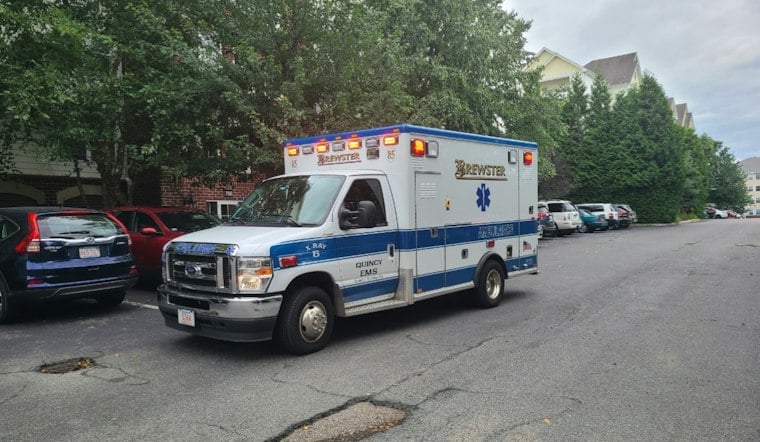
Quincy EMS will soon carry mobile blood transfusions for trauma victims, giving paramedics the ability to start replacing lost blood before a patient ever reaches a hospital. The city will have emergency blood supplies in the field.
The Quincy Police Department announced the plan before CBS News Boston covered it, and the move comes as other Massachusetts communities have adopted prehospital blood programs. According to The Boston Globe, Canton’s program had already transfused eight patients who might otherwise have bled to death.
The stakes behind these programs are significant. A 2023 study of 2,785 patients with severe traumatic hemorrhage, cited by the Globe, found that those who received whole-blood infusions had a mortality risk 37 percent lower than patients who received component therapy alone. Separately, prehospital blood transfusion guidance published in tsaco.bmj.com notes that patients who receive blood products within the initial minutes after injury or the onset of hemorrhagic shock show significantly decreased mortality.
Other Massachusetts Programs Already Running
Quincy would not be alone in the state. Worcester EMS launched its own prehospital blood program on Sept. 1, serving Worcester and Shrewsbury through ambulances operated by UMass Memorial Health, according to MassLive. The Massachusetts Department of Public Health approved that program in July to carry and administer blood products inside ambulances, though the outlet notes blood is kept on designated supervisory response vehicles rather than on every ambulance in the fleet.
Lawrence General's whole-blood program formally began in December 2024 after an 18-month evaluation and a special project waiver from the state health department, per ems1.com. That program allows paramedics to provide whole-blood transfusions within a 30-mile radius of Lawrence. Canton's own reach has been described inconsistently in coverage: the Globe reported the program serves 20 municipalities south of Boston along the Interstate 95 and Route 128 corridor, while kffhealthnews.org reported the program serves 30 towns in the Boston area.
A National Push Backed by Federal Dollars
The expansion isn't confined to Massachusetts. Genesee County EMS in Michigan launched a prehospital blood transfusion initiative on May 1, according to medschool.umich.edu, and Cumberland EMS partnered with the Rhode Island Blood Center to launch that state's first prehospital blood transfusion program for trauma patients in September 2025, per turnto10.com. The Cumberland effort keeps one unit of O-positive blood in a small cooler on each of two ambulances.
Federal support is fueling some of the growth. The National Highway Traffic Safety Administration recently awarded $50 million to ambulance services across the country to establish or expand prehospital blood programs, according to NPR.
Why Field Blood Transfusions Are Complicated to Launch
Getting blood onto an ambulance isn't as simple as stocking a cooler.
There are logistical headaches, too. Carrying blood in the field involves practical challenges for EMS agencies.
Reimbursement is another consideration for agencies weighing whether to offer the capability.




