

























































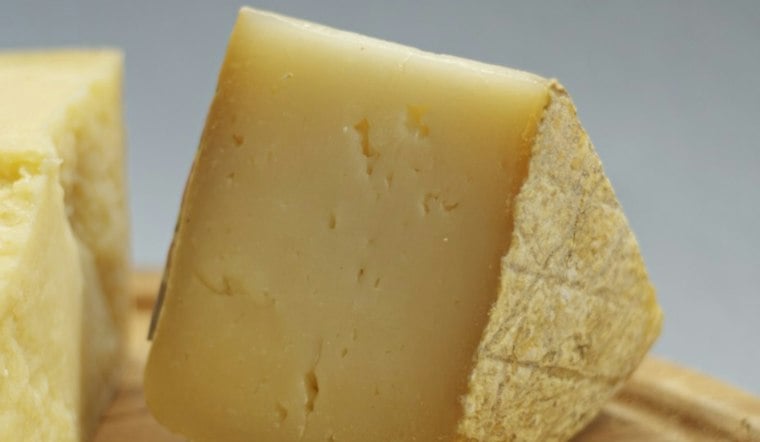
A raw milk cheddar made at a creamery in Willows, California has been recalled nationwide after federal health officials linked it to an E. coli outbreak that has sickened 13 people across nine states, hospitalized eight, and left three with kidney failure. Two of the sickened patients are San Diego County children under the age of 5, according to county health officials.
Local Children Among Those Hospitalized
San Diego County health officials reported Friday that two of California's three confirmed cases in the outbreak involve local children under 5, according to Marler Blog. As reported by Medical Daily, patients across the outbreak ranged from 1 to 58 years old, with a median age of just 5, and more than half of those sickened were 5 or younger. Illnesses were also reported in Colorado, Georgia, Kentucky, Michigan, Nevada, Oregon, Tennessee and Utah.
Eight of the 13 confirmed patients have been hospitalized, and three developed hemolytic uremic syndrome, a form of kidney failure that can cause high blood pressure, chronic kidney disease and neurologic problems, per the outlet's report. No deaths have been reported. The CDC has said hemolytic uremic syndrome is most common among children younger than 5, and demographic data published Friday showed 62% of the 13 confirmed patients are female, with illness onset dates spanning from July 7 to August 26.
Cheese Made By Sierra Nevada Cheese Company
The recalled cheese, sold under the Graziers brand, is made by Sierra Nevada Cheese Company. The FDA said it contacted the company on September 24 about the outbreak before recommending a recall. Founded in 1997 by Ben Gregersen and John Dundon, the company moved its processing creamery from Sacramento to Willows in 2003, according to Enjoy Magazine. Graziers raw milk cheese was sold at retailers nationwide and online. The company recalled every variety as a precaution after the outbreak was linked to the brand.
The recall covers medium cheddar, sharp cheddar, jalapeño jack and Monterey jack, sold in 8-ounce and 16-ounce retail packages as well as 5-pound food-service loaves, per Medical Daily's reporting. The company had reported that illnesses were associated with medium cheddar. Federal agencies have said no positive test of the cheese itself has come back yet, and the FDA's investigation remains ongoing as it works to determine the source of contamination and whether other products may be affected.
Nine Interviews, One Common Meal
Despite the absence of a positive product test, investigators have strong epidemiological evidence tying the illnesses to Graziers cheese specifically. All nine sick people interviewed reported eating the cheese, compared with just 4.9% of respondents in the CDC's FoodNet Population Survey who say they eat raw milk cheese in a given week. Whole genome sequencing also showed the bacteria pulled from sick people's samples were closely related genetically, per Medical Daily.
The outbreak strain, E. coli O26:H11, is a Shiga toxin-producing type whose symptoms can begin a few days after eating contaminated food or up to nine days later, causing severe stomach cramps, diarrhea, fever, nausea and vomiting. The CDC has advised people to seek medical care for diarrhea with a fever above 102 degrees Fahrenheit, diarrhea lasting more than two days without improvement, bloody diarrhea, or vomiting that prevents liquids from staying down. The agency also listed reduced urination, dry mouth or throat, and dizziness when standing as dehydration warning signs, and reduced urination, unusual tiredness or irritability, and pale cheeks or inner eyelids as possible signs of hemolytic uremic syndrome.
From First Illness To Recall
The outbreak's timeline has drawn scrutiny from food safety advocates. The first reported illness onset occurred on July 7, but federal health officials did not notify Sierra Nevada Cheese Company to recommend a recall until September 24 — an 11-week gap, according to the same Marler Blog account, even though the CDC typically takes three to four weeks to link a sick person to an outbreak. The CDC published its outbreak notice on September 25 and has said recalled products carry a long shelf life, meaning cheese purchased months ago could still be sitting in refrigerators.
This is the second raw milk pathogen recall tied to Sierra Nevada Cheese Company in just over a year. In August 2025, California's State Veterinarian issued a statewide recall and quarantine for the company's Bella Capra raw goat milk cheddar after state testing detected Listeria monocytogenes, according to Food Safety News, with the California Department of Food and Agriculture's testing triggering that quarantine.
A Separate 2026 E. Coli Investigation
The current outbreak is not the only 2026 investigation involving raw dairy. The FDA reported nine illnesses in California, Florida and Texas linked to RAW FARM-brand raw dairy products. That investigation involved E. coli O157:H7, a different strain from the O26:H11 strain in the Sierra Nevada outbreak, and a different producer.
The Debate Over Raw Milk Cheese
The policy debate includes the federal 60-day aging rule for raw milk cheese sold across state lines. A U.S. overview of raw-milk laws provides broader context on the regulatory landscape.
Food safety attorney William Marler is working on a citizen petition asking the FDA to require warning labels on unpasteurized milk cheeses and complete a safety reevaluation of the 60-day rule, according to Marler Blog. The petition presents those requests as measures to address risks from raw milk cheese.
The FDA says CDC surveillance from 1998 to 2018 linked unpasteurized raw milk products to 202 reported foodborne illness outbreaks, 2,645 illnesses and 228 hospitalizations. CDC modeling estimates that about 26 additional cases go undetected in the community for every laboratory-confirmed case, so the outbreak's confirmed count may not represent all infections.
What The FDA Wants Consumers To Do
The FDA is advising consumers not to eat any recalled Graziers cheese and to return it for a refund. If shoppers cannot determine whether cheese in their fridge is part of the recall because it lacks clear labeling, the agency says to throw it away rather than risk it. The FDA has also told retailers not to sell repackaged recalled cheese and has urged households to clean and sanitize any surfaces or containers the cheese touched.
The CDC, for its part, is advising people to choose pasteurized milk and dairy products, noting that pasteurization heats milk enough to kill harmful germs that raw milk and raw milk cheese can carry. The outbreak follows a related case Hoodline covered in April, when Fresno's Raw Farm tested dirty for E. coli O157:H7 during a separate multistate investigation unrelated to the current Graziers cluster.





