

























































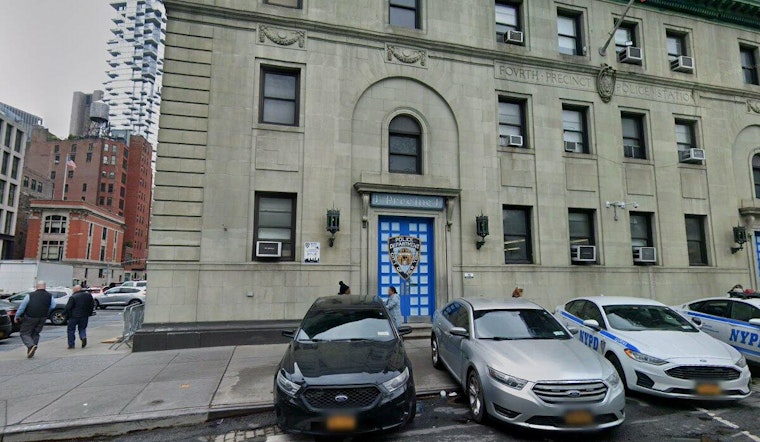
Twenty-five years after he wrote it, Shaun McGill's memo book from September 11, 2001, still carries an entry timestamped 8:41 a.m., describing a two-vehicle accident at the north end of Vesey Street. Minutes later, the first plane struck the World Trade Center, and McGill, then a rookie with just 18 months on the job, ran toward the towers instead of away from them. His notebook, and the uniform he wore that day, are now preserved as artifacts inside a makeshift museum at the 1st Precinct near Ground Zero.
McGill had responded to that fender bender one block from the World Trade Center when the attack began, according to CBS News. He entered the World Trade Center and the Marriott Hotel as jet fuel exploded in the lobby and poured down elevator shafts. As the towers came down, McGill survived the collapse of a building around him, escaping through dark, flooded water beneath the debris. He also evacuated people, including children from a nearby school, before returning to the 1st Precinct, the same station house where he had received his assignment 25 years earlier.
His memo book's final entry that day, logged at 9:15 p.m., simply ends his tour. It is one of the few written records from an officer who lived through the attack at street level, and CBS News reports McGill shared its contents publicly for the first time since that day. The uniform he wore remains covered in dust from September 11, and firearms recovered from the era still carry World Trade Center ash, according to the same account.
A Precinct That Became a Memorial
The 1st Precinct now functions as an informal museum, holding memories and remnants of the attacks, per CBS News. Among the artifacts is a photograph of Officer Moira Smith, who was the only female NYPD officer killed on September 11, 2001. Smith, who served with the 13th Precinct, had already been recognized for heroism before that day — the New York State Senate noted she received the department's Distinguished Duty Medal in 1991 for rescuing dozens of commuters during a subway crash. A mayoral press release from Mayor Giuliani and the City of New York says the New York City Police Museum seeks to collect, preserve and interpret objects related to the history of the New York City Police Department, placing the precinct's artifacts within a broader tradition of NYPD preservation. The New York City Municipal Archives, founded in 1950, preserves and makes available the historical records of city government, providing a broader civic context for keeping institutional records and artifacts accessible.
The chaos McGill and his fellow officers faced was compounded by a communications breakdown. When the towers collapsed, the antennas used for NYPD radio transmissions atop the buildings were destroyed, cutting off contact with the 1st Precinct station house and leaving its phones unanswered, according to Police1. Thousands of NYPD officers responded to the attacks that day, among them Michael Lipetri, now the department's Chief of Department, who has said he will never forget what he saw.
A Shrinking Circle of Living Witnesses
McGill went on to serve another 22 years with the NYPD after September 11, 2001, and is now retired. But officers who lived through that day in uniform are increasingly rare within the department — just over 900 NYPD officers who responded remain on the force today, per CBS News. That dwindling number is part of why artifacts like McGill's memo book, a dust-caked uniform, and photographs of officers like Smith have become crucial touchpoints for a department whose active-duty memory of the attack is fading.
The toll of that day did not end in 2001. Advocacy data from Citizens for the Extension of the James Zadroga Act shows that more than 541 NYPD officers have since died from 9/11-related illnesses, and over 1,720 have been forced into retirement by disabling post-attack health conditions — figures that dwarf the 23 NYPD officers killed on the day of the attacks. It is a pattern that echoes across the FDNY as well, where a 25th-anniversary medical report found more than 600 firefighters have died from post-9/11 illnesses since the attacks, compared with 343 killed on September 11, 2001, according to CBS News.
Deadlines and Ongoing Care
The federal World Trade Center Health Program, which suggested McGill speak to someone about his experiences, now monitors and treats nearly 150,000 enrolled responders and survivors nationwide as of July 2026, with more than two-thirds of certified members suffering multiple chronic conditions tied to the attacks, per the Centers for Disease Control and Prevention. Meanwhile, state legislation backed by the Police Benevolent Association set a final deadline of September 11, 2026, for NYPD officers who took part in World Trade Center rescue and cleanup work to file a Notice of Participation protecting their eligibility for presumptive line-of-duty disability pensions, according to the NYC PBA.
Remembrance and forensic work continue elsewhere in Lower Manhattan, too. This month, the NYPD rededicated a memorial wall at Floyd Bennett Field honoring 45 Emergency Service Unit officers killed in the line of duty, including 14 who died at the World Trade Center, per CBS News. And identification efforts still active at the Office of Chief Medical Examiner named the 1,651st World Trade Center victim in August, leaving nearly 1,100 victims still unidentified a quarter-century after the attacks. For McGill, whose memo book now rests among the precinct's relics, the paperwork of that single morning has become something closer to testimony — a rookie's shorthand for a day that never really ended for those who survived it.



