

























































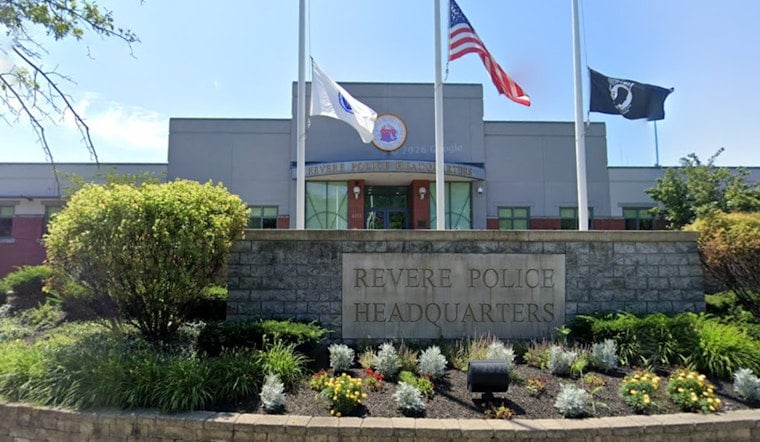
A Revere police officer has returned to duty after serving an unpaid suspension for misusing the department's Flock Safety license plate reader system to track down a woman who held an active restraining order against him. An internal investigation found that Officer Michael Tiso accessed Flock cameras and looked up the woman's license plate through a state database to locate her vehicle, a violation of Revere Police Department policy.
The Revere Police Department opened its internal investigation after receiving a complaint in December 2025, according to WCVB, whose 5 Investigates reporter Brittany Johnson broke the story with contributions from Jenny Barron. The station reports that investigators determined Tiso's Flock camera access and his license plate lookup both violated department policy, and that he was suspended without pay before ultimately returning to duty. Revere police reported the internal affairs findings to the Massachusetts Peace Officer Standards and Training Commission, the state body that tracks officer misconduct statewide.
The case adds to Tiso's disciplinary history. The station's report notes that Tiso had two previous suspensions in 2020, tied to allegations of conduct unbecoming and a separate allegation that he failed to respond to an incident according to established procedure. Per the same account, Revere's case is now the latest example of a Massachusetts police officer misusing Flock cameras for personal reasons rather than official law enforcement work.
A Pattern Repeating Across Massachusetts
Tiso's conduct mirrors a string of nearly identical cases surfacing across the state this year. A Massachusetts district court judge extended a six-month protective order against New Bedford Police Officer Emily Pacheco in August after internal affairs discovered she used her department's Flock system to track her ex-girlfriend's vehicle, according to CBS News; that probe began after an audit flagged unusual search volume on the victim's plate, prompting New Bedford police to suspend their Flock camera operations. In Stow, a police officer resigned in August ahead of a termination hearing after an internal probe found he had misused Flock cameras and state law enforcement databases to track a woman he knew, a case that led Stow officials to cancel their Flock contract entirely.
The scale of the problem extends well beyond Massachusetts. An August investigation found that at least 50 law enforcement officers nationwide have been charged or investigated for misusing license plate reader technology for personal reasons, with 46 of those cases involving Flock Safety systems and more than half involving officers tracking romantic partners or exes, according to The Washington Post. Internal audits have routinely failed to catch these unauthorized searches until victims themselves reported being tracked.
Vendor and Municipal Fallout
Following the wave of scandals, Flock Safety announced in August that it would mandate criminal case numbers for every search, cut default data retention from 30 days down to seven, and automatically enable audit tools across all client agencies — changes that were previously optional settings used by only about a third of its 7,000 law enforcement clients, per the Post's reporting. Flock Safety declined to comment when approached by WCVB, and the company does not disclose which police agencies use its cameras.
Revere itself has invested heavily in the technology: the city's approved FY 2025 municipal budget specifically funded an expansion of the Flock camera deployment area and total camera count across the city, alongside digital evidence management upgrades. In the wake of the Tiso case, the Revere Police Department launched a new audit tool designed to flag unusual or suspicious search patterns, and the department has issued a formal use policy governing its license plate reader system.
More than a dozen Massachusetts cities and towns have already stopped using Flock license plate readers this year, according to WCVB's NewsCenter 5, which added reporting from its own coverage of communities that paused or canceled their contracts. Public records obtained by civil rights advocates show more than 80 Massachusetts police departments had signed Flock contracts by late 2025, spending upwards of $2 million in local public funds, prompting the ACLU of Massachusetts to launch its statewide “Get The Flock Out” campaign urging residents to challenge broad ALPR data-sharing agreements.
A Regulatory Gap and Open Questions
Massachusetts lacks statewide legislative guardrails on automated license plate reader data retention or search justification, unlike several neighboring New England states, according to The New Bedford Light. That leaves individual municipal departments to set their own ALPR policies and self-audit procedures, even as civil liberties advocates keep pressing state lawmakers for binding statutory limits.
The Massachusetts POST Commission maintains a public database of more than 3,400 sustained disciplinary records covering over 2,100 officers, and departments are legally required to report sustained internal affairs findings to it. Commission regulations also require officers facing discipline or seeking voluntary relinquishment of certification to disclose any restraining orders, civil protective orders, or allegations of domestic abuse or civil rights violations. Whether the commission will pursue formal decertification proceedings against Tiso, given the sustained finding and his prior disciplinary record, remains an open question, as does whether Revere city leaders will face pressure to re-evaluate the department's Flock contract.
A separate June investigation found that dozens of Massachusetts officers have resigned or retired during internal investigations to avoid formal discipline before landing jobs at other agencies, according to WCVB — underscoring broader concerns about whether the state's oversight system can keep officers with misconduct histories from simply moving down the road.





