

























































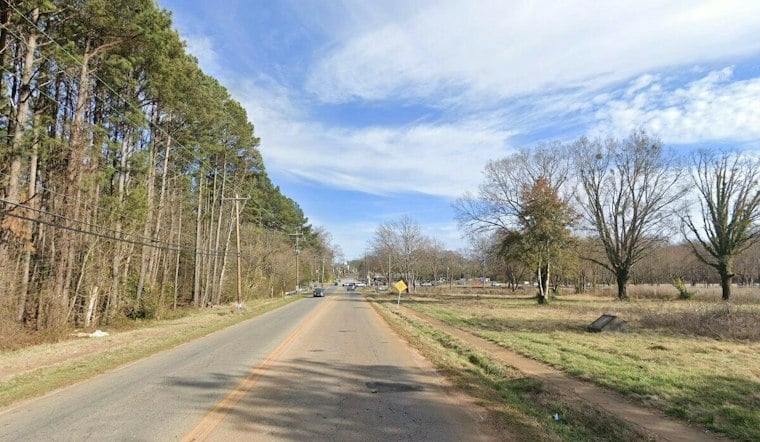
Renewable Water Resources has finished the first phase of a $92 million overhaul of its Swamp Rabbit gravity sewer system, replacing 2,800 linear feet of aging pipe between East Bramlett Road and Sulphur Springs Road with a single line built to last 100 years. The upgrade swaps out two deteriorating parallel pipes, measuring 20 inches and 36 inches in diameter, for one new pipe with sections stretching 48 and 60 inches across. Work on this stretch began in late 2025 as part of a broader effort to expand wastewater capacity between Greenville and Travelers Rest.
ReWa CEO Rebecca West addressed community leaders and stakeholders at a ceremony marking the milestone, according to the Greenville Journal. She called the project and ReWa's other system investments critical infrastructure work, adding, “It is really hard to imagine needing a pipe this large, but we're already thinking about what comes next.” Phase 1A runs between East Bramlett Road and Sulphur Springs Road, according to a ReWa board document.
A Century-Old Utility Plans for the Next 100 Years
The new sewer line roughly parallels the Prisma Health Swamp Rabbit Trail and is expected to meet anticipated wastewater capacity demand growth as the area between Greenville and Travelers Rest continues to fill in. The Greenville Journal's report notes the full corridor project will extend to Travelers Rest when complete in 2031. ReWa's Board of Commissioners awarded the Phase 1A construction contract in February 2025 to Garney Companies, Inc., for an amount not to exceed $14,377,749, per the board packet.
ReWa itself has deep roots in the region. It has been committed to wastewater services since 1925 and marked its centennial last year while operating more than 430 miles of pipeline and nine recovery facilities that purify roughly 44 million gallons of wastewater daily across five Upstate counties, according to the Greenville Journal. ReWa serves Greenville County along with portions of Anderson, Laurens, Pickens, and Spartanburg counties. West said ReWa's infrastructure is relied on by people every day, framing the sewer upgrade as part of the utility's broader Clean Water Forward initiative.
MetroConnects Tackles the Century-Old Pipes Next Door
ReWa's trunk-line work is being undertaken in tandem with a parallel effort from MetroConnects to overhaul wastewater infrastructure in the nearby Union Bleachery community. MetroConnects broke ground in May 2025 on a project replacing 4,953 linear feet of sewer line in the historic Union Bleachery Mill Village, abandoning 8,615 feet of century-old clay pipes installed around 1906, according to MetroConnects. Those legacy clay pipes allowed rainwater to seep in and contaminated sewage to escape during heavy storms, which is exactly the kind of inflow that overburdens ReWa's larger trunk lines downstream.
MetroConnects has a broader push, dubbed Clean Water Forward, to systematically replace decaying sewer networks across historic Greenville County mill villages, supported by federal ARPA funds and the State Infrastructure Investment Program. The mill village projects are aimed at preventing sanitary sewer overflows during heavy rainfall, the utility says. Together, the two efforts reflect a coordinated strategy: MetroConnects shutting off old inflow points while ReWa expands the capacity of its main lines to handle whatever comes next.
Growth Pressure From a Former Superfund Site
Much of that anticipated demand traces back to the 240-acre former Union Bleachery textile mill site adjacent to the sewer corridor, now being redeveloped into “On The Trail GVL,” a $2 billion mixed-use community featuring 20 million square feet of space and 100 acres of green space. Residential construction on the site began in May 2026, according to the Upstate Business Journal. The property previously housed industrial textile operations before its current transformation.
Before that development could move forward, environmental cleanup was required. In March 2024, the U.S. Environmental Protection Agency awarded $10 million in federal Bipartisan Infrastructure Law funds to treat contaminated groundwater at the Union Bleachery Superfund site using chemical injections, addressing toxic chromium and asbestos left over from past industrial finishing operations, per the Upstate Business Journal's sister outlet, Greenville Journal.
More Trail and Funding Moves Underway
The sewer corridor also connects to major surface investments nearby. Greenville County secured a $20.3 million federal RAISE grant in 2024 to build a 2.2-mile Swamp Rabbit Trail spur through the Union Bleachery site, including pedestrian bridges over West Blue Ridge Drive and Sulphur Springs Road — the latter crossing previously the site of a fatal bicyclist crash, according to the Post and Courier. ReWa is also separately carrying out a Conestee area sewer improvement project backed by a $10 million federal grant, which is causing temporary closures along the Blue Line of the Swamp Rabbit Trail this year.
The pipe work in the Union Bleachery corridor lands amid a broader local push to fund infrastructure. In July, the City of Greenville introduced a proposal for a 1% municipal sales tax estimated to generate $511.6 million over eight years, as Hoodline previously reported. The proposal also addressed owner-occupied property-tax relief.





