

























































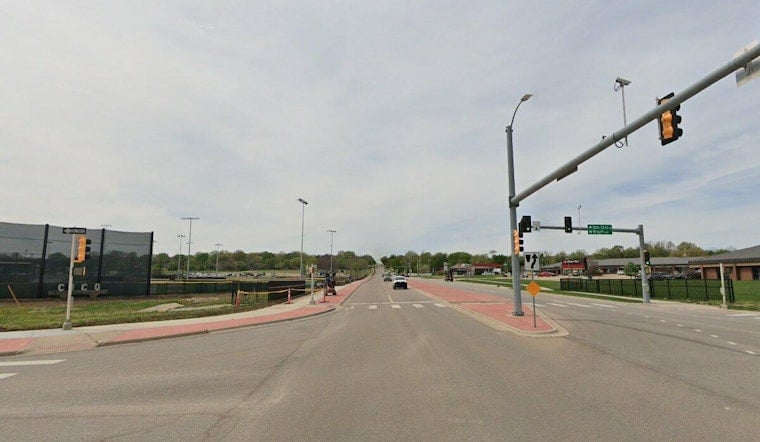
Riley County is developing a formal agreement to move forward with a proposed $20.5 million event complex that would replace the county's aging fairgrounds at CICO Park. The plan calls for a year-round facility west of the county shops on Tuttle Creek Boulevard, on roughly 40 acres of land, and organizers insist it won't cost taxpayers a dime in property or sales tax revenue. Riley County’s FAQ lists the Public Works Department at 6215 Tuttle Creek Blvd., the area identified in planning materials as the location of the county shops.
Volunteer task force members Dave Lewis and Reese Greenlee discussed the project's progress during an appearance on Within Reason with Mike Matson on News Radio KMAN, telling the show that Riley County is developing the memorandum of understanding for the proposed Flint Hills Event Complex, according to The Manhattan Mercury. Riley County commissioners have signaled preliminary support for the project, though no official vote has been taken. Organizers have proposed creating a charitable foundation through the Greater Manhattan Community Foundation to collect donations.
Two-Phase Build Starts With Livestock Barn and Show Pavilion
Construction is planned in two phases, according to the Mercury's reporting. Phase 1, estimated at approximately $20.5 million, would include a flexible livestock barn, an outdoor rodeo, carnival grounds, an extension office, a 40,000-square-foot show pavilion, and expanded parking for vehicles and trailers. Organizers plan to develop sponsorship and naming-rights opportunities alongside the fundraising foundation.
The proposed complex could include additional livestock barns, additional parking, an enclosed rodeo space, and an amphitheater as part of its overall conceptual scope. Organizers plan to advance designs, form an advisory committee, and establish the donation foundation through the Greater Manhattan Community Foundation as the effort moves forward, the Mercury reports.
Site Prep and Utility Work Loom as Early Hurdles
Even before vertical construction begins, organizers have estimated that initial site preparation and groundwork for the 39-acre county-owned property will cost approximately $4 million, according to Citizen Portal.
The task force has continued developing the concept. The Greater Manhattan Community Foundation is the philanthropic entity organizers plan to use for administering private donations.
A Fairgrounds Steeped in Six Decades of Shared History
The 97-acre multi-use park was established in 1962 through a cooperative agreement between Riley County, the City of Manhattan, and Manhattan-Ogden School District USD 383 — its name combining “City” and “County” to reflect that joint ownership. The park's history reflects the joint involvement of the city, USD 383 and Riley County.
The Kaw Valley Rodeo also drew a large crowd during the July fair season, according to the Kaw Valley Rodeo Association. Attendance at the county fair reached record levels in July 2024, with K-State Research and Extension County Director Gary Fike noting at the time that fair events, the carnival, and the rodeo drew the largest crowds of his six-year tenure, per News Radio KMAN. That surge in turnout has underpinned organizers' argument that the current fairgrounds can no longer keep pace with demand.
Parallel City Investment Raises Questions About CICO's Future
Even as county officials weigh relocating fairground operations, CICO Park remains the current home of the fairgrounds. The proposal would move county fairground operations away from CICO Park.
The current relocation push also stands in contrast to how the county funded park development in the past. In 1965, three years after CICO Park's creation, the Riley County Board of Commissioners instituted a property tax levy specifically dedicated to funding county park developments and helping smaller municipalities build local park facilities. The proposed Flint Hills Event Complex includes sponsorships, naming rights and donations through a community foundation as potential funding sources.





