

























































Michigan basketball guard Roddy Gayle Jr. can keep chasing a repeat national championship after a New York judge granted him a preliminary injunction Thursday, allowing him to remain on the Wolverines' roster while his eligibility lawsuit against the NCAA plays out. The ruling marks Michigan's second court win in as many days, coming one day after teammate Kenny Noland secured his own injunction in Indiana.
A Second Straight Court Win for Michigan
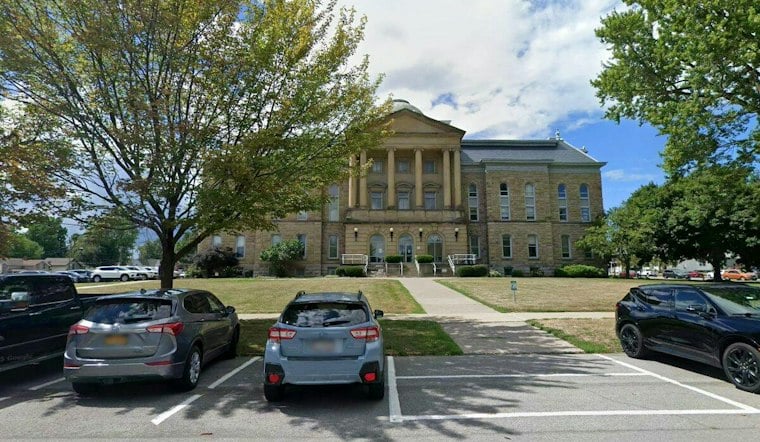
Niagara County Supreme Court Justice Frank A. Sedita III issued the preliminary injunction, according to Detroit Free Press reporter Tony Garcia, who covers the Wolverines for the paper. The order lets Gayle remain on Michigan's team until a final decision is reached in his case, even though the NCAA had ruled he exhausted his eligibility. Gayle, a key contributor to Michigan's 2025-26 national championship team, played four seasons of college basketball split between Ohio State and Michigan before the NCAA's ruling threatened to end his career a year early.
The order followed a temporary restraining order Justice Sedita issued earlier this month, which had already let Gayle practice and take part in team activities, according to ClickOnDetroit. Gayle filed his lawsuit on August 31 in Niagara County Supreme Court in his home state of New York. He was born in Niagara Falls and graduated from Lewiston-Porter High School, per the same ClickOnDetroit report.
The $1,700 Payment at the Center of the Dispute
The $1,700 Payment at the Center of the Dispute Central to Gayle's case is his involvement with the Detroit Pistons' Las Vegas Summer League, for which he received roughly $1,700. According to 247Sports, Gayle signed with the Pistons less than 48 hours after the NCAA adopted its five-in-five eligibility rule, and his lawsuit argues he never intended to turn professional in a way that would forfeit his college eligibility. Per the Free Press account, Gayle has never played a professional regular-season game and has received no professional basketball salary beyond that summer league payment, and he has asked the court to bar the NCAA from declaring him ineligible or interfering with Michigan's decision to let him play.
Gayle also requested that Michigan, its coaching staff and his teammates not face punishment for following the court's order, and that he be allowed to compete for a roster spot on the same terms as everyone else, the Free Press reports. The outlet notes that the judgment in his New York case was not immediately made public online.
Noland's Indiana Ruling Came First
Gayle's win came a day after Columbia transfer Kenny Noland won his own preliminary injunction in Indiana. Monroe County Circuit Court Judge Kara E. Krothe found that the plaintiffs were eligible under the plain, unambiguous text of the NCAA manual, ruling that the NCAA's eligibility bylaw did not explicitly exclude the Class of 2026, according to the Free Press. Krothe's order also explicitly barred the NCAA from applying its so-called restitution rule, a protection that shields Michigan from having wins vacated or facing penalties if the injunction is later overturned on appeal, as detailed by UM Hoops.com.
Noland, a Columbia transfer who averaged a team-best 17.1 points per game as a senior in 2025-26, briefly signed with German professional club Artland Dragons in July before pivoting back to pursue college eligibility, according to a Wikipedia entry on the 2026-27 Michigan roster. He transferred to Michigan in August. Both he and Gayle are among hundreds of athletes who have sued the NCAA seeking an extra year of eligibility after the association shifted to a five-in-five system for the Class of 2027 while declining to extend that same relief to 2026 seniors.
Why the NCAA's Carve-Out Sparked a Legal Wave
The NCAA Division I Cabinet unanimously approved its age-based five-in-five eligibility framework on June 23, giving athletes five years to play five seasons — but the rule explicitly excluded student-athletes who had already completed their fourth year of eligibility by the end of the 2025-26 academic year, according to PBS. That carve-out is what prevented Gayle from playing a fifth season despite having completed four and graduated from college, and it forced him into professional basketball only after the new rule took effect, per the Free Press.
The legal fights playing out for Gayle and Noland are part of a broader pattern. A wave of state court lawsuits from 2026 seniors erupted after the U.S. Court of Appeals for the 10th Circuit issued an emergency stay on August 21, halting a federal court order that had previously let Class of 2022 athletes compete under the five-in-five model. That stay pushed players nationwide, including Oklahoma's Danny Saili and Dayton Tockey and former Kansas star Tre White, toward state courts for individual relief.
Backcourt Depth and a New Coaching Era
Michigan's urgency to retain both guards intensified after incoming five-star freshman Brandon McCoy Jr. suffered a season-ending right knee ACL injury during the team's August European tour and underwent surgery on September 11, according to University of Michigan Athletics. The Wolverines are also navigating a coaching transition, having appointed Mike Boynton Jr. as head coach on July 10 after Dusty May left in June to take over the NBA's Dallas Mavericks following Michigan's title run, per ClickOnDetroit. Boynton said the team would welcome Gayle back if possible, and teammate Elliot Cadeau said he wanted Gayle to return, describing him as a great leader and a great player, according to the Free Press.
Gayle's role on last season's record-setting squad was substantial even if the raw numbers were modest. He played 39 games last season, averaging 7.3 points, 3.3 rebounds and 1.3 assists in 21.1 minutes per game, and started 25 of Michigan's games during the championship run, per the Free Press report. Across his full college career, spanning Ohio State and Michigan, Gayle has appeared in 146 games and started 72 of them. Michigan finished the 2025-26 season with a program-record 37 wins, going 37-3 overall and 19-1 in Big Ten play, before beating Connecticut 69-63 on April 6 to claim the school's first men's basketball national title since 1989, according to ClickOnDetroit.
Both injunctions remain preliminary, meaning Gayle's and Noland's eligibility could still be reversed depending on how the underlying lawsuits and any appeals unfold. For now, though, Michigan enters its title defense with both guards cleared to play, a status the Free Press notes has not yet been finalized in a publicly available judgment for Gayle's case.





