

























































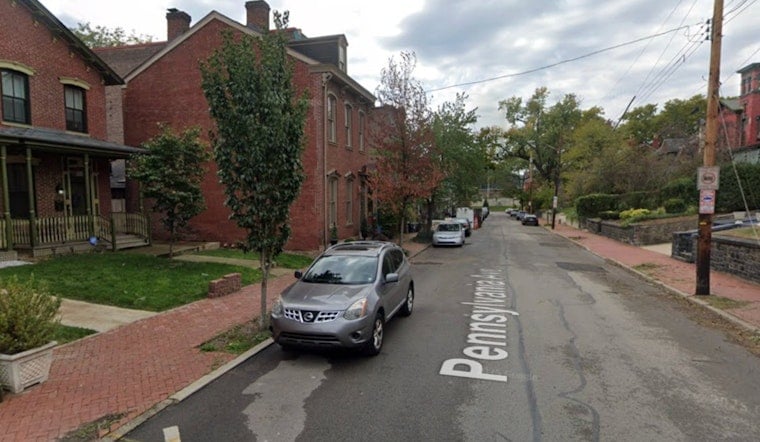
A massive oak tree snapped cleanly at its base around 4 a.m. Tuesday in the 1400 block of Pennsylvania Avenue in Pittsburgh's Manchester neighborhood, crushing several parked vehicles, damaging nearby buildings, and taking down a utility pole along with multiple live electric lines. As if that weren't enough for one storm-battered street, the fallen trunk turned out to be home to several active bee colonies, which erupted into swarms of thousands of stinging insects the moment the tree hit the ground.
Manchester resident Edward Seftas told CBS News Pittsburgh he heard a loud crash around 4 a.m. as his power cut out instantly. He said the tree had long looked old and rotted, and neighbors had figured it was only a matter of time before it came down. Pittsburgh public works crews responded to clean up the wreckage the same day, according to CBS News, whose Ross Guidotti reported on the scene for KDKA-TV.
The bee problem didn't end with the initial swarm. Crews trying to cut apart the felled branches ran into another round of angry insects bursting from the hollow wood, according to the same CBS News Pittsburgh report, turning a routine debris-clearing job into something closer to an emergency pest response. Penn State Extension explains that honey bees are cavity nesters and reproduce by swarming, helping explain why a hollow tree can provide nesting habitat.
Downed Wires Slow the Cleanup
Adding to the complications, the tree's collapse onto live power lines created hazards for Public Works crews as they worked to clear the debris, the outlet reported. That protocol, designed to prevent electrocution and fire risk during storm cleanup, has slowed recovery efforts elsewhere in the region in recent days.
Just days before the Manchester collapse, a severe storm system moved across Western Pennsylvania on September 3 and 4, according to TribLIVE. The storm also affected communities elsewhere in the region.
A Familiar Risk After Heavy Rain
Heavy rain had preceded the Manchester collapse by several days, while the oak had already looked old and weakened. The City of Pittsburgh's Forestry Division, part of the Department of Public Works, is responsible for public street trees within the city right-of-way. According to the City of Pittsburgh, requests for work on city street or park trees must be submitted to the Forestry Division through the 311 Response Center.
Tree-related power failures are a persistent problem for the region's electric grid. Duquesne Light Company launched a vegetation management campaign in 2025 targeting 38,000 trees along 1,300 power lines across Allegheny and Beaver counties, identifying fallen trees as one of the leading causes of electric outages in Western Pennsylvania, per WPXI. A Pennsylvania Public Utility Commission report published on 3 Sept 2024 said vegetation and weather-related power outages continued to challenge the state's electric reliability.
Utility Tree-Cutting Has Sparked Pushback Before
That same vegetation management push has not gone unchallenged. In October 2025, Duquesne Light paused a controversial plan to cut down more than 300 mature trees along a corridor near North Park after pushback from residents and state representatives over what they called aggressive clear-cutting, the Pittsburgh Post-Gazette reported. The episode underscored the tension between preserving the region's mature tree canopy and keeping power lines clear of the kind of hazard that played out on Pennsylvania Avenue this week.
For now, Manchester residents are left cleaning up around crushed cars, while the bees that called the old oak home have scattered into the neighborhood along with everything else the storm and its aftermath left behind.



