

























































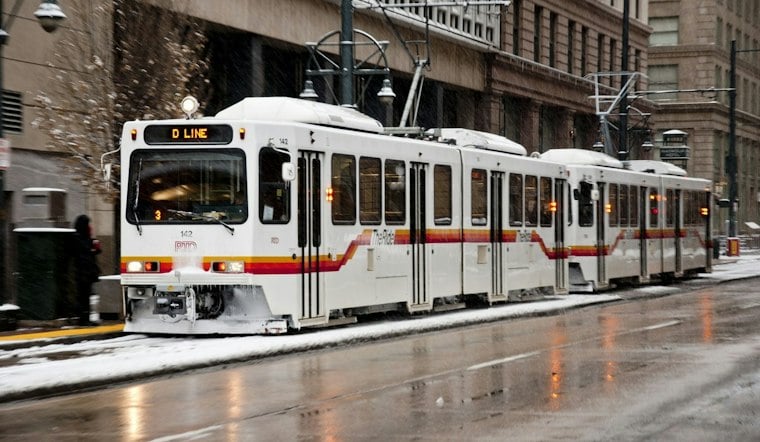
Riders caught without a valid fare on RTD trains and buses currently face a stark choice: a warning, or a $75 citation plus county fees. That gap could soon narrow, as the Regional Transportation District board prepares to vote on directing staff to study a full overhaul of how fare evasion gets enforced across the system.
The proposed changes would examine whether RTD could issue administrative fines instead of traffic citations, according to Denver7. Under the current system, a fare-evasion citation carries a $75 base fine on top of additional county fees, and that fine revenue flows to the county court system rather than back to RTD. The proposed first-violation ticket, by contrast, could cost as little as $10, with diversion options such as community service or reloading a rider's fare account offered instead of a straight fine.
Committee Vote Set to Advance the Proposal
RTD's operations, safety and security committee plans to discuss the recommended fare-enforcement action on Wednesday, per the same Denver7 report. Board member Chris Nicholson sponsored the study and said the changes would not be made immediately, framing the effort as giving staff tools and flexibility to bring fare evaders into compliance rather than an instant policy shift. Nicholson also noted that RTD does not receive citation revenue because it goes to county court systems, not the transit agency itself.
Fare evasion is currently enforced as a class B traffic infraction under Colorado law, and RTD's existing approach leans heavily on warnings rather than citations. The numbers back that up: RTD issued 12,789 fare warnings in 2025 compared with just 1,096 citations, out of nearly 5 million estimated rail fare checks conducted that year. RTD collects about $60 million annually in fare revenue systemwide, the article notes.
What the Overhaul Would Study
Beyond the fine structure itself, the proposed overhaul would also examine potential statutory changes and could replace the current education-first enforcement model with direct fines collected by RTD. The review would additionally cover RTD's code of conduct, technology needs, public engagement plans, and equity considerations, the report states.
Board member June Churchill raised concerns about the financial burden fare payment already places on many riders, proposing discount passes, the Live RTD Pass, or other assistance for those unable to afford fares. Churchill said she supports the broader goal of stricter fare enforcement but wants safeguards for riders facing financial difficulty built into any new system. She also suggested fare gates at high-ridership stations, which would require riders to tap their fare before entering, and said she preferred a transit ambassador model to check fares on light rail over armed personnel screening passengers.
Other Transit Systems Offer a Blueprint
RTD's board is not rushing into any changes, but other agencies that have already made the shift offer some data points. Systems that adopted fare-enforcement-first policies saw nearly a 10% increase in fare revenue within a few months, and the rate of people actually paying their tickets quadrupled after enforcement moved in-house, according to the same Denver7 reporting. San Diego's transit agency tightened fare enforcement in 2025 and saw fare revenue climb 9.3% compared with the same period a year earlier. A potential revenue increase for RTD under a similar model could amount to an additional $6 million.
Minneapolis Metro Transit shifted from police-issued misdemeanors to an administrative citation model in 2023, a change that came with a sharp increase in citations issued alongside a near-elimination of criminal citations. Transit systems in Portland, Salt Lake City, Seattle and San Francisco have each adopted their own combinations of administrative fines, escalating penalties for repeat violations, and diversion options, per the report.
Elsewhere, some transit agencies have already built out formal appeals processes for administrative citations. In San José, for instance, the city's Department of Finance allows residents to contest a citation by filing a Hearing Request Form and contacting the department directly — a model of the kind of dispute process RTD's staff review could eventually have to consider.
What Comes Next for RTD Riders
If the committee advances the recommendation Wednesday, it would move to the full RTD board for a vote on Sept. 22. RTD staff plans to report back to the board with a recommendation on improvements in February, and any resulting policy changes must be implemented by Jan. 1, 2028. For now, the $75 citation and the warning-heavy system remain in place while the board weighs its options.




