

























































Naomi Panaligan's 5-year-old son Xeon qualified for a $15,900 Texas Education Freedom Account award this year, but she had to turn it down. No private school she applied to would accept him, and one that considered it said it would only try if Xeon could use the bathroom independently. Xeon is deaf, has cochlear implants, is learning the basics of American Sign Language, and was recently diagnosed with autism.
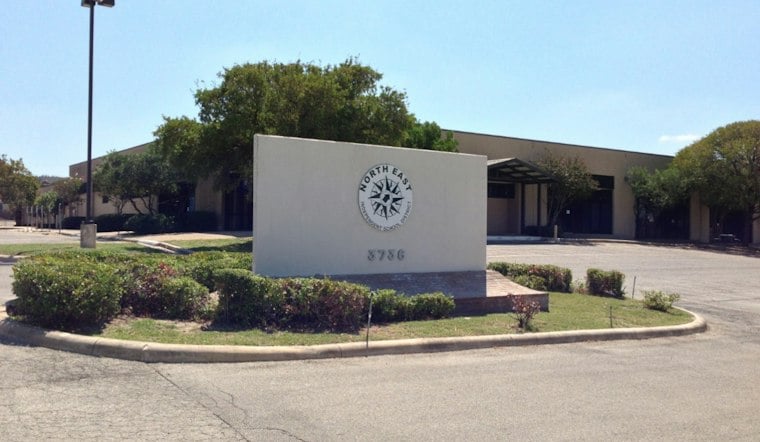
Panaligan's experience is far from isolated. As reported by the San Antonio Report, the Texas Education Freedom Accounts program is a $1 billion state-funded initiative that launched in 2026, offering families up to $30,000 for students with disabilities to cover private school tuition, textbooks, therapy and tutoring. The program prioritizes low-income students with documented disabilities, and most recipients statewide were expected to receive around $10,000. Panaligan told the outlet her son is currently receiving all the services he needs through Northside Independent School District, where he's enrolled, but she wanted to see if a private option might work better for him.
The gap between funding and access is showing up statewide. According to the Dallas Morning News, 29,400 applicants with disabilities were deemed eligible for TEFA awards, and at least 7,400 of them had already returned their vouchers by early September. By that point, a total of 27,500 students statewide had left their funds unused altogether. Families told the paper their children's needs couldn't be accommodated, that prospective schools were too far away or too expensive, or that schools simply never responded to their applications.
Why Private Schools Aren't Required to Match Public Services
Part of the problem is structural. Private schools accepting TEFA funds are not required to meet federal special education standards or develop individualized education plans the way public schools must, the same Dallas Morning News report notes. In the Dallas-Fort Worth area, tuition at private schools dedicated to serving students with special needs can top $40,000 a year, the outlet reported, well beyond the program's $30,000 maximum award.
The demand side of the equation is striking too. Nearly 25% of the roughly 85,000 TEFA recipients for the 2026-27 school year have a documented disability, per the San Antonio Report, compared with just 12% of the more than 248,000 eligible applicants overall. That's well above the share of students with disabilities in Texas public schools generally — more than 15% of the state's 5.5 million public school students received special education services during the 2024-25 school year, and in the San Antonio region specifically, including Bexar County and surrounding counties, that figure is nearly 17%.
Applying for TEFA Doesn't Speed Up an Evaluation
Families pursuing TEFA disability funding needed individualized education program forms from their local school districts, and that requirement triggered a surge in evaluation requests this year. Alamo Heights ISD received about 25 evaluation requests within five days during the application window, which ran from Feb. 4 to March 31, according to the San Antonio Report — a sharp jump from just one such request earlier in the school year.
But applying for TEFA does not speed up that process. Per guidance from Houston Independent School District, a family's decision to apply for TEFA does not expedite the special education evaluation process or change timelines set under federal law. Districts have 15 days to respond to a written evaluation request and 45 school days to complete a Full and Individual Evaluation once a parent consents. Houston ISD also notes that any parent can request an evaluation regardless of whether their child attends public school, private school or is homeschooled.
Some Local Schools Are Adding Capacity
A handful of San Antonio-area schools are trying to expand what they can offer. The Archdiocese of San Antonio launched a pipeline intervention center to support students with special needs and the schools serving the program's first priority group, the San Antonio Report found. The Christian School at Castle Hills added kindergarten seats and launched both an online K-12 program and a classical K-4 school in response to demand from TEFA recipients, and its SOAR program offers individual or small-group support, progress monitoring and curriculum accommodations — though eligible students must have a current Full and Individual Evaluation on file with the school, according to the Christian School at Castle Hills.
River City Christian School is a private Christian school in San Antonio serving kindergarten through 12th grade since 1995, per the San Antonio Report. The school says on its own site that it specializes in supporting diverse learners with personalized strategies, including students with dyslexia, dyscalculia, central auditory processing disorder and executive-function challenges, according to River City Christian School. Still, the campus is not fully wheelchair accessible — a limitation that illustrates how even schools actively building out special-needs programs can't accommodate every disability.
A second TEFA application round is expected to open in early 2027.


