

























































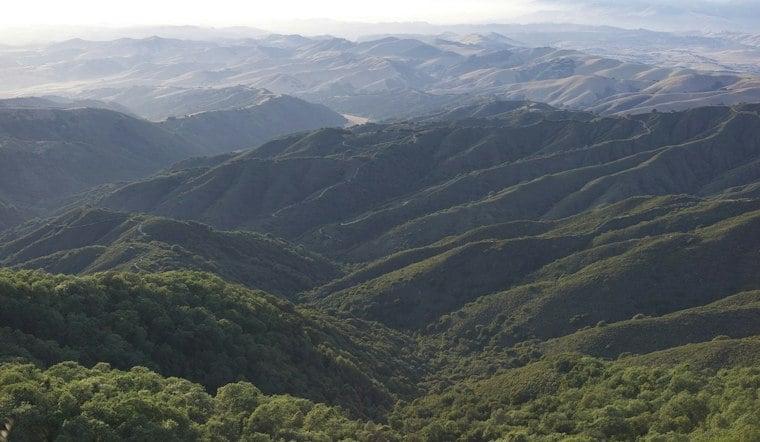
Gov. Gavin Newsom's administration has proposed stripping explorer John C. Fremont's name from a state park in San Benito County, citing his role in violence against Native American tribes in the 1840s. Fremont Peak State Park, perched about 45 miles south of San Jose near San Juan Bautista, could be renamed Tooyohtak State Park — an Ohlone word meaning place of the bumble bee.
California State Parks issued a notice giving the public 30 days to weigh in on the proposal, as reported by The Mercury News. The comment window runs through October 23, and residents can weigh in by emailing [email protected] or filling out an online survey, according to California State Parks. Feedback gathered during that period will be compiled before the proposal heads to the California State Parks and Recreation Commission, whose nine members are appointed by the governor.
A Tribal Request Rooted in a Bloody 1846 Episode
The Amah Mutsun Tribal Band first asked Newsom to rename the park back in 2019, per the Mercury News account. That same year, in June 2019, the governor signed Executive Order N-15-19, formally apologizing on behalf of California to Native American tribes for historical violence, mistreatment, neglect, exploitation and dispossession, and establishing the California Truth and Healing Council, according to the Office of Governor Gavin Newsom.
Central to the renaming push is Fremont's involvement in what became known as the Sacramento River Massacre, in which Fremont, Kit Carson and roughly 60 other Americans killed several hundred Wintu tribe members near Redding in 1846, per the Mercury News. Amah Mutsun leader Valentin Lopez, who wrote the original 2019 letter urging Newsom to act, said the effort seeks to correct history rather than change it, the outlet reported.
The Origin of the Fremont Name Faces New Scrutiny
Fremont Peak was named for the explorer because he raised the American flag there in 1846, but California State Parks noted in its 2026 proposal notice that modern historical research has raised uncertainty about whether the peak — historically known as Gabilán Peak — was actually the summit where that flag-raising occurred, according to California State Parks. The park was established in 1936 based on its presumed link to that event.
The episode traces back to March 1846, when Mexican Commandant-General José Castro ordered Fremont and his 60 armed surveyors to leave Alta California. Fremont responded by building a temporary log fort on Gabilán Peak before retreating under cover of darkness after four days, according to a historical account from SanBenito.com. The standoff heightened regional tensions shortly before the Mexican-American War broke out. Tooyohtak is a traditional Mutsun place-name for the Fremont Peak area, meaning place of the bumblebees.
A Complicated Legacy Beyond the Peak
Fremont's biography stretches well beyond the 1846 confrontation. Known as the Pathfinder, he led five expeditions across the West in the 1840s and 1850s, founded the California Republican Party, and became one of California's first two U.S. senators in 1850, according to the Mercury News. He went on to become the first Republican presidential nominee in 1856, losing that race to Democrat James Buchanan, and later served as a Union Army officer during the Civil War — until President Abraham Lincoln fired him in 1861 after Fremont issued an emancipation order in Missouri without approval, the outlet reported. He died in 1890. Today at least 18 towns and cities and four counties across the country still bear his name.
Fremont Peak itself sits at 3,173 feet and today offers several miles of trails, a campground and an observatory to visitors, per the Mercury News account. The park is home to the Fremont Peak Observatory, built in 1986 and run by a volunteer astronomical association, which features a 30-inch Challenger Newtonian telescope used for public stargazing programs, according to the Fremont Peak Observatory Association. The peak is also registered as California Historical Landmark No. 181 and has been mentioned in several of John Steinbeck's novels, according to the Mercury News.
Precedent, Pushback and What Comes Next
This would not be the first park renamed under the state's broader effort. California State Parks launched its Reexamining Our Past Initiative in 2020 to address discriminatory place names, according to research published in The Public Historian. In September 2021, the state park commission voted unanimously to rename Patrick's Point State Park in Humboldt County to Sue-meg State Park following a formal request from the Yurok Tribe — the first park renamed under the initiative and the direct precedent for the current proposal.
Not everyone is on board locally. Peter Hernandez opposed the proposed name change, telling the Mercury News that swapping the name would alter the community's identity. California State Parks official Amanda Blosser said new park materials would continue to mention Fremont while also including Native American history, according to the same report. State parks officials have already held two online meetings about the potential change and will present the proposal to the commission after the 30-day comment period closes, with a vote possible as soon as December 3.
The debate echoes other recent renaming fights, including the 2021 rebranding of Squaw Valley Ski Resort as Palisades Tahoe and San Francisco voters' 2022 recall of three school board members after they moved to strip names from school buildings, per the Mercury News. Fort Bragg's city council, meanwhile, decided against putting a name-change measure on the ballot in 2020. San Jose State political science professor Larry Gerston told the outlet that historical groups increasingly dismissed in the past are now being acknowledged. Beyond renamings, the state's initiative has involved consultation and proposed interpretive changes at Sutter's Fort State Historic Park in Sacramento, with no permanent changes or final decisions made, according to the Sierra Club.




