

























































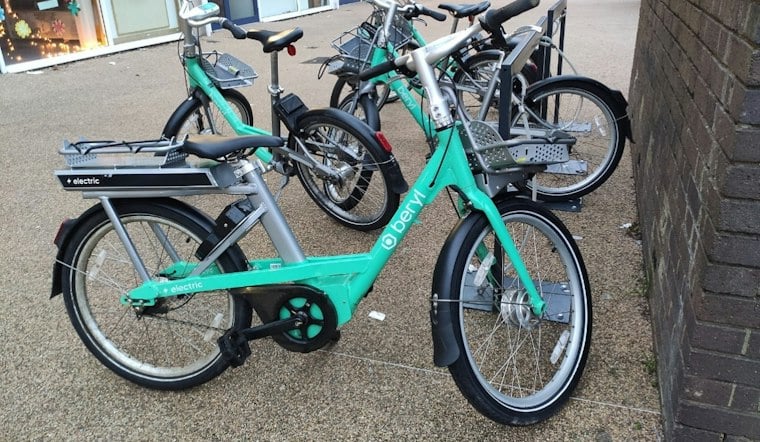
San Diego County supervisors are set to vote Tuesday morning on a proposal that would direct county lawyers to investigate and potentially sue manufacturers, distributors, retailers, and online platforms accused of selling illegal e-bikes to children. The push comes from Supervisor Terra Lawson-Remer, who says well-meaning families across the region have unknowingly bought their kids electric motorcycles marketed as ordinary bicycles.
Lawson-Remer has spent time hosting e-bike safety trainings and helmet giveaways for children and parents, and what she's seen at those events helped shape her proposal, according to 10News. She says some children have arrived at those safety classes with pedals attached to their bikes that have no chain connecting them to anything, meaning the pedals serve no real function at all.
The distinction matters because California law draws a hard line between bicycles and motor vehicles. Legal Class 1 and Class 2 e-bikes top out at 20 mph of assisted speed and require functional pedals, per the same 10News report, while Class 3 e-bikes can reach 28 mph but still require pedaling to activate the motor and don't come equipped with throttles. A bike without working pedals isn't a bicycle at all under that framework — it's a motorcycle, whether or not it has pedals bolted on for appearances.
The Legal Line Between Bike and Motorcycle
That legal boundary is also spelled out under California Vehicle Code Section 312.5, which defines compliant e-bikes as having fully operable pedals and motors capped at less than 750 watts, according to the California Department of Motor Vehicles. Vehicles that exceed that wattage or lack working pedals require a driver's license, registration, and insurance just like any other motor vehicle. Kevin Baross, who supports the board's proposal, argues parents shouldn't need to be vehicle code experts just to tell a bicycle from a motorcycle, and that companies shouldn't be allowed to mislead consumers and profit off that confusion, per 10News.
State officials have already signaled they see the same problem. In April 2026, California Attorney General Rob Bonta and several district attorneys issued a consumer alert warning that two-wheeled vehicles exceeding 28 mph, exceeding 750 watts, or lacking functional pedals are legally mopeds or motorcycles, according to the Office of the California Attorney General. The alert specifically cautioned that selling high-speed electric motorcycles as bicycles misleads parents and endangers the public.
A Statewide Surge in Youth Injuries
The scale of the problem has become harder to ignore. A peer-reviewed UC San Diego study published in Trauma Surgery & Acute Care Open found that reported e-bike injury collisions in California jumped from just 2 in 2018 to 1,506 in 2024, with riders aged 14 and under disproportionately involved, according to UC San Diego. Researchers who analyzed seven years of California Highway Patrol crash records also found that e-bike riders suffered more severe injuries than traditional cyclists.
Locally, San Diego County hospitals logged 865 emergency department visits and 186 hospitalizations tied to e-bike accidents in 2024, according to data reported by KPBS. Coastal North County alone accounted for 246 of those emergency room visits, including 56 involving children under age 12.
County Considers a Familiar Legal Strategy
Lawson-Remer's push toward litigation echoes a strategy she's used before. In March 2024, she initiated a lawsuit against a manufacturer accused of selling banned ghost gun building devices under a rebranded name, partnering with gun safety organizations to file the case in San Diego Superior Court.
Cities across the region have already used state authority to restrict youth e-bike use directly. Assembly Bill 2234, a pilot program running through January 1, 2029, allowed local authorities and unincorporated county areas to pass e-bike regulations, prompting cities including Carlsbad, Chula Vista, and San Diego to pass local age minimums. Carlsbad went further in February 2026, adopting rules that let police impound e-bikes ridden recklessly by minors and require both parent attendance and a completed safety course before the bike is released.
Statewide, more than 600 Californians signed a petition during the spring and sent it to the state attorney general and district attorneys, according to CalBike. Cycling advocates behind that push argue that deceptive marketing by manufacturers doesn't just endanger young riders — it also fuels public backlash against legal e-bike riders more broadly.
Whether San Diego County ultimately moves forward with litigation against manufacturers and retailers will depend on Tuesday's vote, which would direct county counsel to begin investigating potential legal action rather than filing suit immediately.




