

























































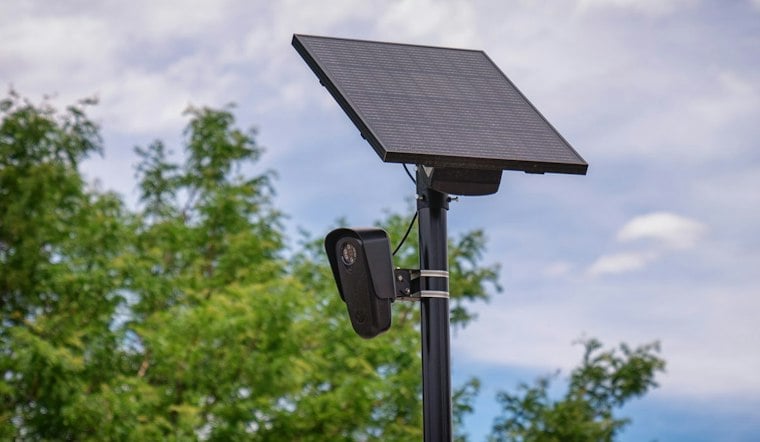
San Diego police have started publicly disclosing why officers run searches through the city's network of Flock license plate reader cameras, and the new data shows officers logged the vague catch-all reason “other” nearly 4,000 times so far this year. The disclosure marks a shift for the San Diego Police Department, which installed automated license plate readers at 500 locations across the city as part of its Smart Streetlight camera program.
According to Times of San Diego, SDPD began releasing the search reasons at the beginning of 2026 after implementing a reason field and required case numbers for every Flock query. Ashley Nicholes said the disclosure step is meant to improve transparency and accountability, according to the outlet's reporting. Since the start of the year, SDPD has recorded 114,692 automated license plate reader searches, per the same account.
The department's dataset contains 152 different search reasons, and the top three accounted for 43 percent of all ALPR searches from January through July 2026, the station's report notes. Stolen vehicle searches led the way at 19,210 queries, followed by arrest warrant checks at 17,141 and gunfire or weapons offense searches at 13,221, all according to SDPD data cited in the same report.
The 'Other' Category Raises Questions
Despite ranking as just the 11th most frequently used ALPR search category, “other” accounted for 3,962 searches from January through August 2026, according to the same SDPD data. San Diego police do not publicly release the detailed responses associated with those other searches, even though officers are required to provide a more detailed written response when they select that option, per the article's reporting.
That gap in the public record echoes concerns raised earlier by San Diego's civilian Privacy Advisory Board, which unanimously recommended in November 2025 that the City Council stop using the Flock ALPR system entirely, citing privacy and data-security concerns, according to CBS 8. The council's Public Safety Committee subsequently voted to keep the technology in place, a decision Hoodline covered in its report on the committee's vote.
Built-In Safeguards and Past Data-Sharing Fallout
SDPD mandates that ALPR technology be used strictly for legitimate law enforcement purposes, which include solving crimes and locating missing persons, and the department prohibits personal use of the technology altogether, per the outlet's reporting. The search system itself shuts down when queries involving categories such as immigration or reproductive care are entered, according to the same account.
SDPD has an official surveillance use policy governing ALPR data, which is subject to a 30-day retention cap.
California law adds another layer of restriction. Civil Code Section 1798.90.5, enacted under Senate Bill 34, explicitly prohibits California state and local law enforcement agencies from selling, sharing, or transferring ALPR data to federal or out-of-state agencies, according to the California Department of Justice. Attorney General Rob Bonta filed a lawsuit on October 3, 2025, against the City of El Cajon and its police department, alleging they illegally shared ALPR data with numerous out-of-state agencies in violation of that law.
Legal Exposure and Regional Scrutiny
The stakes for compliance failures have grown sharper. A February 2026 California appellate court decision, *Bartholomew v. Parking Concepts, Inc.*, found statutory harm from collecting and using ALPR information without the required privacy policy, according to Flock Safety. San Diego's own TRUST Ordinance compliance work served as a model for improvements across Flock Safety's broader platform, including a required event or case number feature now built into the system, per the Times of San Diego report.
The San Diego City Council amended the Transparent and Responsible Use of Surveillance Technology Ordinance, including provisions addressing exemptions, according to CivIQ. That legislative work followed years of friction between city leaders and privacy advocates over how much oversight the camera network truly receives.
Public Pushback and Real-World Impact
Opposition to Flock surveillance tools became an international story, according to the Los Angeles Times.
Flock surveillance tools have faced increased controversy over mass surveillance nationally, with concerns including alleged misuse by officers, such as stalking romantic partners, according to the Times of San Diego article. Two San Diego men said officers erroneously used ALPRs to link them to an attempted carjacking even though they were miles away at the time, according to the same report.
Department metrics released in December 2025 showed ALPR cameras led to 187 arrests and citations between October 2024 and August 2025, per CBS 8's reporting. SDPD and city leadership continue to point to those figures as evidence of the system's value, even as civilian oversight advisors and community groups keep pressing for tighter limits on how the cameras are used and who can see the results.





