

























































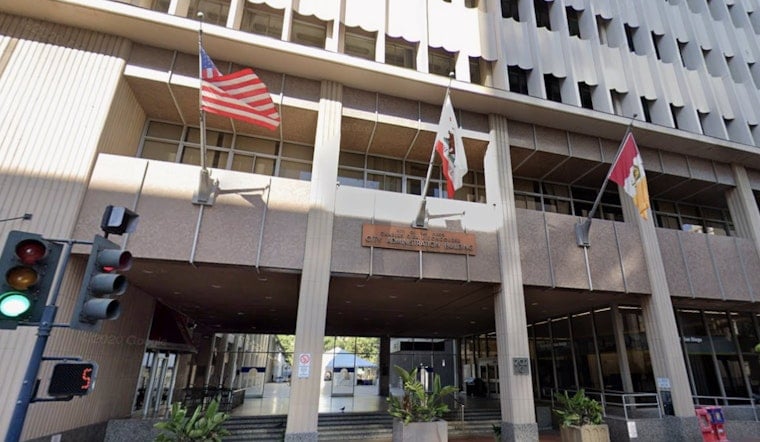
San Diego's City Council voted to repeal a decades-old section of the municipal code that restricted bathhouses based on assumptions about HIV transmission, striking language that Council President Joe LaCava said does not reflect who the city is today. The section, first established in April 1988 and last updated in 1991, had no operational or practical use and had not been enforced by either the San Diego Police Department or the city's Development Services Department for years.
LaCava told the council a staff member found the code language and brought it to his attention, according to NBC 7 San Diego. He said he does not support the code language, describing it as reflecting an outdated and offensive perspective, and called the repeal a smart signal of how far society has come. The repealed section, part of San Diego Municipal Code Chapter 4 Article 2 Division 4, restricted bathhouses that the code said encourage, facilitate and knowingly allow patrons to engage in sexual practices posing a significant HIV-transmission risk.
Rules Born From a Crisis
The restrictions trace back to the height of the HIV/AIDS epidemic, when the outbreak prompted cities across the country to impose sweeping rules on adult bathhouses. HIV/AIDS diagnoses in San Diego exceeded 700 in 1988 alone, per the same NBC 7 account, and roughly half of those diagnosed that year eventually died of the disease. San Diego has recorded at least 10,000 resident deaths from HIV/AIDS complications since the virus first arrived in the United States in the early 1970s.
Under the code's earlier iteration, San Diego Municipal Code Section 42.0408 required bathhouses to maintain clean laundered sheets and towels, clean steam rooms and bathtubs daily, and run mandatory educational programs for patrons coordinated with the San Diego County Regional Task Force on AIDS, according to the City of San Diego. Today, the San Diego County Health & Human Services Agency oversees all regulations required for bathhouse businesses, and the repeal carries no permitting or enforcement impacts.
Owners Fought the Original Rules in Court
The 1988 ordinance did not go unchallenged. Four local bathhouse owners sued the city that May, contesting the constitutionality of the original restrictions, a legal dispute that ultimately ended in a settlement leading to the 1991 code update, per city council records. The Historical Resources Board has since recognized that bathhouses played more than a commercial role in San Diego during those years. In March 2022, the board designated the former Vulcan Steam Room and Sauna at 805 W. Cedar Street in Little Italy as a historic resource, noting it operated from 1974 to 2013 as one of seven bathhouses in the city and served as a key support and informational center during the HIV/AIDS epidemic, according to Save Our Heritage Organisation. Bathhouses have provided a safe haven for LGBTQIA+ community members to gather, offering a place to meet when it was not safe for LGBTQIA+ people to gather publicly elsewhere.
Personal Stakes at the Council Podium
The vote carried personal weight for several council members. Councilman Raul Campillo said his uncle Francisco died of HIV/AIDS in 1992, a detail he shared during the discussion, per NBC 7. Openly gay Councilmember Stephen Whitburn publicly thanked LaCava for bringing the repeal forward and praised the presence of strong LGBTQ+ allies on the council, as reported by CBS 8 from yesterday's meeting.
Oxean “Eddie” Rey pushed back on the stereotype embedded in the old code, saying bathhouses were comparable to luxury spas rather than a shady, dangerous stereotype. Rey also said gay and bisexual men were dying and being blamed for dying, a framing that speaks to how the original ordinance characterized bathhouses as allowing and fostering risky sexual encounters rather than as community spaces.
Part of a Wider Rollback
San Diego's action fits a pattern playing out in cities well beyond Southern California. San Francisco began dismantling its own 1984 AIDS-era bathhouse ban in July 2020 through legislation from Supervisor Rafael Mandelman, later updating zoning rules in 2022 and repealing police permit oversight and patron registry requirements in November 2024, according to SFist. Minneapolis Mayor Jacob Frey signed legislation in June 2024 ending that city's 38-year-old adult bathhouse ban, and New York state lawmakers introduced the Albany bathhouse ban repeal effort in August to undo that state's 1985 restrictions.
Public health strategy has shifted dramatically since the 1980s. California decriminalized non-intentional HIV exposure through Senate Bill 239 in 2017 and enacted further HIV law reforms that took effect in January 2022, according to background compiled by Wikipedia. San Diego County still recorded roughly 400 new HIV infections in 2022, an incidence rate of 14.4 per 100,000 residents compared with California's statewide rate of 12.5 per 100,000, per CDC data reported in 2024. But with PrEP, antiretroviral therapy, and modern education now widely available, health authorities increasingly view bathhouses as potential partners in outreach and prevention rather than as public health nuisances to be regulated out of existence.





