

























































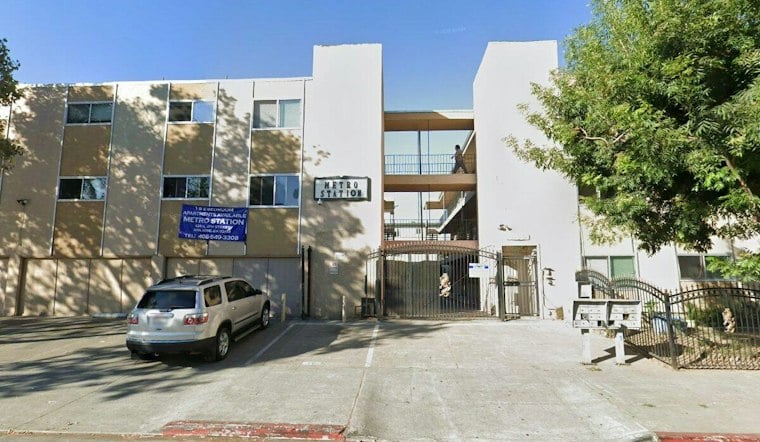
A long-vacant stretch of South Fourth Street near San Jose State University is back in play, with a developer now pitching 372 apartments where an earlier 210-unit project never got off the ground. The new proposal calls for 368 affordable below-market-rate apartments and four market-rate manager residences on the half-acre site at 439 and 451 South Fourth Street, between East San Salvador and East William streets.
American Housing Co., a subsidiary of oWow, is behind the revived plan, according to The Mercury News. The firm estimates the project's total cost at $159.6 million, broken down into $94.8 million in construction costs and $6.4 million in land and acquisition expenses. San Jose city planner John Tu said Jeremy Harris of oWow reached out to the city about building on the site, and the California Debt Limit Allocation Committee issued a staff report on the project dated September 1, 2026.
A Site That's Waited Years for Housing
The South Fourth Street parcel isn't new to housing proposals. A prior plan for the same address called for 210 units back in 2024, but that project was never built, leaving the lot idle near one of downtown San Jose's busiest student corridors. The report notes the site was previously floated as a 25-story housing tower, a scale that hasn't carried over into the current 372-unit pitch.
It's a familiar pattern across the county. Santa Clara County has roughly 600 affordable apartments and homes stuck in its development pipeline as projects struggle to secure additional funding, and some may not open until 2030, per San José Spotlight. Seven county development projects are currently seeking more funding, the outlet reports.
San Jose's Own Funding Bottleneck
San Jose itself has struggled to move projects off paper. The city had 13 affordable-housing projects waitlisted for city funding as of mid-2024, representing more than 1,500 homes kept off the market, and housing officials recommended only four of 17 submitted projects receive a combined $50 million in city funding, according to the same outlet's earlier reporting. A proposed shift of $25 million from Measure E affordable-housing funds toward temporary shelter was flagged at the time as a potential threat to projects otherwise ready to build.
The financing path for projects like the South Fourth Street tower often runs through the state. Developers seeking the 4 percent tax credit apply to the California Debt Limit Allocation Committee for private-activity bonds, which the tax-credit program then pairs with the credits, per the California Legislative Analyst's Office.
oWow's Oakland Track Record — and Its Risks
oWow's ambitions extend well beyond San Jose. The developer has floated an 11-story, 284-unit affordable housing tower at 1523 Harrison Street in downtown Oakland, with an estimated 281 affordable units and three manager's units, according to Silicon Valley News. That project was pegged at a total cost of $86.1 million and includes a mix of 63 studios, 203 one-bedroom units and 18 two-bedroom units.
oWow and San Diego-based Community HousingWorks later formed a joint venture on that Harrison Street project, which grew to 284 units — 61 for very-low-income households and 220 for low-income households — with construction costs estimated at about $245 per square foot and completion expected by December 2027, San Francisco YIMBY reported.
But oWow's balance sheet has also taken a hit. An affiliate of the company lost ownership of a 102-unit apartment complex it developed at 1919 Market Street in downtown Oakland when the property was foreclosed on in January. An affiliate of Parkview Financial bought the building for $37.5 million after unpaid debt on the site climbed to $58.5 million, according to The Real Deal. The outlet notes the Bay Area multifamily market broadly has seen a string of loan defaults, foreclosures and sales at steep discounts — the same rocky financing terrain the San Jose proposal will need to navigate to become more than paper plans.




