

























































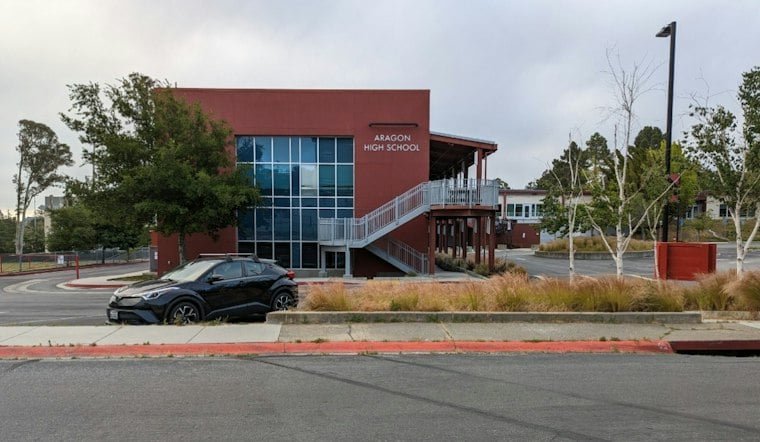
San Mateo's City Council approved lower speed limits on nine roads, removed 15 previously proposed speed increases and left 99 other limits unchanged. The changes followed a review of speed limits across the city and came amid public concern about pedestrian safety after a student was struck near Aragon High School.
A Collision That Changed The Conversation
A Sept. 14 collision near Aragon High School brought added attention to pedestrian safety. The San Mateo Daily Journal reported that student London Walker was struck by a car driven by an unlicensed, distracted driver and taken to Stanford's trauma center. The newspaper described the student's injuries as minor abrasions.
More than 200 letters were sent to the City Council ahead of its meeting, according to the newspaper. Parents and other residents used the public forum to request safety measures near schools, including protected turns, crossing guards and speed bumps.
Council Response And Nine Roads Getting Slower
Councilmember Lisa Diaz Nash told the meeting there is no way to adequately say she is sorry and that the collision should never have happened, according to the same report. The council's modified ordinance ultimately decreased speed limits on nine roads while omitting 15 increases that had been recommended elsewhere in the city.
Among the changes reported by the newspaper, North Delaware Street between Peninsula Avenue and East Poplar Avenue and South Delaware Street between Fifth Avenue and Concar Drive were slated to increase from 25 mph to 30 mph, but discussion of both changes was tabled for a future study session. Coyote Point Drive is dropping from 35 mph to 25 mph, while East Fourth Avenue, Second Avenue and North B Street are each falling from 25 mph to 20 mph. The report also said the council decided that Coyote Point Drive and North Bayshore Boulevard would carry lower limits going forward.
Survey Data Behind The Numbers
The changes followed a recent engineering and traffic survey. The newspaper reported that the Engineering and Traffic Summary recommended speed increases on 15 roads and identified 123 roads still needing evaluation. It also reported that under California rules, survey results are valid for seven years, with an option to extend to 14 years.
The newspaper also reported that a city official said the speed data could guide future enforcement and infrastructure decisions, while staff considered options that could be implemented relatively quickly.
Existing pedestrian and student-travel safety efforts
The speed-limit changes are part of a broader city safety context. San Mateo adopted a Citywide Pedestrian Master Plan in April 2012 that analyzed collision data and developed recommendations to improve pedestrian access, according to the City of San Mateo. The city's Safe Routes to School program works with local schools, school districts, police, parents and community groups on student travel safety, according to the City of San Mateo.
What Comes Next For Drivers And Pedestrians
San Mateo will install new speed-limit signs reflecting the changes, though that rollout may take up to six months. The city is also evaluating near-term safety enhancements, including roadway markings, centerline delineation and signage, and has launched an accelerated review of the Alameda de las Pulgas and Aragon Boulevard intersection to evaluate such enhancements.




