

























































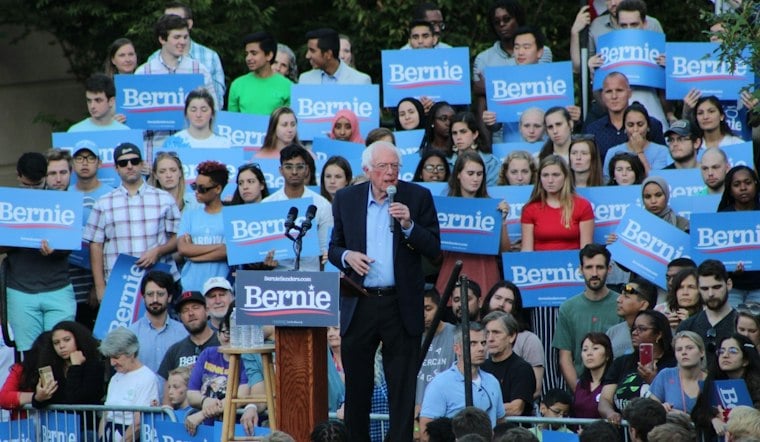
Sen. Bernie Sanders is once again pushing to shrink the American workweek, and this time he's not alone. On September 8, 2026, the Vermont independent and Rep. Mark Takano (D-Calif.) announced the reintroduction of the Thirty-Two Hour Workweek Act, a bill that would amend the Fair Labor Standards Act to cut the federal standard workweek from 40 hours down to 32 over a four-year phase-in — without touching employee pay or benefits.
The legislation would update a federal labor standard that has not changed since 1940, according to the office of Rep. Mark Takano. FOX 8 Cleveland's WJW, which first aired the update on the legislation, reported that anchor FOX 8 News Todd Meany shared details on the newest push to trim eight hours off the standard work week. Under the bill, employers would have to pay non-exempt workers overtime at 1.5 times their regular rate for anything beyond 32 hours in a week or eight hours in a day, with double pay kicking in for any shift stretching past 12 hours, as reported by Fox Business.
An 85-Year-Old Standard Under Fire
The current 40-hour benchmark traces back to the Fair Labor Standards Act of 1938, signed by President Franklin D. Roosevelt, which initially capped workweeks at 44 hours before dropping to 40 in 1940, per Ballotpedia. Roosevelt's administration had promoted shorter hours partly as a work-sharing tool meant to spread jobs around during the Great Depression. Sanders and Takano frame their bill as a long-overdue update to that Depression-era law, arguing that the productivity gains American workers have delivered since then justify giving some of that time back.
Takano's office points to a striking gap: American worker productivity climbed 93.2% between 1979 and 2026, while hourly compensation for average workers rose just 33.7% over that same stretch. Proponents say that disconnect shows corporate profits have far outpaced what workers have taken home, and they argue artificial intelligence is only widening the gap. A November 2023 study from think tank Autonomy, reported by The Guardian, found that productivity gains from AI and large language models could let 35 million U.S. workers — about 28% of the national workforce — shift to a 32-hour week within a decade without losing pay or output.
What the UK Pilot Found
Backers of the bill lean heavily on results from the world's largest four-day workweek trial, a six-month pilot in the United Kingdom released in February 2023 by 4 Day Week Global. That trial found 71% of participating workers reported less burnout, and resignation rates among participating companies dropped by 57%, according to the Autonomy Institute. Businesses in that same pilot reported an average revenue increase of 35% compared with similar periods the year before, and 92% of the trial companies chose to keep or extend the 32-hour schedule permanently, per Boston College researchers who evaluated the results alongside teams from Cambridge and Oxford.
Public appetite for shorter schedules appears to back up the political push. A 2023 Bankrate survey of 2,367 U.S. adults found 81% of full-time American workers favor a four-day workweek model, according to Founder Reports, with interest running especially high among parents managing child care costs and younger workers. The United States would not be breaking new ground internationally either — France established a statutory 35-hour workweek back in 2000, and Belgium passed legislation in November 2022 giving employees the legal right to request a four-day week without a pay cut, per India Today.
Republicans Warn of a Hidden Wage Mandate
Not everyone in Washington is on board. During a March 2024 Senate HELP Committee hearing, Ranking Member Sen. Bill Cassidy (R-La.) forcefully opposed a mandated 32-hour workweek, arguing that requiring 40-hour pay for 32 hours of work amounts to a 25% hourly wage increase that would devastate small businesses running on thin margins and fuel inflation. Cassidy and other opponents maintain that voluntary adoption by companies under existing law is preferable to a government mandate, according to the Senate Committee on Health, Education, Labor and Pensions.
That tension sits at the heart of the debate: whether service, manufacturing, healthcare, and small-business sectors — where someone has to physically be there and automation gains come slower — could absorb the added overtime costs without raising prices or cutting full-time jobs. Sanders currently sits on the Senate HELP Committee, a role Hoodline has previously covered in the context of his oversight of warehouse workplace safety standards.
Whether the bill advances further this time remains to be seen, but its reintroduction puts the 32-hour question back on Congress's table just as AI's effect on the American workday becomes harder to ignore. For now, the fight lines look much the same as they did in 2024: progressive lawmakers pointing to productivity data and overseas pilots, and business-aligned Republicans warning that mandated shorter hours could hit paychecks and payrolls the mandate is meant to protect.



