

























































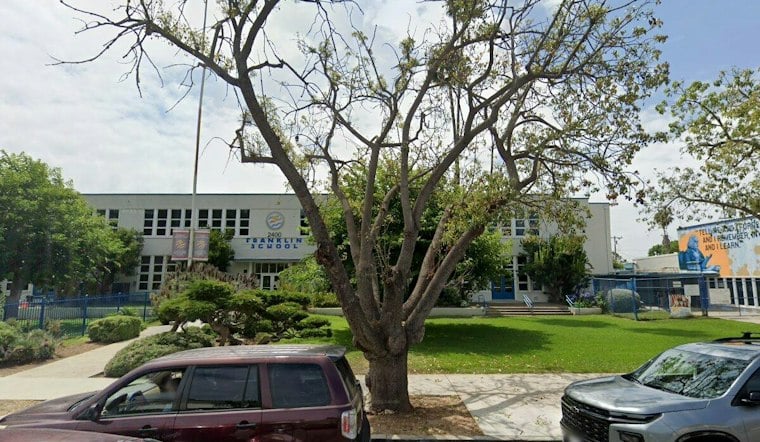
Many people signed up to speak at an SMMUSD board meeting earlier this month, with parents describing young children watching movies instead of going to recess, school-issued Chromebooks opening straight onto YouTube, and little clarity about which apps students are even using in class.
Parents Say the Real Problem Has Moved to District-Issued Devices
The board took up revisions to the district's mobile device policy at its meeting on September 3, according to the Santa Monica Daily Press. At a September 17 meeting, parents urged the board to rein in classroom screen time, and so many signed up to speak that the board voted to consolidate public comment so everyone could be heard in sequence, the outlet reported. While the district's phone policy restricts student phone use during the school day, speaker after speaker made clear their concerns had shifted to the tablets and laptops SMMUSD already puts in students' hands.
Laura Gersinhorn told the board that screen use is the most risky and potentially consequential classroom tool, yet receives the least specific communication to families, per the same account. She called for a districtwide instructional technology policy, arguing that classroom technology use is currently inconsistent across schools, grade levels, and even individual teachers.
Sylvia Ewald said screens are replacing physical activity for her kids, describing how her children watched Angry Birds 2 at school. One daughter, she said, preferred school over aftercare because she could watch videos during transitional kindergarten. Ewald also told the board that students rush through assignments just to earn tablet time for learning games, the Daily Press reported.
YouTube Consent Form Draws Sharp Criticism
Molly Reid focused her comments on the district's YouTube consent form for school-issued Chromebooks, saying parents who selected allow believed YouTube access was required for classwork. Under the district's deny setting, students can still watch teacher-assigned videos embedded through Google Classroom slides, while the allow setting opens non-instructional YouTube subject to district filters, per the Daily Press account. Reid asked the district to explain the two options clearly to every family and pressed the board to reset all accounts to deny and eliminate the allow option altogether.
Todd Grabarski told the board that Schools Beyond Screens — a coalition founded by LAUSD parents and teachers with a local chapter in Santa Monica, according to K-12 Dive — drafted a proposed technology use policy at Superintendent Antonio M. Shelton's request. That proposal would limit devices to specific instructional uses while including exceptions for students with Individualized Education Programs or Section 504 plans, the Daily Press reported. Grabarski also criticized district spending on unproven educational technology products without evidence of efficacy, and argued restricting YouTube would not stop students from accessing curriculum-related videos.
Benjamin Goldman described a January tour of Roosevelt Elementary where first graders used tablets and older students viewed Google searches topped by AI-generated summaries, per the same account. Christina Stewart questioned the use of school-issued devices to hijack students' attention, while Viola Maya asked about the cost of replacing broken Chromebooks, noting the district spends millions of dollars on devices that are repeatedly broken and replaced.
Not Everyone Wants the Clock Turned Back
Not every parent who spoke wanted more restrictions. Evan McGee said his son has been less distracted since phones were placed in Yondr pouches and that the change made a significant difference in the classroom, according to the Daily Press. McGee argued that intentionality, not blanket bans, matters most when it comes to classroom technology.
Board Vice President Laurie Lieberman said the board had heard the public comments, but open-session rules bar a formal response to items not on the agenda, the outlet reported. The comments arrived as SMMUSD works to meet California's Phone-Free Schools Act, or Assembly Bill 3216, which Governor Gavin Newsom signed into law on September 23, 2024, requiring every California school district to adopt a policy limiting or prohibiting student smartphone use during school hours by July 1, 2026. Under the law, exceptions cover emergencies, medical needs, or uses required by a student's IEP; device use is also allowed when approved by a teacher, administrator, or doctor, according to employment law firm Liebert Cassidy Whitmore.
What the Updated Phone Policy Actually Says
Frank Dussan presented the phone policy revisions at the September 3 meeting, per the Daily Press. The updated policy acknowledges that phones can have both beneficial and harmful effects on student learning and well-being, and it cross-references district discipline policies for students who misuse devices at school. Olympic High School was added to the district's away for the day approach, which requires students to turn off and stow phones for the entire school day, while Santa Monica and Malibu high schools continue to follow a bell-to-bell rule storing phones during each class period.
Middle schoolers at John Adams Middle School, Lincoln Middle School, and Malibu Middle School are issued magnetically lockable Yondr pouches to secure personal devices during the day, according to Santa Monica-Malibu Unified School District. State law requires the board to review the policy at least every five years, and the district's phone policy was last revised in November 2024. The board ultimately approved the consent calendar including the phone policy item, with Maria Leon-Vazquez moving approval and one board member abstaining procedurally because of absences at prior meetings, the Daily Press reported.
A Digital Learning Program a Decade in the Making
Parents are now scrutinizing SMMUSD's use of digital devices in classrooms.
Neighboring Los Angeles Unified School District adopted classroom screen-time limits in June 2026, eliminating digital devices in TK through 1st grade and setting limits for older grades. The policy also blocks YouTube access without teacher approval for the 2026–2027 school year, as reported by LAist. The policy offers one regional example of classroom screen limits.
National survey data suggests the concerns raised in Santa Monica are far from isolated. A Pew Research Center survey published in June 2024 found 72% of U.S. high school teachers and 33% of middle school teachers described student cellphone distraction as a major classroom problem. Common Sense Media separately reported a median of 43 minutes of phone use during school hours, while a follow-up Pew survey in July 2026 found public support for bell-to-bell school cellphone bans had climbed to 48%, up from 36% in 2024, while 77% of adults favored in-class phone bans.
The screen-time debate lands as SMMUSD navigates a broader restructuring. The district reported roughly $480 million in active and recently completed construction projects, and in December 2025 the SMMUSD Board of Education and the Malibu City Council unanimously approved an agreement to split the district into two independent school districts, with an independent Malibu Unified School District expected no earlier than 2028. How districtwide technology rules would carry over across that eventual split remains an open question for a board already balancing state mandates with parents demanding tighter guardrails on the devices already in their kids' backpacks.


