

























































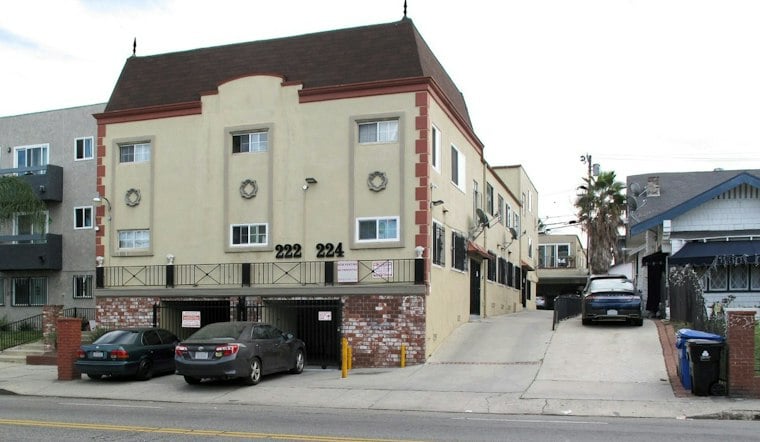
Los Angeles has put new money behind affordable housing, including work to preserve existing apartments. The City Council approved a $466.6-million funding round in September, with applications open through Dec. 4, the Los Angeles Times reported. Within it, the city’s Small NOAH program is slated to make $102 million available over four years for smaller, older apartment buildings.
The round puts a practical question on the table: how will public support help preserve older rentals, and what will ensure that affordability lasts after repairs or other work? The funding figures and application deadline establish the scale and timing of the opportunity, but the reporting cited here does not specify the commitments recipients will have to make or how the results will be measured.
Preservation can take more than one form
Los Angeles has used public acquisition as well as funding programs to protect existing apartments. The USC Lusk Center for Real Estate reported that the Housing Authority of the City of Los Angeles acquired more than 40 properties containing about 2,750 apartments over four years. Acquisition and preservation funding are different approaches: one can put properties under public ownership, while the other supports preservation work.
Boston offers a separate example of acquisition tied to continuing affordability. In an Oct. 24, 2024 announcement, the City of Boston said its Acquisition Opportunity Program had helped preserve 1,000 homes through purchases by mission-driven developers, keeping current tenants in place and guaranteeing affordability in perpetuity. That is a different model from Los Angeles’ announced repair and preservation funding; the Boston announcement does not establish what outcomes Los Angeles’ round will produce.
Program delivery is another consideration. California launched a foreclosure-intervention housing preservation program in 2021, planning $500 million in loans and grants to help eligible organizations acquire distressed buildings with up to 25 units. But the state had distributed no money after three years, and lawmakers scrapped the program in June 2024, U.S. News & World Report reported. The state initiative was not the same program or funding source as Los Angeles’ round, but it illustrates why announced dollars and delivered preservation are not interchangeable.
A large, aging rental base
The potential reach of preservation is significant. A USC Lusk Center report found that buildings constructed before 2000 contain about 75% of the 1.08 million multifamily rental units in county properties with at least five apartments. It identifies Core Naturally Occurring Affordable Housing, or NOAH, as 43% of the county’s multifamily stock. These are unsubsidized apartments considered relatively affordable compared with newer market-rate housing.
That relative affordability does not mean rents are easy to manage: the USC report found that renters in the county’s most affordable NOAH properties spend about 35% of their income on housing, while 57% of county renters overall are rent burdened. Those countywide figures describe the broader housing context; they do not establish how many apartments will qualify for or receive money through the city’s program.
Rent regulation is another, distinct tool. The Los Angeles County Department of Consumer and Business Affairs says the County’s Rent Stabilization and Tenant Protections Ordinance limits annual increases for rent-stabilized units and provides just-cause eviction protections in unincorporated Los Angeles County. Those rules do not describe the city’s funding round, and they address tenant protections rather than the cost of repairing a building.
The city’s funding round therefore raises questions beyond how much money is available: which older properties and applicants can access it, what affordability conditions will apply, and whether funded work will be completed. The county’s housing data show the scale of the existing stock at stake; the eventual awards and their terms will determine what this particular round preserves.


