

























































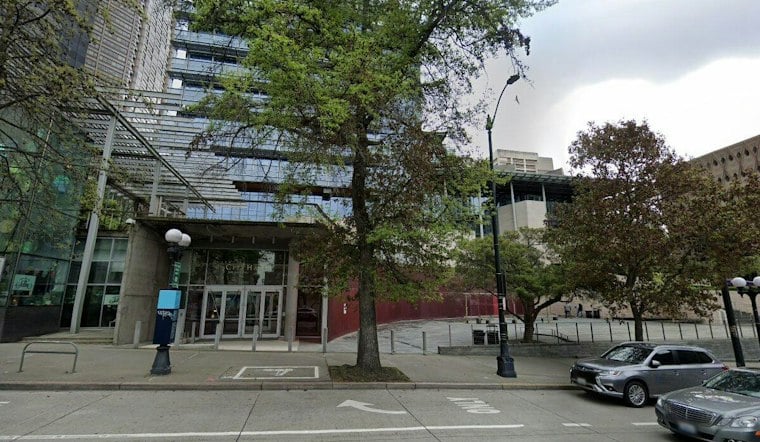
A federal appeals court has ruled that Seattle must face part of a lawsuit from a former city employee who says anti-racism trainings and workplace comments created a hostile environment for white workers. The Ninth U.S. Circuit Court of Appeals revived Joshua Diemert's hostile-work-environment claim while leaving most of the rest of his 2022 lawsuit dismissed.
Diemert worked at Seattle's Human Services Department, where he reviewed applications for a utility discount program, according to court records. He began working for the city in 2013 and resigned in September 2021, then sued Seattle and then-Mayor Bruce Harrell in November 2022, alleging race discrimination, retaliation and a hostile work environment under federal and state law, as detailed in the Reuters report on the ruling. He also accused the city of violating his equal-protection rights under the 14th Amendment.
At the center of Diemert's claims is Seattle's Race and Social Justice Initiative, a program the city launched in 2004 that, according to VitalLaw, aims to undo institutionalized racism. Diemert claimed the initiative classified employees by race and, combined with a series of workplace incidents, created a racially hostile environment specifically for white employees.
What Diemert Says Happened at Work
Diemert attended race-focused meetings and trainings tied to the initiative, which he claims included discussions of white supremacy and white privilege. He alleged he was called racist during workplace meetings, called a colonist with white privilege, and told it was impossible to be racist toward white people, per the Reuters account. He also said he was criticized for defending bans on critical race theory.
According to the same report, Diemert claimed he was discouraged from applying for a promotion and was told that retaining a leadership role meant he was preventing a person of color from being promoted. VitalLaw's account of the underlying allegations includes claims that RSJI trainers told employees that white people are cannibals, that racism is in white people's DNA, and that white people are like the devil. Diemert also said he was told white people were inherently racist and were the devil, per Reuters.
The Appeals Court's Ruling
A unanimous three-judge panel — Chief Judge Mary H. Murguia and Circuit Judges William A. Fletcher and Lucy H. Koh — found that Diemert raised a genuine issue of material fact as to whether he was subjected to a racially hostile work environment, according to the panel's opinion. The court found the alleged incidents, spanning roughly six years, were sufficiently numerous, frequent and severe to create a triable issue, per VitalLaw's account of the ruling.
Murguia wrote that the alleged evidence would show Diemert faced racially offensive statements and generalizations unrelated to legitimate training efforts, according to Reuters. Mynorthwest reported that the appeals court treated incidents from years earlier as potentially relevant to showing a continuing trend of hostility.
Even so, the panel affirmed summary judgment for Seattle on Diemert's constructive-discharge claim and agreed he failed to state claims for retaliation. The court also upheld summary judgment on his equal-protection claim, but on narrower grounds — it found Diemert lacked Article III standing to bring that claim, rather than ruling on its merits.
How the Case Got Here
The case, formally Diemert v. City of Seattle, previously went in the city's favor at the district court level. U.S. District Judge Jamal Whitehead dismissed Diemert's entire lawsuit in 2025, finding the alleged conduct was not severe or pervasive enough to support a hostile-work-environment claim. The district court ruled for Seattle on February 10, 2025, according to the Advancing DEI Initiative, which noted the court held that DEI programs addressing racial inequalities are not necessarily discriminatory against white employees. Diemert appealed shortly after.
Seattle has denied wrongdoing and defended its social justice program throughout the litigation, according to Reuters. The city has argued that the program applies equally to all employees regardless of race, that Diemert never suffered an adverse employment action, and that he merely objected to the content of workplace trainings. The Seattle City Attorney's Office said it is reviewing the decision and discussing potential next steps for the city, per the same report.
Attorneys React to the Ruling
Diemert was represented by attorneys from the Pacific Legal Foundation. Attorney Laura D'Agostino said the decision sends a clear message that the law protects all employees from racially hostile work environments, and that the foundation looks forward to returning to the district court so Diemert can have his day in court, according to Reuters.
The case now heads back to the district court for further proceedings on the surviving hostile-work-environment claim. The Ninth Circuit, based in San Francisco, did not address how the case should ultimately be resolved, leaving that question for further litigation.




