

























































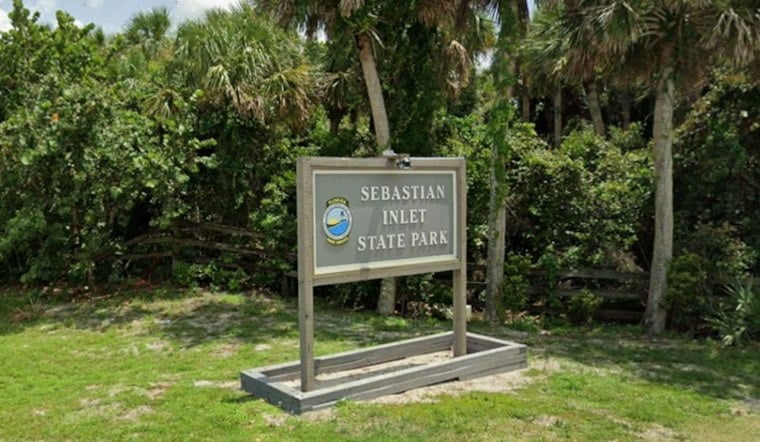
A new stretch of shoreline at Coconut Point in Sebastian Inlet State Park got a green makeover last week, as crews finished installing a “living shoreline” along about 200 feet of eroded bank facing the Indian River Lagoon. The pilot project pairs 22 honeycomb-shaped reef arch structures with roughly 90 mangroves, swapping out the usual hard seawall approach for something meant to work with the water instead of against it.
The installation was completed Sept. 10, according to Florida Today, republished by the Miami Herald. The pilot is intended to reduce erosion and improve habitat, while the prefabricated reef units provide a nature-based alternative to a conventional seawall.
How the Project Grew From 100 Feet to 200
The scope expanded during planning and construction. Sebastian Inlet District documents initially described 15 reef arches and 45 red mangroves along about 100 feet of shoreline. The completed installation covered about 200 feet and included 22 reef structures and roughly 90 mangroves, according to the district project descriptions cited in the reporting.
Project partners include the Sebastian Inlet District, Sebastian Inlet State Park, the Ocean Research and Conservation Association and Reef Arches LLC, according to a Reuters Connect item describing the buildout. ORCA funded seven reef arches and about half of the mangroves, and is recruiting volunteer citizen scientists to monitor the site for at least three years.
Why Erosion Has Become a Lagoon-Wide Problem
The push for softer, nature-based defenses reflects a broader trend along the Indian River Lagoon. Natalie Stephens said natural shorelines in the lagoon are experiencing accelerated erosion, which leads to both habitat loss and deteriorating water quality, the Herald's report states. Stephens also said ORCA uses citizen scientists to assess how conditions change over time and how the project improves the shoreline, per the same account.
That erosion concern isn't isolated to Sebastian Inlet. The Sebastian Inlet District has separately supported broader shoreline-management efforts involving living shorelines, submerged aquatic vegetation surveys, dredge-material management and bank stabilization work, according to ESA. The Coconut Point project is also similar in concept to living shorelines already built at Castaways Point Park and the Marine Resources Council's Ted Moorhead Lagoon House in Palm Bay, the Herald reports.
Who's Paying for the $95,000 Pilot
The Coconut Point work is financed through a $95,000 cost-share grant tied to Florida's Resilient Florida Program, run through the state Department of Environmental Protection, the outlet's reporting shows. The Sebastian Inlet District's own match portion comes to $7,918, earmarked for permitting and construction certification, while the remaining $87,084 arrives as an in-kind combined match from Reef Arches LLC and the nonprofit MANG, which raises awareness about mangroves' role in coastal ecosystems, per the same reporting. Once the project wraps, the district plans to seek $95,002 in total reimbursement from the state, the Herald notes.
The Coconut Point project is smaller than another Brevard County shoreline effort. In 2024, the county launched a $4.2 million project at A. Max Brewer Memorial Parkway in Titusville that combined concrete pyramid-shaped wave breaks, baby clams, seagrass plantings and fill sand, according to Florida Today, republished by the Miami Herald. The different designs provide a comparison point as officials evaluate how nature-based shoreline measures perform in the lagoon.



