

























































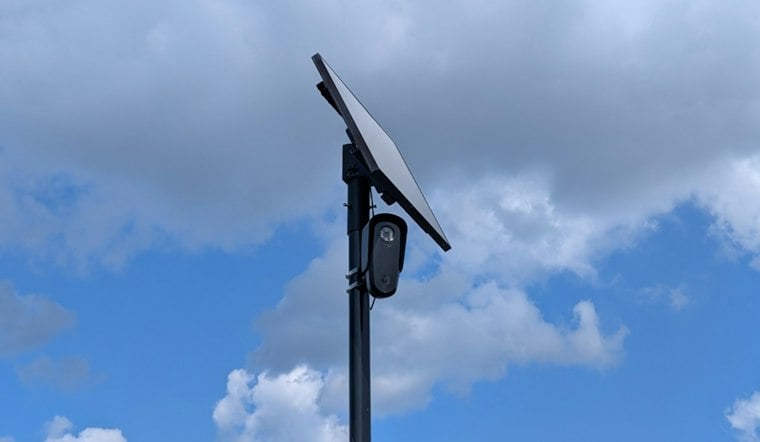
Sedro-Woolley is done with Flock Safety’s automated license plate reader cameras, just six months into a contract that was supposed to run through March 2027. Police Chief Dan McIlraith has asked the company to deactivate the system immediately, pull out all the hardware, and restore every affected location to its original condition.
According to The Seattle Times, the city paid $7,100 for the contract and is now seeking a prorated refund for the services it won’t receive after the new termination date it has requested. Flock may reject that early-termination request, but Sedro-Woolley says it doesn’t matter either way — the cameras are done being used regardless of the company’s answer, and if Flock won’t let the city out early, Sedro-Woolley simply won’t renew when the contract comes up again.
The Sedro-Woolley City Council approved a motion authorizing McIlraith to pursue both the early termination and the eventual nonrenewal, and the chief has since sent Flock a letter spelling out the request for immediate deactivation. Flock’s cameras work by photographing passing vehicles and logging license plates, vehicle characteristics, location and time, per the Yakima Herald-Republic. Once deactivated, the cameras will not capture any further data.
Why the City Is Walking Away
Sedro-Woolley’s decision was attributed to a mix of factors: privacy scrutiny, shrinking law-enforcement shared networks, new legislative requirements, public-records obligations and straightforward budget considerations, the Times reported. McIlraith said the department used the cameras correctly and followed the law throughout, framing the tool as one meant to solve crimes rather than track people.
Still, he acknowledged the tradeoff. McIlraith said the decline of the broader automated license plate reader network reduces his department’s ability to solve crimes, even as he said he still believes technology should be used to help do exactly that. He called moving forward without the Flock system a good idea for Sedro-Woolley regardless.
The city’s history with Flock hasn’t been free of legal friction. Sedro-Woolley settled a lawsuit tied to public-records requests about the cameras for $40,000 this year, with Sedro-Woolley and Stanwood together settling for $80,000 combined, according to the Times.
Part of a Statewide Pullback
Sedro-Woolley isn’t operating in isolation. At least eight other Washington cities — Olympia, Auburn, Shoreline, Redmond, Mountlake Terrace, Lynnwood, Edmonds and Snohomish — have either turned off their cameras indefinitely, ended their contracts, or otherwise cut ties with Flock, per everettpost.com. Statewide, more than 50 agencies or communities have canceled, suspended or rejected a Flock contract or deactivated their cameras since the start of 2026, the Yakima Herald-Republic reports.
Washington jurisdictions have collectively poured at least $2 million in taxpayer money into Flock’s automated license plate reader system, the same everettpost.com report found, while cities and counties statewide have paid more than $300,000 in public-records settlements tied to failures to release Flock camera images. Flock itself operates a network of more than 120,000 cameras nationwide, according to The Hill, and the company recently shortened its recommended default data-retention window from 30 days to seven, while also requiring users to select an offense type before searching its database — a search now logged in an audit trail.
Not every city has walked away empty-handed on results. Before Redmond canceled its own Flock contract in July, its police chief told the City Council the system had closed cases 38% faster and improved stolen-vehicle recovery by 72%, per everettpost.com. Spokane County reported that Flock data helped recover 88 stolen vehicles, 23 stolen plates and nine missing persons, and contributed to 150 arrests between January 2023 and May 2024, while Everett logged a 67.81% drop in stolen vehicles this year compared with its prior three-year average, with 68 vehicles recovered as of July. Those numbers stand in contrast to the concerns now driving Sedro-Woolley and a growing list of Washington cities away from the technology altogether.





