

























































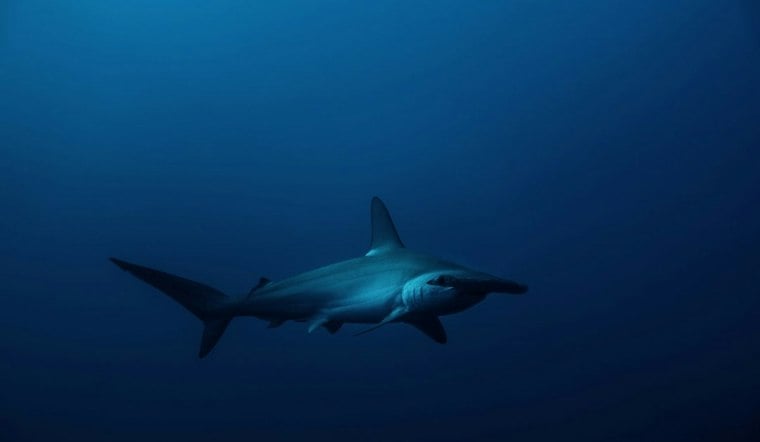
A young man walking home from Kaiser High School this week made a grim discovery on the grass near a bridge leading toward the Hawaii Kai post office: roughly seven dead juvenile hammerhead sharks, dumped and left in the open. State officials are now investigating who left the sharks there and why, with the carcasses turning up over the past several days.
The Department of Land and Natural Resources said the sharks may have been discarded as bycatch from a fishing net, according to Hawaii News Now. Capturing sharks is generally illegal under Hawaii law, and state officials are urging anyone with information to call the DLNR enforcement hotline at 808-643-3567. Tips can also be submitted anonymously through the DLNRtip app, by text message, or through an online form.
A Familiar Pattern in Hawaii Kai Waters
This is not the first time dead juvenile hammerheads have washed up in this exact neighborhood. A June 30, 2025, report described at least 11 dead juvenile hammerhead sharks along Kuliʻouʻou Beach Park, also in Hawaii Kai, with marine experts suspecting human causes or intentional killing, according to KHON2. An even larger incident unfolded in 2018, when state enforcement officers opened an investigation after 50 to 100 dead hammerhead shark pups were found dumped in a pile near La Mariana Sailing Club at Keehi Lagoon in Honolulu, an incident that prompted conservation groups to offer a $5,000 reward for information about illegal net fishing, per the Hawaii Department of Land and Natural Resources.
The recurring nature of these discoveries points to a persistent enforcement challenge.
Why Net Entanglement Kills So Quickly
Marine biologists have long explained why bycatch incidents like this turn deadly so fast. A Waikiki Aquarium marine biologist previously told Inverse that sharks must move continuously to force water over their gills to breathe, meaning entangled juvenile hammerheads can suffocate and die within two to three minutes of becoming trapped in a net. Under Hawaii Division of Aquatic Resources rules, fishers using authorized gillnets or lay nets are legally required to inspect their gear at least once every two hours to release non-target catch alive.
Hammerhead pupping has been reported near Keehi Lagoon, according to Images of Old Hawaiʻi.
Steep Penalties Await If a Suspect Is Found
Hawaii law, codified as Hawaii Revised Statutes § 188-40.8, makes it illegal to intentionally or knowingly capture, entangle, or kill any shark in state marine waters. Under that statute, capturing or killing a shark in state waters is a misdemeanor carrying criminal fines of $500 for a first offense, $2,000 for a second offense, and $10,000 for subsequent offenses, alongside potential administrative fines of up to $10,000 per shark and civil fines of up to $10,000 per offense, as well as gear forfeiture, according to FindLaw.
Dumping the sharks also constitutes criminal littering, a separate offense from any shark-related violation. Under Hawaii Revised Statutes § 708-829, criminal littering on public land or state waters is classified as a petty misdemeanor punishable by mandatory fines between $500 and $1,000, along with mandatory community service picking up litter — four hours for a first offense and eight hours for subsequent offenses, per Justia Law.
For now, the identity of whoever left the seven hammerhead pups near the bridge remains unknown, and DLNR is relying on the public to help close that gap. Anyone with information is asked to call the enforcement hotline or submit a tip through the DLNRtip app, text message, or the online form at dlnr.hawaii.gov/dlnrtip/.





