

























































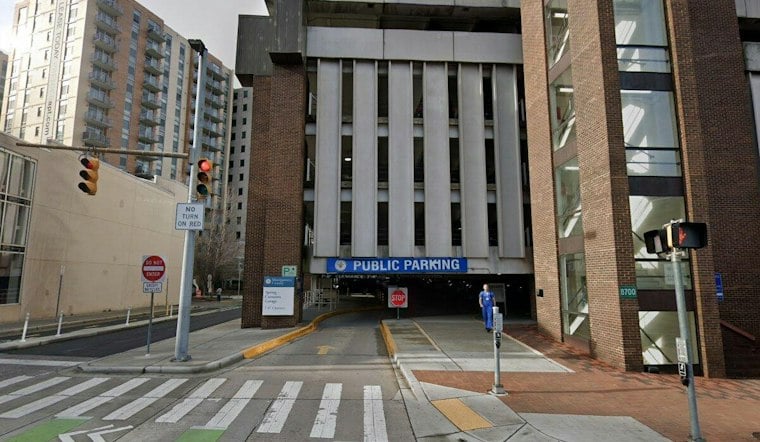
A Lanham man who authorities say drove for the rideshare app Empower is being held without bond after Montgomery County police charged him with raping and kidnapping a teenage girl in a Silver Spring parking lot. Abdoulaye Dia was arrested in Montgomery County, Maryland, on September 16, 2026, one day after officers responded on September 15, 2026, to a report of a rape that police said had occurred earlier that same day.
According to DC News Now, police said the victim, an underage teenage girl, reported that a driver using the Empower rideshare app had raped her. Investigators said Dia drove the teen to a parking lot in Silver Spring, where he assaulted her. Officers were able to link Dia to the crime through records tied to the rideshare app itself, police said.
Dia now faces charges of first-degree rape, kidnapping, second-degree assault, and a third-degree sex offense, according to police. He was transported to the Montgomery County Central Processing Unit, where he is currently being held without bond.
Detectives Believe There May Be More Victims
Detectives said they believe there may be additional victims beyond the teen at the center of this case. The Montgomery County Department of Police has asked anyone with information, or any other potential victims of Dia, to come forward. Police have asked that tips be directed to the Special Victims Investigations Division at (240) 773-5050.
What Maryland Law Says About the Charges
The charges Dia faces carry some of the most severe penalties in Maryland's criminal code. Under Maryland Criminal Law Code § 3-303, first-degree rape is a felony punishable by up to life imprisonment, with the potential for life without parole if committed alongside the kidnapping of a child under 16 or by a repeat offender, according to Maryland Code via Justia Law. Separately, child kidnapping involving a victim under 16 is punishable by up to 30 years in prison under Maryland Criminal Law Code § 3-503, a sentence that can also escalate to life without parole when the kidnapping occurs alongside a rape.
Empower's Rocky Regulatory History in the Region
The app at the center of the case, Empower, has faced repeated regulatory challenges across the D.C. region well before this arrest. In July 2026, Maryland's Public Service Commission issued a cease-and-desist order against Empower's parent company, Yazam, Inc., following a formal complaint filed in April 2024 alleging the platform was operating as an unauthorized transportation network company in the state, according to The Baltimore Banner. That action was part of the broader dispute over Empower's operations in Maryland.
The dispute extends beyond Maryland. In late 2024, a Washington, D.C. Superior Court judge ordered Empower to cease operations in the District for operating without required vehicle-for-hire registration, though company executives reportedly continued offering free software access to D.C. drivers to work around the ruling, as reported by The Washington Post. D.C. officials warned at the time that unregistered app operations deprive passengers of mandatory driver screening and safety regulations. Hoodline previously reported on Empower's clash with New York City's Taxi and Limousine Commission, which in February 2026 warned that drivers using Empower's unlicensed software face fines up to $500, vehicle owners face penalties up to $10,000, and drivers risk license revocation.
How Empower's Business Model Differs From Traditional Rideshare Apps
Empower describes itself as a software subscription service, where drivers pay a flat monthly fee, set their own rates, and keep 100% of their fares, rather than surrendering a percentage of each ride to the company. The company relies on third-party criminal background check vendors rather than the state-run TNC licensing frameworks that govern companies like Uber and Lyft, according to Empower's own account of its operations. Empower has argued that its platform functions more like an online reservation system than a traditional rideshare operator, and the platform has faced regulatory challenges in Maryland, D.C., and New York.
The case also lands amid broader scrutiny of sexual assault reporting across the rideshare industry generally. Major rideshare companies have faced scrutiny over sexual-assault and misconduct reporting.
No additional details about Dia's background or the specific timeline of his interactions with the victim beyond the parking lot assault have been released. Montgomery County police continue to ask anyone with information about the case, or anyone who believes they may have had a separate encounter with Dia, to reach out to investigators.





