

























































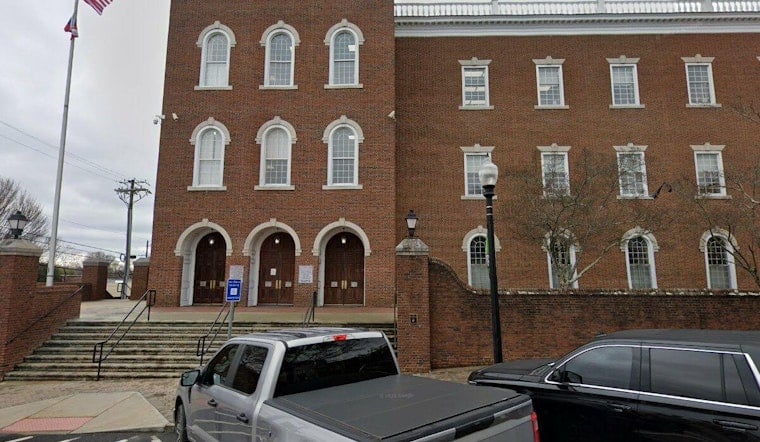
Nearly 11 years after a 19-year-old Georgia driver rear-ended an Uber vehicle at 107 mph while allegedly trying to reach 100 mph and post the result on Snapchat, the case is finally headed to trial. A Spalding County judge has ruled that a jury, not a court, must decide whether Snapchat’s now-discontinued speed filter contributed to the crash that left driver Wentworth Maynard with a severe traumatic brain injury.
The trial is scheduled to begin November 2, 2026, according to WSB-TV. The lawsuit alleges that Snapchat’s speed filter, which let users superimpose their real-time speed onto photos and videos, encouraged then-19-year-old Christal McGee to speed on Tara Boulevard in Spalding County on September 10, 2015, when she slammed into Maynard’s car at more than 100 mph in a 55 mph zone.
The collision forced Maynard’s vehicle into an embankment and left him with a permanent traumatic brain injury, according to FOX6 News Milwaukee. He spent weeks in a coma, per the same account. Immediately after the crash, McGee posted a selfie from a gurney inside an ambulance, blood on her face, captioned “Lucky to be alive,” as reported by Enjuris.
What Witnesses and Snapchat Each Claim
Heather McCarty told Channel 2 Action News in 2016 that McGee was holding her phone with Snapchat open before the crash, and that McGee was trying to hit 100 mph to post it on the app. Snapchat disputes that account and argues there is no evidence McGee was using her phone at the moment of impact. The company says the driver was not using Snapchat at or around the time of the collision and maintains that any suggestion it encouraged unsafe driving is simply wrong.
The lawsuit also raises the question of whether Maynard could have avoided the crash by not changing lanes outside an apartment complex, a detail that remains part of the dispute jurors will have to sort through. Snapchat has said the evidence does not establish that the company or the speed filter caused the collision, and it has pledged to continue vigorously defending against claims it considers unsupported by the evidence.
A Long Road Through the Courts
The case has moved through years of appellate battles that reshaped how courts view tech companies’ liability for app design. In March 2022, the Georgia Supreme Court ruled in Maynard v. Snapchat, Inc. that product manufacturers owe a legal duty to exercise reasonable care in design choices when high-speed misuse of a feature is reasonably foreseeable, a decision that reversed lower court dismissals and allowed the case to proceed, according to Justia Law.
That ruling built on a related federal precedent. In May 2021, the U.S. Ninth Circuit Court of Appeals held in Lemmon v. Snap Inc. that Section 230 of the Communications Decency Act does not shield tech companies from negligent product design claims tied to the speed filter, in a case involving the same feature. Snapchat introduced the speed filter in 2013 and discontinued it in June 2021 following a series of lawsuits, though the company maintains it removed the feature primarily because few people were still using it, according to the ABA Journal.
Discovery Sanctions Delayed the Case
The path to trial was complicated further by pre-trial discovery misconduct. In October 2025, a Spalding County judge ordered McGee, now known as Christal Leatherwood, to pay $109,612 to Wentworth and Karen Maynard after forensic testing of a phone she had produced during discovery. Leatherwood reportedly failed to turn over her own device after receiving a preservation notice 19 days after the crash and continued using it for eight months.
Separately, Clayton County law enforcement issued warrants for McGee in June 2016, including a felony serious-injury-by-vehicle charge, to which she later pleaded no contest.
Attorneys Frame the Stakes
Michael Neff, an attorney for Wentworth Maynard, said the judge’s ruling brings the family closer to presenting its case nearly 11 years after the crash. “We’ll get to present the theories and claims that we believed in from the early days,” Neff said. The judge’s ruling does not establish that Snapchat was responsible; it simply means disputed facts, including whether the speed filter influenced McGee’s driving and whether Snapchat could have foreseen the danger it posed, must be resolved by a jury.
Michael Neff, an attorney for Wentworth Maynard, said the judge’s ruling brings the family closer to presenting its case nearly 11 years after the crash. “We’ll get to present the theories and claims that we believed in from the early days,” Neff said. The judge’s ruling does not establish that Snapchat was responsible; it simply means disputed facts, including whether the speed filter influenced McGee’s driving and whether Snapchat could have foreseen the danger it posed, must be resolved by a jury.
Distracted Driving Remains a National Problem
The case unfolds against a broader backdrop of concern about distracted driving and phone use behind the wheel. According to the Georgia Governor’s Office of Highway Safety, Georgia experienced 1,491 traffic fatalities, 7,308 serious injuries and 406,290 motor vehicle crashes in 2019. According to the National Highway Traffic Safety Administration, 3,208 people were killed in crashes involving distracted drivers in 2024, while distracted driving was involved in 8% of fatal crashes.
When the trial begins in November, jurors will weigh who was at fault, whether Snapchat’s former speed filter contributed to the high-speed crash, and whether the company could have anticipated the danger the feature posed before it was pulled from the app in 2021.





