

























































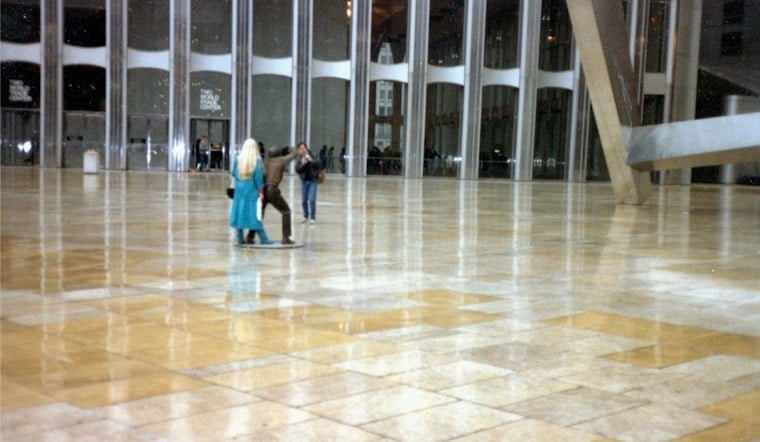
A Southern California man is describing, in his own words, the moment he escaped the World Trade Center's South Tower on September 11, 2001, before it collapsed. His account, shared this week, arrives as the region continues to reckon with the deep personal ties Southern California held to that day.
The man's recollection was shared in a video published by NBC Los Angeles, which reported on his experience fleeing the South Tower during the attacks. Southern California's connection to that morning runs deeper than many might expect: three of the four hijacked airliners, including United Airlines Flight 175, which struck the South Tower, and American Airlines Flights 11 and 77, were all bound for Los Angeles International Airport, according to All That's Interesting. Those three flights were bound for Southern California before hijackers diverted them.
Flight 175 itself had departed Boston's Logan International Airport that morning on a transcontinental route to LAX before it crashed into the South Tower at 9:03 a.m., according to Britannica. The plane struck floors 77 through 85 of the tower, and the building stood for 56 minutes afterward before collapsing at 9:59 a.m., a timeline documented in federal disaster investigations cited by Wikipedia. That collapse killed more than 600 people in the South Tower's upper levels, according to a 2005 account submitted to the U.S. House of Representatives.
How Some Escaped Where Others Could Not
Accounts of the South Tower evacuation say that 18 people escaped from floors above the impact zone and survived.
A Health Toll That Is Still Growing
Twenty-five years on, the physical toll on people who escaped the towers remains part of the 9/11 story. The World Trade Center Health Program continues to provide no-cost medical monitoring and treatment through 2090 for eligible responders, survivors and other people affected by the attacks.
The program addresses a range of conditions, including respiratory illnesses, post-traumatic stress disorder and cancer. Earlier Hoodline coverage examined the program alongside a Library of Congress archive of responder accounts, but the continuing availability of treatment and monitoring is the broader point for survivors whose health problems emerged years after the attacks.
Building Codes Rewritten in the Towers' Shadow
The attacks also prompted renewed attention to high-rise evacuation and fire protection. Earlier Hoodline reporting discussed changes to building standards after the World Trade Center investigation; Los Angeles-specific requirements provide a separate view of how high-rise safety is handled locally.
What Los Angeles Changed After High-Rise Fires
Los Angeles had a separate high-rise fire precedent before 9/11. The National Institute of Standards and Technology reports that a May 4, 1988, fire on the 12th floor of the 62-story First Interstate Bank building involved about 50 occupants, killed one maintenance man and injured 14 firefighters. It was an office fire, not a terrorist attack or an aircraft impact. Los Angeles Fire Department records show that the city’s High-Rise Retrofit Ordinances took effect in August 1988 and November 1989. They cover existing high-rise buildings with permits issued before July 1, 1974, with an exception for Group R Division 1 occupancies, and require compliance with specified fire- and life-safety provisions. For new high-rise and high-rise change-of-use buildings, Los Angeles Fire Department guidance calls for audible and visual notifications on the alarm level and the floors or zones immediately above and below it; the policy also includes elevator-recall requirements in specified circumstances. The department’s retrofit guidance identifies measures including fire-protection systems, sprinklers, standpipes and fire pumps, with requirements varying by building type and height.
Commemoration and Debate 25 Years Later
The anniversary has also prompted discussion over how the day should be marked.
Elsewhere, the anniversary was marked with large-scale public memorials. On September 9, 2,977 light-bearing drones flew over New York Harbor to recreate the architectural scale of the Twin Towers in the sky, honoring each victim killed in the attacks, an artwork developed in collaboration with survivors, first responders, and family organizations, according to Hoodline's earlier report. Lower Manhattan itself has undergone significant rebuilding since the attacks.
For the SoCal man whose account NBC Los Angeles captured, the memory of walking out of the South Tower before it fell remains a defining moment a quarter-century later. His story joins a growing collection of survivor accounts surfacing around the 25th anniversary, each one a reminder of how closely Southern California's own history is bound to that September morning in Lower Manhattan.





