

























































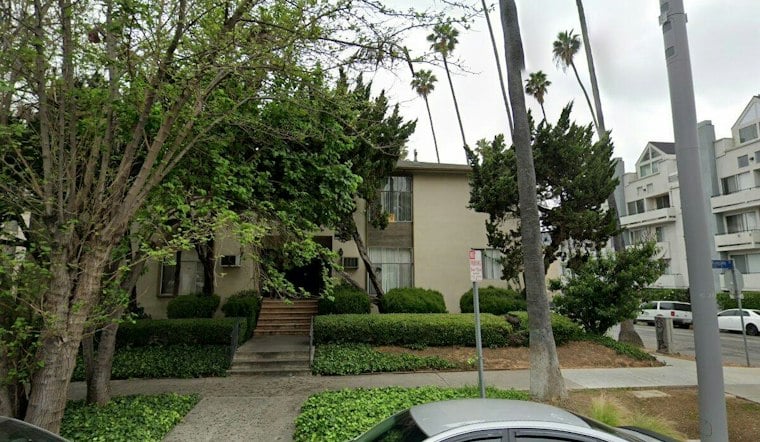
Tracey Ellis has lived in her rent-stabilized apartment near the Sunset Strip since 2001, and her lease has always included a parking space. Now, at 70 years old and relying on a cane or walker because of mobility problems, she fears that could disappear — along with her ability to stay in her home.
Ellis pays just over $1,600 a month in the eight-unit building, and her landlord recently told tenants that a new apartment would be built over their garages, according to the Los Angeles Times. That construction is expected to eliminate parking for one to two years, and possibly longer. Landlord Alex Goodson said the planned three-bedroom accessory dwelling unit, or ADU, would sit above the parking area, and that he is trying to follow the law while caring for residents. He said the spots will be returned once building is finished and that he is working with tenants who request accommodations.
Ellis said she was initially offered a $100 monthly discount to offset the loss, an amount she said would not come close to covering the cost of replacement rides. She requested a parking accommodation from Goodson directly. Beyond her own situation, Ellis said she worries about neighbors who depend on their garages for storage, parking and getting to work or school. “It's my freedom,” she said of her parking space, according to the Times, warning that losing it threatens her independence.
A Growing Pattern Across Dense L.A. Neighborhoods
Ellis's case is part of a broader trend the Times describes as an increasing number of landlords converting parking spaces and garages into ADUs. Attorneys tracking the issue say the conflict is especially pronounced in Koreatown, Pico Union, Silver Lake and Hollywood — dense neighborhoods where street parking is extremely limited and many buildings are rent-stabilized.
Larry Gross, executive director of the Coalition for Economic Survival, which runs tenant rights clinics, said his organization encounters affected tenants almost every week, and that many cannot continue renting without a place to park. Tenant advocates more broadly argue that stripping away parking violates leases and disproportionately harms seniors, disabled tenants and people who simply cannot afford to move.
Hollywood Lawsuit Halts ADU Construction
The dispute has already reached the courts. Low-income residents of a rent-stabilized Hollywood building filed a lawsuit challenging permits that would convert 20 parking spaces into nine ADUs, seeking to stop the city from approving permits for spaces that are currently in use and included in tenants' leases. A Los Angeles County Superior Court judge halted construction of the Hollywood ADUs until the case can be fully argued.
Sabrina Venskus, an attorney representing the tenants, said parking is part of a rental unit under the city's rent stabilization ordinance and that the compensation landlords have offered is insufficient. Jacob H. Zadeh, who represents the building's owner, countered that converting parking into housing is a practical and humane response to Los Angeles's housing need, and argued that eliminating the building's parking does not amount to an eviction. The Los Angeles City Attorney's Office has argued that tenant protections do not prevent the conversion of existing parking into ADUs mandated by state law.
Another Senior Tenant Sues Over Lost Parking
Ellis is not the only older tenant pushing back. Karen Numme, 83, has lived in a rent-stabilized Silver Lake apartment building since 1995 and pays $1,333 a month in rent. Her landlord's property, listed under Jakobovich Holdings, plans to permanently replace her garage parking with two ADUs. Numme requested a reasonable accommodation to keep her parking and, in September, sued her landlord, alleging the removal of parking violates fair housing, disability and the city's anti-harassment laws.
City planning officials said Los Angeles must approve ADU permits because it cannot override state law, but they also noted that many tenants who lose parking may qualify for a rent reduction and could request a new handicapped parking space on their block.
The State Law Driving the Conflict
At the center of these disputes is Senate Bill 1211, which went into effect in January 2025. The law increased the number of ADUs allowed on certain multifamily lots and restricts local agencies from requiring replacement parking when a space is lost to an ADU, though it does not specify which parking spaces qualify for conversion. California YIMBY co-sponsored the bill in 2024, and the organization's communications director, Matthew Lewis, said Los Angeles has a housing shortage rather than a parking shortage, arguing that housing needs outweigh the need for parking.
The California Department of Housing and Community Development said landlords and tenants should consult existing laws governing residential lease agreements as SB 1211 is implemented. Tenant advocates, meanwhile, argue that only unused parking spaces should qualify for ADU construction in the first place. California state Assemblymember Nick Schultz, who represents Burbank, said he plans to examine possible unintended consequences of the law and that it should be reconsidered if it is being used to displace people.
Echoes of Earlier Koreatown Disputes
Similar fights have already played out in Koreatown. The owner of a 22-unit building there planned to convert several tenant parking spaces into five ADUs, prompting a tenant sit-in protest, the Times reported in September 2025. The property manager offered a $200 monthly credit per lost space, and the city approved a Tenant Habitability Plan that June.
At 501 Kingsley in Koreatown, tenants opposed plans to tear down what they called a badly needed garage to make way for five ADUs, according to LAist. Those renters were also offered a $200 monthly rent credit. Tenants at the building, located near 5th Street and Kingsley Drive, later said their cars were removed from their parking spots overnight, as NBC Los Angeles reported, while a representative of North Oak Property Management said the city had given the company the green light to proceed with the project.
Accounts of that towing incident differ. One early report described eight cars being towed, but building owner Mark Nassab told ABC7 that only three cars were towed, not eight, and that tenants had been given notice beforehand. Tenants at the Kingsley Drive building maintained that the spaces being converted were assigned to them in their leases — the same core complaint now playing out from Silver Lake to the Sunset Strip as California's push for more housing collides with renters who say their parking was never supposed to be up for grabs.


