

























































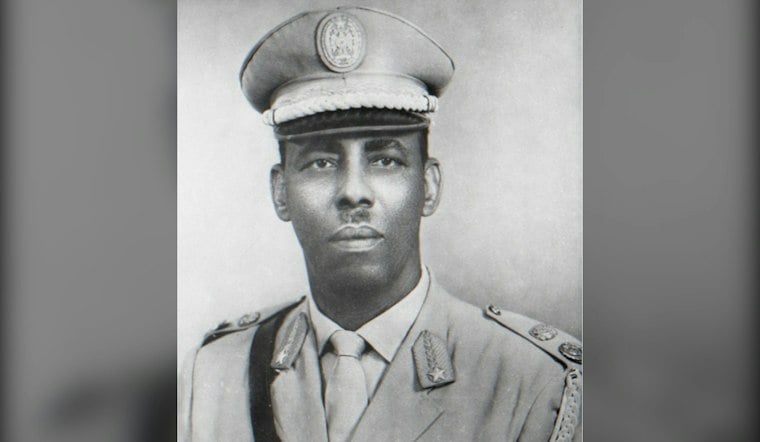
A son of the late Somali dictator Siad Barre, whose regime is blamed for the deaths of as many as 200,000 people, is living in a three-bedroom house worth roughly $350,000 in a Columbus suburb. Ayanle Siad Barre, 61, has been linked to Somal Global Services and Halwa Kismay Coffee, while Vanguard Home Health Care, a separate family-run business run by his sister Deka Siad and Abdikarim Ali Omar, received more than $1.8 million in Medicare funding. Ayanle has not publicly denounced his father's regime, and historians say he once served as its de facto second-in-command.
According to the New York Post, Ayanle appointed and dismissed regime authorities on his father's behalf and, according to historians and campaigners, headed Siad Barre's administration during the final years of the dictatorship. Historian and Oxford University doctoral researcher Mohamed Haji Ingiriis described him as his father's right-hand man, and the outlet reports Ayanle even became de facto ruler of Villa Somalia when his father was temporarily unable to govern. He and his sister, Deka Mohamed Siad, 69, arrived in the United States shortly after their father was overthrown in 1991 and now both live in Columbus, home to an estimated 70,000 Somali residents, according to Ohio Senate legislative records, making it the second-largest Somali community in the country after Minneapolis.
A Regime Remembered for Mass Killing
Siad Barre seized power in a Soviet-backed coup in 1969 and ruled Somalia for two decades before he was overthrown in 1991, later dying of a heart attack in Lagos, Nigeria, in 1995. His rule culminated in the Isaaq genocide, a campaign the regime carried out against the Isaaq clan in northern Somalia using ethnic cleansing, torture, indiscriminate bombing, and what the Post describes as war crimes and crimes against humanity. Historical and human rights documentation cited by the Times of Israel estimates that between 50,000 and 200,000 Isaaq civilians were killed during the 1987-1989 campaign, which destroyed up to 90 percent of the Somaliland capital Hargeisa and pushed roughly 500,000 people into Ethiopia as refugees — devastation historians have likened to the bombing of Dresden.
The regime also deployed a mechanized unit called Dabar Goynta Isaaqa, meaning “The Isaaq Exterminators,” composed entirely of non-Isaaq soldiers, according to background compiled on Wikipedia. The unit targeted unarmed villages, poisoned water wells, and laid landmines across grazing lands to destroy the Isaaq clan's pastoral economy — the Post separately reports the regime laid more than 1 million landmines on grazing lands. Ali-Guban Mohamed, 64, told the Post that his own family was rounded up and executed in Agabur, and said Siad Barre and his men committed many war crimes.
The Medicare-Funded Family Business
The Post reports that Deka Siad and Abdikarim Ali Omar ran a Medicare-funded home health care business called Vanguard Home Health Care. Vanguard received more than $1.8 million in Medicare funding, and the outlet notes the company appears legitimate and filed proper paperwork; it closed after Omar died in January 2021 at age 70. Separately, Qaran News identifies Ayanle Siad Barre as a coordinator and mentions Somal Global Services. The Post also links Ayanle to Halwa Kismay Coffee, and reports the wider Barre family has ties to a translation service and to a charity bearing Siad Barre's name.
Suleiman Bolaleh, 59, an advocate for victims of the Barre regime, has called for an investigation into Siad Barre's family and what he describes as their inherited proceeds. Ingiriis told the Post that Siad Barre's children massively benefited from properties acquired illegally during the regime, and the outlet reports Siad Barre and his cronies looted an estimated $27 million in gold and cash from Somalia's central bank. US authorities have been urged to investigate the presence and activities of Siad Barre's children in the United States, according to the Post's reporting.
Legal Precedent for Holding Regime Figures Accountable
The U.S. has a documented track record of pursuing civil and immigration action against former Somali military officials living stateside, even without criminal charges. In 2012, former Somali general Mohamed Ali Samantar accepted legal responsibility in an Eastern District of Virginia federal court for torture, war crimes, and extrajudicial killings, according to the Center for Justice and Accountability. The case resulted in a $21 million award. That case followed the Supreme Court's 2010 ruling in Samantar v. Yousuf, which found that the Foreign Sovereign Immunities Act does not shield foreign officials from civil suits.
In 2019, federal civil litigation in Alexandria, Virginia, involved former Somali National Army Lieutenant Colonel Yusuf Abdi Ali, the Center for Justice and Accountability's litigation records show. Ali, who later relocated to Northern Virginia, was ultimately removed from the United States to Somalia in December 2024 after a Department of Justice immigration judge issued a 65-page removal order finding he personally committed and ordered torture and extrajudicial killings, according to U.S. Immigration and Customs Enforcement. That investigation was carried out by ICE's Human Rights Violators and War Crimes Center, an interagency unit combining agents and attorneys from ICE, the Department of Justice, the State Department, and the FBI that supported more than 180 war crimes investigations in fiscal year 2024 and has secured the deportation or departure of more than 1,300 known or suspected human rights abusers from the United States since its inception.
A Local Group's Tribute Draws Scrutiny
The Post's reporting notes that the Somali Museum of Ohio refers to Siad Barre as its “honorable grandfather.” Ayanle Siad Barre launched a nonprofit called Somali Immigrants Achieving Democracy in 2004, and the Post also reports he visited London. The Torture Victim Protection Act of 1991 underpins civil suits like those against Samantar and Ali.



