

























































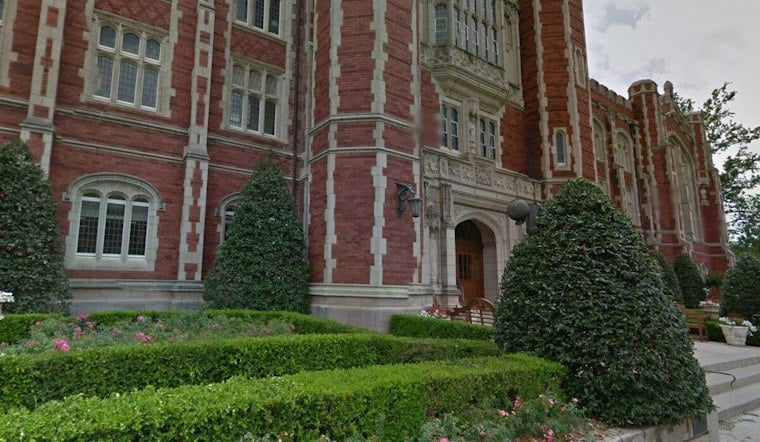
U.S. Supreme Court Justice Sonia Sotomayor’s Wednesday, Sept. 16, 2026, appearance in Tulsa brought a national judicial figure into an Oklahoma legal community shaped by tribal jurisdiction, federal workload pressures and legal education. The occasion was the Judge Stephanie K. Seymour Lecture at the University of Oklahoma-Tulsa, hosted by the Northern/Eastern Oklahoma Chapter of the Federal Bar Association. The chapter’s event listing identified Sotomayor as the featured speaker and U.S. District Judge Sara Hill as moderator.
A lectureship rooted in Oklahoma’s federal judiciary
The program honors Stephanie K. Seymour, who in 1979 became the first woman appointed to the U.S. Court of Appeals for the 10th Circuit and later became that court’s first female chief judge. The Oklahoma Bar Association describes those milestones, while the University of Tulsa has said that more than 50 of Seymour’s former law clerks helped establish the lectureship.
Hill’s role gave the program another Oklahoma-specific dimension. A citizen of the Cherokee Nation, she was confirmed in December 2023 as the first Native American woman to serve as a lifetime federal judge in Oklahoma, according to Native News Online. Before joining the federal bench, Hill served as the Cherokee Nation’s attorney general.
Why Sotomayor’s Oklahoma record matters
Sotomayor has longstanding ties to Oklahoma’s legal-education community. University of Tulsa law professor Robert Spoo clerked for her on the U.S. Court of Appeals for the Second Circuit and moderated an earlier University of Tulsa conversation with her, according to the university. During a three-day Oklahoma visit in September 2014, she also spoke at the University of Tulsa, Oklahoma City University and the University of Oklahoma about topics including affirmative action, judicial ethics and legal education, KGOU reported.
Her judicial record also includes a ruling with direct consequences for eastern Oklahoma. Sotomayor joined the 5-4 majority in McGirt v. Oklahoma, which held that the Muscogee (Creek) Nation’s reservation had not been disestablished for purposes of federal criminal law. The reservation encompasses much of eastern Oklahoma, including Tulsa, as summarized in the case record. Burwell v. Hobby Lobby Stores, Inc. was a 2014 case involving the Oklahoma City-headquartered company’s challenge to federal contraceptive-coverage requirements, according to Public Radio Tulsa.
McGirt changed the federal court workload
The significance of McGirt was not limited to constitutional and tribal-law doctrine. The ruling also raised questions about federal criminal caseloads.
The Administrative Office of the U.S. Courts likewise reported that McGirt caused a spike in Oklahoma prosecutions and caseloads, prompting emergency assistance for affected federal districts, according to the federal judiciary’s annual report. Those developments document the ruling’s institutional aftermath; they do not establish what the court’s workload was at the time of the 2026 lecture.
Legal education tied to tribal communities
The post-McGirt landscape also reaches law-school training. Oklahoma City University School of Law lists an American Indian Wills Clinic and a Tribal Sovereignty Institute among its programs. These programs indicate the school’s connection to tribal communities; they are not evidence that every Oklahoma law school follows the same model.
What is known about the Tulsa appearance
News On 6 reported that Sotomayor spent about five hours at the University of Tulsa’s law campus before traveling to OU-Tulsa, met over lunch with women attorneys and law students, and answered questions from 10 selected students. The station also reported that more than 500 people attended the lecture and that students from the University of Tulsa, the University of Oklahoma and Oklahoma City University participated. Those details remain based on News On 6’s account; the independently documented context establishes why the event mattered to Oklahoma’s legal community, but does not independently verify every aspect of the visit schedule or attendance.
News On 6 described the appearance as Sotomayor’s first Tulsa visit since 2014. Taken together with the Seymour lectureship, Hill’s place on the federal bench and the continuing institutional effects of McGirt, the visit connected the ceremonial history of Oklahoma’s judiciary with the practical questions facing its courts, tribes, lawyers and law students.





