

























































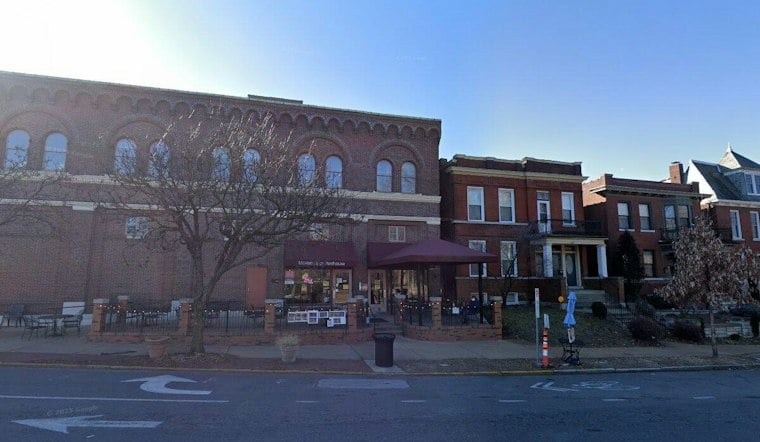
The South Grand Community Improvement District has withdrawn a letter that told businesses not to give unhoused people food or water and urged them to call 911 about people sleeping, defecating or urinating near storefronts. The letter, dated Sept. 11, triggered criticism from businesses and neighbors before the board apologized and said it did not reflect the district’s values or actions, according to St. Louis Public Radio.
The episode leaves two separate questions: whether businesses are facing sanitation or safety problems, and what role a business district should play in responding to people experiencing homelessness. Those questions became conflated in the letter’s proposed solution, which treated withholding basic necessities as a deterrent. South Grand board president Natasha Bahrami said she signed the letter without reading it and did not agree with denying anyone food or water, the station reported.
A district with a public-service role, but not a homelessness agency
The South Grand CID says it was created under Missouri legislation in 2001 to provide enhanced public safety, maintenance, building improvements and economic development beyond services supplied by the city. It also describes itself as a Missouri political subdivision governed by unpaid volunteers who are assessment-paying property owners or business owners in the district. Those responsibilities help explain why merchants may turn to the CID over storefront conditions, but the district’s own description does not make it the city’s homelessness-services provider. The CID’s description of its mission and governance materials do not establish that it has authority to direct businesses’ humanitarian practices.
The CID said previous requests for city help had not been adequately addressed, while also acknowledging that those concerns should be handled without denying water to people in need. The city’s Department of Human Services said outreach workers sometimes provide water and snacks, particularly during extreme heat. The CID has scheduled discussions with Peter and Paul Community Services and Continuum of Care staff, but the eventual plan, its funding and the division of responsibilities remain unresolved, according to St. Louis Public Radio.
Documented cooling options do not settle the access question
City records list Carpenter Branch Library at 3309 South Grand Boulevard as a citywide cooling center. They also list Biddle Housing Opportunities Center as a citywide cooling center with daily drop-in hours from 8 a.m. to 4:30 p.m. Those listings document available cooling locations, but they do not by themselves show whether every person near the South Grand corridor could reach, use or receive services at either site.
That distinction matters because the dispute occurred during a period of severe heat, when temperatures reached 94 degrees, while businesses were also describing concerns about sanitation and people using entryways. The record supports the existence of both a heat-relief resource list and a dispute over street-level conditions; it does not establish how many people were involved, whether homelessness had increased by a measured amount, or whether any particular service would have resolved the reported problems.
A comparison, not a model for South Grand
A City of Bellingham, Washington, downtown safety strategy dated October 2023 offers one limited point of comparison. Its documented approach paired public-safety and cleanup measures with expanded homeless-outreach services intended to connect people with housing and basic needs. The Bellingham strategy is a different city’s plan, not evidence that the same arrangement would work in St. Louis or that the two communities faced identical conditions. Its relevance is narrower: it shows that business-district safety and maintenance concerns can be documented alongside, rather than substituted for, outreach to people lacking housing.
For South Grand, the immediate reset is the board’s retraction and apology. The more consequential test will be whether the planned meetings produce a clearly documented response that separates emergency assistance, outreach, sanitation and public safety—and identifies which agency or organization is responsible for each.





