

























































The central question in South Maui's long-range planning update is not only how much growth the region may accommodate, but whether infrastructure can keep pace with it. During the Maui County Council committee's review this month, officials confronted a water system operating near its reliable limit, cesspools facing a 2030 conversion deadline and infrastructure needs whose listed costs exceed half a billion dollars. The plan is intended to guide two decades of housing, land use, transportation and infrastructure decisions, while its implementation schedule leaves many projects without cost estimates or identified funding.
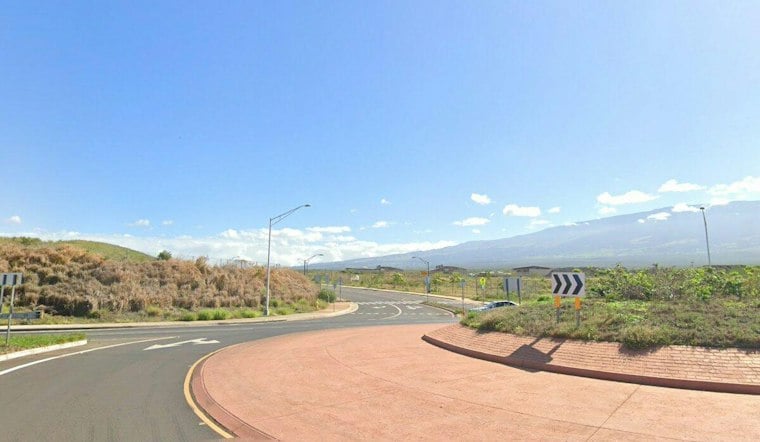
The Disaster Recovery, International Affairs and Planning Committee began reviewing the draft plan section by section this month, according to a Maui County press release, which describes the document as one that will guide future growth and development in South Maui including housing, land use, transportation and infrastructure. The committee also reviewed Bill 108 (2026) as part of that process, according to Maui Now. Ahead of the panel's evening meeting at the Kīhei Community Center, the county scheduled site inspections at Kulanihakoi Road and East Waipuilani Road at Liloa Drive, tied to the proposed Mauka North Kīhei growth area and a planned North-South Collector Road extension.
A Plan Years in the Making
The South Maui Community Plan would replace the 1998 Kīhei-Mākena Community Plan and is designed to span 20 years, per the same Maui Now report. The update process began in 2020, and a 13-member community plan advisory committee appointed by Mayor Richard Bissen and the County Council held 42 public meetings between October 2022 and November 2023, according to Civil Beat. The Maui Planning Commission then reviewed the draft from May 2024 through March 2025 before it reached the Council committee this month, Maui Now reports.
Civil Beat describes the plan as a legal document established by the Maui County Code, giving it a role in decisions about how South Maui grows. The plan also addresses infrastructure concurrency and related policies, an issue that has become central to the Council committee's review.
What Infrastructure Concurrency Means
The county record describes both the plan's reach and the limits of its current review process. According to Maui County Planning Commission minutes, the community plan has regulatory relevance in special management areas, zoning and County special-use-permit changes, subdivisions, and the County budget and Capital Improvement Program. In separate Planning Commission minutes, county staff said infrastructure gaps are assessed after a developer submits plans, with the results used to guide needed improvements. The earlier 1998 Kihei-Makena Community Plan also called for transportation improvements to occur concurrently with planned growth.
There are also proposed capacity projects in the county's capital program. The FY2026-2031 program includes a Central Maui Reliable Capacity project supporting existing and new water sources, transmission and storage, with a South Maui Desalination Water Treatment Plant among the anticipated FY2026 projects, according to the Maui County capital improvement program.
Water System Already Maxed Out
That infrastructure requirement runs into an immediate problem. The Central Maui water system operates at 98% to 100% of its maximum reliable capacity, according to a Department of Water Supply letter cited by Maui Now, and has no additional source capacity available for new or expanded service. South Maui's water supply draws from the ʻĪao aquifer at roughly 8.3 million gallons per day, with most of the region's water piped over from the Wailuku aquifer on the north side of the island, Civil Beat reported. South Maui's own Kamaole aquifer is brackish at lower elevations and would need desalination before it could serve as drinking water, per the same account.
Wastewater presents another deadline pressure. Cesspools in Māʻalaea and Maui Meadows must convert to regional wastewater treatment by 2030, Maui Now reports, adding urgency to a plan that already lists $25.6 million in South Maui utilities action items spread across four projects.
The Price Tag and the Paper Trail
The draft's financial picture is incomplete. Of 145 implementation action items, only eight carry cost estimates, while 65 have no cost figures and 15 are marked not applicable, according to Maui Now. The available estimates, attributed separately to Dick Mayer, total $554 million. Appendix H lists 15 transportation projects at a separate $373 million in 2022 dollars, including the North-South Collector Road extension in Kīhei. All of the plan's cost estimates use that 2022 baseline, the report said.
The review underscored a broader tension: the plan flags water, wastewater, flood-control and roadway deficiencies, but a large majority of its action items still lack a dollar figure or funding source.
How Many People, How Many Homes
Estimates of South Maui's population vary depending on who's counting and when. Civil Beat reported the region's population hit 28,700 in 2020, with the U.S. Census projecting at least 32,000 residents by 2045. The region also faces congestion and evacuation concerns.
Housing projections carry similar spread. Separate county research identified 1,700 housing units as needed in South Maui. Civil Beat's earlier reporting offered a different lens: seven major developments, some already approved, could add 7,355 new homes to the region, with only 20% deemed affordable, and Dick Mayer estimated that projected growth would require 800 to 1,700 new homes on top of South Maui's current inventory of 11,100 homes. Mayer's analysis further projected that scenario could bring an additional 19,000 people and 14,600 cars to South Maui.
Evacuation Routes and Opposing Views
Public testimony at the Kīhei Community Center reflected sharp disagreement over how much more South Maui can absorb. Albert Perez urged the committee to reject roughly 3,500 additional housing units, arguing they are unnecessary given that South Maui already has roughly 4,500 housing units entitled. Perez also raised a safety concern, saying the region has only one evacuation route.
Evacuation constraints and wildfire risk were among the concerns raised during the review. Flooding has already tested the region's roadway resilience: Civil Beat reported flooding and public-safety concerns. Approved projects may be decades away from actual construction, even as the plan works through its review.
The Disaster Recovery, International Affairs and Planning Committee held its site inspections in South Maui and heard testimony in Kīhei as part of this stage of review, according to the county's press release.





