

























































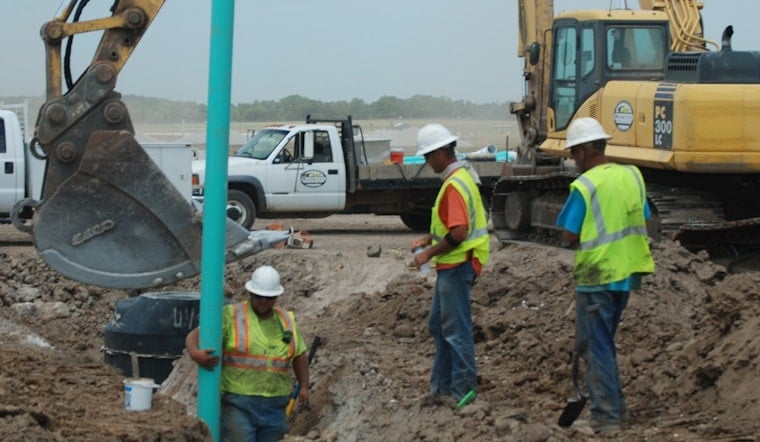
A sinkhole that swallowed part of Southwest Trafficway in Kansas City's Signal Hill area is expected to be fully addressed by 3 p.m. Tuesday, September 1, 2026, after repairs, restriping and equipment removal, city officials said. The collapse, which opened on August 26, forced crews to shut down all southbound lanes and two northbound lanes between 29th Street and Interstate 35, snarling commutes across Midtown and Downtown for days.
KC Water traced the collapse to a failed sewer line, according to the utility, and officials provided updates on the repair status, as reported by FOX 4 Kansas City WDAF-TV. Andy Shively, KC Water's deputy director of Smart Sewer, wastewater and stormwater, discussed the cause, repair schedule and working conditions at a Friday press conference. The station reports that Kansas City officials said Southwest Trafficway would fully reopen by 3 p.m. Tuesday, September 1, 2026, after sinkhole repairs, restriping and equipment removal.
A Pipe Older Than the Road Itself
The sinkhole formed after a 15-inch vitrified clay sewer pipe buried roughly 25 feet beneath the street gave way, according to KCUR. That pipe has been in place since 1892, back when the corridor was known as Summit Street, before Southwest Trafficway existed as a roadway at all. That vitrified clay segment has spent more than a century underground.
Complicating the fix, crews had to work carefully around a 30-inch water transmission main installed in 1932 that sits close to the failed sewer line, KCUR's report notes. Repairing the collapsed line and restoring the roadway meant tearing up roughly 80 feet of pavement between 29th Street and I-35, with an initial completion target of around September 2, per the same account.
Why Kansas City's Ground Keeps Giving Way
Shively has said subterranean sinkholes like this one tend to occur during wet years. Hot, dry years, by contrast, expose weaknesses on the water-main side and are associated with more water-main breaks, he said. The Beacon reports that some Kansas City streets carry more than 25,000 vehicles a day, which is why the lane closures have rippled into gridlock across the city as drivers hunted for alternate routes during morning and evening commutes.
The Southwest Trafficway closure left Midtown commuters looking for alternate routes.
A Bigger Challenge for Kansas City's Buried Pipes
The collapse underscored the challenge of maintaining Kansas City's aging water and sewer infrastructure.
The Signal Hill collapse is a reminder that even as the city addresses its infrastructure, old pipes can fail with little warning on some of its most heavily traveled streets.





