

























































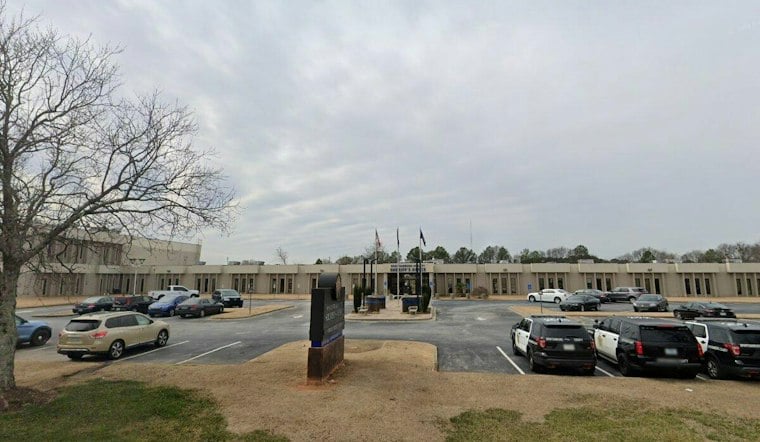
A local forensic chemist’s account is underscoring how frequently fentanyl appears in Spartanburg County overdose investigations. Jacob Jackson, chief chemist for the Spartanburg County Sheriff’s Office, told FOX Carolina that the synthetic opioid is being found alongside several other drugs, including counterfeit prescription pills, methamphetamine and cocaine. His observations describe the cases reaching his lab rather than a countywide estimate of every overdose.
Jackson said fentanyl is nearly universal in the overdose cases he investigates, according to FOX Carolina News. “It’s almost always in tandem with fentanyl,” he told the outlet. Jackson said fentanyl is turning up in fake prescription pills, meth and cocaine, including substances sold as something else.
How the Contamination Happens
Jackson attributed part of the danger to contact between drugs during manufacturing or handling. Fentanyl powder can adhere to prescription tablets and other substances, he said, according to FOX Carolina. As a result, a pressed pill made to resemble a legitimate prescription, or a bag of meth or cocaine, may contain fentanyl without a visible indication that it is present.
The risk extends to people who believe they are taking a familiar, tested substance. Users may have no idea fentanyl is present in what they are consuming, whether the drug at hand is a street-bought pill designed to mimic a prescription medication or a batch of a stimulant like meth or cocaine.
A County That Has Seen the Numbers Swing
The warning follows a period in which Spartanburg County’s overdose death toll rose sharply before easing. In 2023, Spartanburg County Coroner Rusty Clevenger reported 191 people had died from drug overdoses, with a majority of those deaths tied to fentanyl. One year later, the total dropped to 115 overdose deaths, including 44 involving fentanyl, as noted by FOX Carolina.
What the available data show
The county figures cited here show an improvement from 2023 to 2024, but they do not by themselves establish whether that decline continued after 2024. Statewide, fentanyl was involved in 914 of South Carolina’s 1,481 drug overdose deaths in 2024, according to the South Carolina Department of Public Health. The county’s response has included treatment and overdose-prevention measures. The Spartanburg County Recovery Movement says a medication-assisted treatment and re-entry program launched at the county detention center in October 2024 has provided life-saving medications to more than 700 individuals. The Department of Public Health says its free Opioid Overdose Safety Kits contain two doses of naloxone, fentanyl and xylazine test strips, and overdose-response guidance; residents are advised to contact their local health department to check availability.
That decline followed years of escalation. The county investigated almost 100 cases involving fentanyl in 2020, a number that more than tripled by 2021, according to WSPA. Separate reporting from ABC News 4 found the county was on track to record almost 60 more overdose deaths in 2021 than it had two years earlier, with 36 overdose deaths investigated in just the first four months of 2021 compared with 85 for all of 2019.
New Analogues Raise the Stakes
The concern extends beyond fentanyl itself. FOX Carolina reported that federal officials are flagging carfentanil, fluorofentanyl and methylfentanyl in counterfeit pills and mixtures involving cocaine, methamphetamine and heroin. Carfentanil alone is up to 100 times more potent than fentanyl, the station reported.
Those three analogues have been involved in at least 12,500 deaths since 2023, per a report from White House Office of National Drug Control Policy citing a CDC estimate. The White House has warned that an overdose involving those fentanyl analogues may require additional doses of Narcan to reverse, a caution that underscores how much more potent this newer wave of synthetic opioids can be compared with fentanyl on its own.
Jackson’s local observations also fit a broader pattern documented in medical research, although the study does not establish the prevalence of these compounds in Spartanburg County. A multi-hospital study tracking fentanyl and para-fluorofentanyl overdoses found that, among 833 patients with confirmed exposure between 2020 and 2023, para-fluorofentanyl was detected in 139, or 16.7 percent, according to research published on ScienceDirect. The research also noted that synthetic opioid-related deaths more than tripled nationally between 2016 and 2022.
For now, Jackson’s message to Spartanburg County residents is blunt: whether a drug is bought as a pressed pill, a bag of powder, or something else entirely, the chances that fentanyl is mixed in without a user’s knowledge remain high. The physical evidence Jackson analyzes in his lab has become one of the clearest local signals of how deeply embedded fentanyl now is in the broader drug supply.





