

























































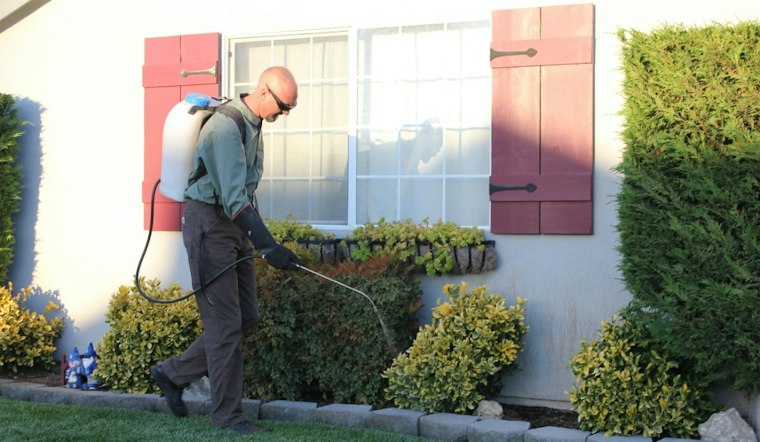
A West Nile virus case reported in Anderson County has triggered an emergency mosquito-spraying operation near Iva, with crews set to treat a one-mile radius around Barnes Station Road and Manning Road late Friday, weather permitting. The spraying comes as South Carolina's 2026 case count climbs and county officials scramble to knock back the mosquito population before the virus spreads further.
Anderson County Emergency Management hired Gregory Pest Solutions to carry out the treatment after the county reported a recent case of the virus, according to The State. The spray is scheduled for late Friday, Nov. 13, within a mile of the Barnes Station and Manning road intersection in Iva, though the timing depends on weather conditions. The Emergency Management Agency says the water-based pesticide poses no health risk to humans or animals, but it is urging anyone with beehives in the treatment zone to relocate or cover them until spraying wraps up.
South Carolina has logged 30 West Nile virus cases so far in 2026, according to the CDC, placing it well behind California's nationwide high of 452 cases, the report notes. Those numbers reflect a steep climb from earlier in the year: a September 11 report from South Carolina Public Radio put the CDC's count at just seven cases in the state at that point in the year.
Outbreaks Already Hit the Midlands and Lowcountry
The South Carolina Department of Public Health confirmed two separate West Nile virus outbreaks earlier this year, the station's report notes — four cases in the Midlands and two in the Lowcountry. Richland County saw two confirmed cases in early August, part of the cluster that pushed health officials to pay closer attention statewide.
The scale of exposure in South Carolina may run far deeper than confirmed case counts suggest. A study cited earlier this year found that one in 10 South Carolinians has been exposed to West Nile virus, described as 10 times the national average, per the same report. Dr. Melissa Nolan estimated that in Richland County and Columbia specifically, exposure may run as high as one in five residents. Nolan also cautioned that private mosquito spraying by individual homeowners may be contributing to insecticide resistance, complicating broader control efforts.
How Other SC Communities Have Fought Back
Anderson County isn't alone in turning to spray trucks this year. Myrtle Beach, Columbia, Charleston and Horry County all sprayed for mosquitoes in 2026, the article notes, as cases popped up across the state. Charleston's mosquito-control program leaned on aerial spraying, truck-based spraying and catch basin treatments after West Nile cases were confirmed there.
Charleston County went further, ramping up nighttime truck-based spraying specifically to cut the risk of West Nile virus infection, according to the Post and Courier. The county added spraying at least every 10 days around West Nile-positive areas, running trucks between 11 p.m. and 7 a.m. to limit contact with people, pets and pollinators. Charleston's spray season typically runs April through November and is highly weather-dependent, mirroring the same weather contingency built into Friday's planned Iva application.
Symptoms and Precautions to Know
West Nile virus spreads to people through bites from infected mosquitoes, and most people who get infected never develop symptoms, according to The State's report. Still, the virus causes illness in about one in five infected people within two to 14 days, with symptoms that can include fever, headache, joint pain, muscle pain, nausea and vomiting, and sometimes sensitivity to light, eyelid inflammation and rash. Fewer than one percent of infected people develop encephalitis, a potentially fatal brain swelling.
Health officials recommend applying insect repellent containing DEET, picaridin, oil of lemon eucalyptus, IR 3535 or 2-Undecanone, along with wearing clothing that covers the skin and installing tight-fitting screens on doors and windows. Eliminating standing water in flowerpots, tires, rain gutters and pet bowls removes mosquito breeding grounds around the home. Day-active mosquitoes tend to bite most often in early mornings and late afternoons, while night-active mosquitoes bite more at dawn and dusk, so residents are urged to take precautions during those windows.





