

























































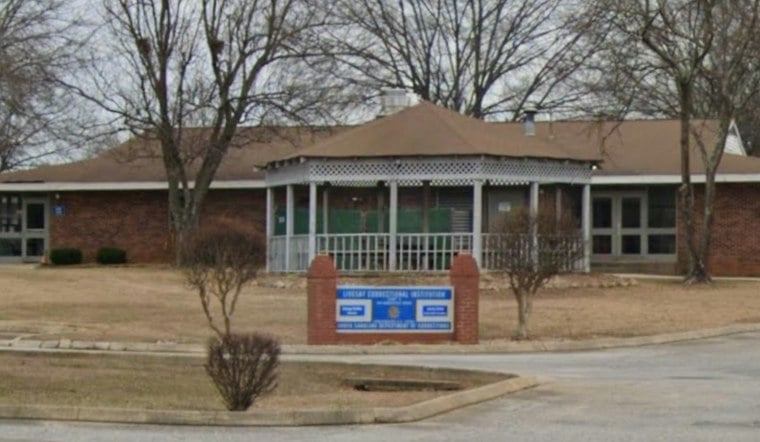
Inside Livesay Correctional Institution in Spartanburg County, a father picked up a copy of “You Can Change the World” and began reading it aloud, not for himself, but for his son Elijah. The recording is part of Riley's Readers, a program that lets incarcerated parents across South Carolina select a children's book, record themselves reading it, and send that recording home to their kids at no cost to the family.
The father dedicated his reading to Elijah with a personal message tucked into the recording. “I just wanted to let you know how amazing you are and how cool it is that I get to tell you that in a book,” he said, according to Fox Carolina. He said he hopes his son remembers that he has the ability to change the world, echoing the very book he chose to read.
An Initiative Born From Furman's Riley Institute
Riley's Readers is run through Furman University's Riley Institute, and it aims to soften the physical separation and emotional strain that incarceration places on families, per the station's report. The program traces back to 2016, when it was developed through workshops with Furman's Riley Diversity Leadership Initiative, with backing from South Carolina Department of Corrections Director Bryan Stirling, according to Furman University. It was formerly known as the “Mother’s/Father’s Voice” program, according to Nelson Mullins.
It was originally built to serve incarcerated mothers before growing to include fathers and grandparents. In November 2023, SCDC renamed the project Riley's Readers to honor former South Carolina Governor and U.S. Secretary of Education Richard Riley, a Furman alumnus, as reported by Nelson Mullins.
From One Facility to All 21 State Prisons
What began as a narrow pilot for mothers has since expanded to all 21 of SCDC's state correctional facilities, according to WLTX. The program also includes fathers and grandparents. Livesay Correctional Institution itself is a minimum-security men's facility with a capacity of roughly 530 inmates, per Wikipedia's list of South Carolina state prisons.
Tyler Hodge, associate warden at the facility, described the challenge the program is designed to address. “Incarceration creates both a physical barrier and an emotional barrier,” Hodge said, according to Fox Carolina's reporting. Gloria Lucky, a captain overseeing public awareness for the South Carolina Department of Corrections, travels to facilities statewide to coordinate the recordings and says the impact lasts well beyond the moment a child first presses play.
Keepsakes Kids Return To When They Miss Their Parents
“Children often cherish the recordings as long-term keepsakes,” Lucky said, per the same account. Kids reportedly love the books their incarcerated parents record, and many turn to them specifically when they're missing that parent, the station reports.
The program is funded through a state grant and has, to date, involved more than 500 South Carolina inmates and delivered over 1,500 books to children across the state, Fox Carolina reported. It also draws support from the South Carolina Department of Social Services and public advocacy from Miss South Carolina 2024 Davis Wash, whose Silent Victims initiative was shaped by her own experience having an incarcerated parent, according to The Sumter Item.
A Small Fix for a Much Larger Problem
The stakes behind programs like Riley's Readers are sizable. Nationally, children have had a parent who was ever incarcerated, an indicator tracked by the Annie E. Casey Foundation. In South Carolina alone, SCDC manages roughly 16,600 inmates across 21 facilities, including 18 male and three female institutions, per the South Carolina State Library.
Keeping families connected across that system is a major undertaking on its own, including through family visitation.
At Livesay itself, education efforts have run alongside programs like Riley's Readers. In June, inmates at the Spartanburg facility earned 350 high school diplomas and vocational certificates through SCDC's Palmetto Unified School District, the agency announced. For families like Elijah's, the immediate goal is simpler: hearing a parent's voice read a story, even from behind prison walls.





