

























































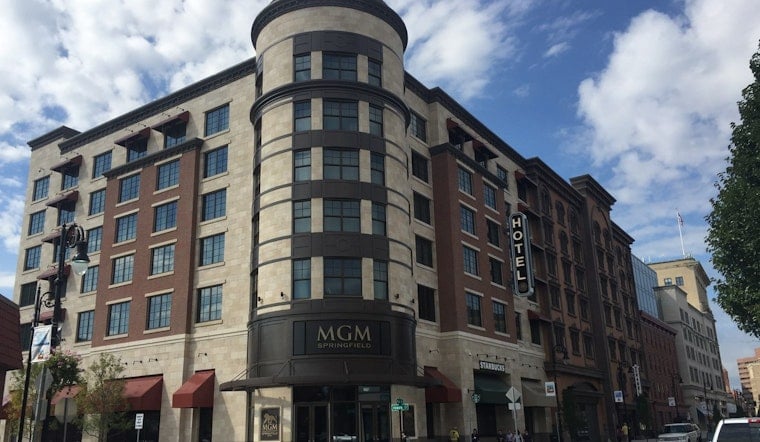
Springfield officials filed a breach-of-contract lawsuit against MGM Resorts International on Thursday, accusing the casino giant of shortchanging the city on jobs and gaming tables for years while trying to push through a sale of its downtown casino without municipal sign-off. The suit, filed in Hampden Superior Court against MGM Resorts and its subsidiary Blue Tarp Redevelopment LLC, escalates a fight that has simmered since MGM Resorts told Mayor Domenic Sarno back in early 2024 that it had lined up a buyer for MGM Springfield.
According to Casino.org, the city's complaint arrives after roughly two years of negotiations over alleged noncompliance with MGM's 2013 Host Community Agreement failed to resolve municipal concerns. MGM and Blue Tarp had sought to move the dispute into private arbitration, according to reporting by The Boston Globe, but the underlying disagreements over staffing, gaming inventory, and an unfinished redevelopment project persisted. The city and MGM remain at odds over the transfer request.
What Springfield Says MGM Never Delivered
Springfield's core argument is straightforward: MGM Springfield is falling short on employee numbers, gaming inventory, and the redevelopment of a nearby building, per the Globe's reporting. The 2013 agreement pledged at least 3,000 employees, 2,800 to 3,000 slot and video gaming machines, and 75 to 100 table games, the Globe reports.
The gap is even wider than those numbers suggest. The original Host Community Agreement had pledged 3,000 workers, according to the Globe's reporting, a figure the casino allegedly failed to maintain. MGM Resorts had also agreed to convert the building at 101 State St., next to the casino, into a hotel — a project Hoodline previously reported sits idle while other downtown revitalization projects move forward nearby.
The Legal Leverage Behind the Fight
Springfield's position rests on contractual leverage. The Host Community Agreement itself gives Springfield approval power over any transfer of the casino business, and city officials argue that authority is exactly what MGM is trying to sidestep.
That contractual leverage traces back to the deal Springfield struck with MGM in 2013, which required $15 million in upfront civic payments during construction and $25 million in annual municipal payments once the resort opened, according to BusinessWest. Those terms were the foundation of a resort that opened in August 2018 as a $960 million complex spanning three downtown blocks. Encore Boston Harbor in Everett is another of the state's commercial gaming facilities.
MGM's Side: A Delay Tactic, Not a Legitimate Dispute
MGM Resorts has pushed back hard on the city's framing. The company said Sarno and Springfield initiated litigation to delay consideration of MGM's sale request, and separately said Sarno and other city officials were trying to delay the sale outright, according to the Globe's reporting. MGM has not publicly disclosed the identity of its prospective buyer, though reporting from Western Mass News this week identified the buyer as a Canadian investment firm that MGM says has presented plans to maintain operations and abide by the existing Host Community Agreement.
The Globe's reporting separately discusses Clairvest Group, a Toronto-based firm involved in gambling businesses, including the operations of Northfield Park in Ohio. Whether Clairvest is the same buyer identified in the Western Mass News report is not specified in available reporting.
Why MGM Might Want Out
MGM forecast before opening that Springfield would average $34.8 million in monthly gross gaming revenue, but as of April, the casino had never reached that mark, according to a report cited by WAMC. The performance gap between MGM Springfield and Encore Boston Harbor has been covered by Hoodline in the context of statewide casino performance.
MGM Resorts had already sold the casino's underlying real estate. That transaction left MGM Resorts operating the casino under a long-term lease rather than owning the land beneath it — meaning the sale now in dispute involves only the operating business, not the real estate itself.
A City Already Squeezed on Casino Revenue
The lawsuit also lands amid broader questions about casino revenue. Statewide, the Massachusetts Gaming Commission reported in August that the Commonwealth has collected more than $2.5 billion in cumulative taxes and assessments from its three commercial gaming facilities since legal casino operations began, underscoring how much is riding on the state's Category 1 casinos even as Springfield's individual cut has shrunk.
Neither side has signaled a willingness to back down. Springfield maintains its lawsuit is about enforcing a decade-old bargain the city says MGM never fully honored, while MGM Resorts insists the litigation is a stalling tactic aimed at a transfer to a buyer the company describes as qualified and compliant. The case now heads into Hampden Superior Court, where the dispute over who ends up running MGM Springfield will be addressed.





