

























































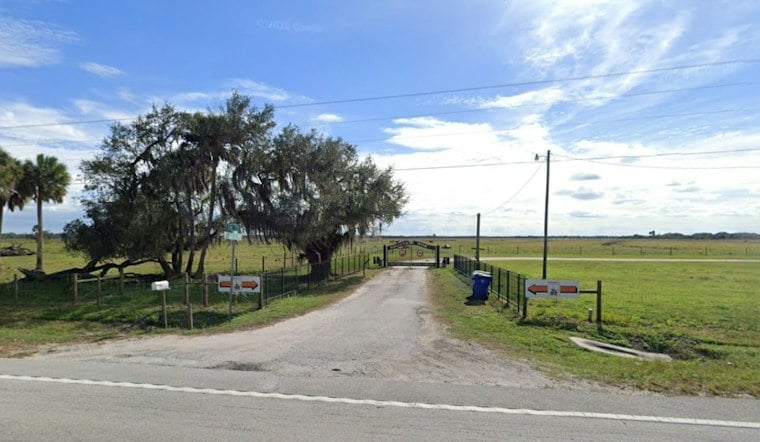
A conservation easement now protects 1,500.31 acres of Square One Ranch, a 1,564.49-acre cattle operation in Highlands County. The Florida Department of Environmental Protection’s Board of Trustees document identifies the property at 10882 Reo Hinton Avenue and records the protected acreage as part of the state-approved transaction. The agreement keeps the land in agricultural use while removing development rights from the protected portion.
The $6.1 million transaction was financed through two public conservation programs: $4.1 million from Florida’s Rural and Family Lands Protection Program and $2 million from the U.S. Air Force’s Readiness and Environmental Protection Integration Program, according to WUSF. The state and federal investment reflects two overlapping objectives—keeping a working ranch in production and protecting land near the Avon Park Air Force Range.
What the easement changes
Florida’s Rural and Family Lands Protection Program is designed to acquire permanent agricultural conservation easements, according to the Florida Department of Agriculture and Consumer Services. The program says landowners retain the ability to continue farming or ranching while development rights are protected and wildlife habitat is preserved. That distinction matters at Square One: the transaction is not a purchase of the ranch for conversion to public parkland, and the available state materials do not indicate that cattle operations must end.
The public records establish the size, location and funding structure of the easement, but they do not, in the materials reviewed here, provide a complete property-specific list of every permitted building, agricultural activity or future alteration. The central restriction is clearer: the protected acreage is intended to remain agricultural land rather than be converted through ordinary development. Highlands County’s Planning & Zoning division says its 2050 Comprehensive Plan and land-development regulations are intended to direct development to appropriate locations while protecting natural and cultural resources, according to the county.
A corridor connection, not an isolated tract
The ranch also has significance beyond its ownership history. Tampa Bay 28 reported that Conservation Florida documented bears and bobcats on the property and confirmed Florida panthers on trail cameras, describing Square One as a link in the Florida Wildlife Corridor. The report also said the Florida Ecological Greenways Network ranked the property as a high-priority corridor site. Those observations identify why a working ranch can serve a conservation purpose even when it remains privately operated.
The Florida House of Representatives’ 2023 staff analysis described the Rural and Family Lands Protection Program as capable of supporting protection patterns involving ecological greenways, functioning ecosystems and buffers around military installations. That policy framework helps explain the unusual combination of funding at Square One: the easement supports agricultural continuity while also reinforcing habitat and land-use compatibility near a major military training area.
Part of a longer Highlands County pattern
Square One is not the county’s first example of conservation financing being used to keep cattle land intact. In 2021, The Nature Conservancy said a conservation easement on the 1,069-acre Ravensworth Farms permanently prohibited development while allowing cattle ranching to continue uninterrupted. The comparison is limited—Ravensworth and Square One are separate properties and transactions—but it shows that working-ranch easements have already been used in Highlands County as an alternative to either unrestricted development or public acquisition.
The broader state program has been operating since 2001 and has permanently protected more than 232,000 acres of working agricultural land, according to the Florida Department of Agriculture and Consumer Services. The program’s model is therefore not simply about preserving scenery. It is a way to keep agricultural land on the tax roll and in production while preventing the loss of development rights that can fragment larger habitat networks.
For Square One Ranch, the immediate result is specific and durable: most of the property is protected by an agricultural conservation easement, while the Hinton family can continue operating the ranch. The records reviewed establish the transaction’s acreage, funding and conservation purpose; they do not establish that every future use has been eliminated or that the property is open to public access. What has been secured is the land’s continued working-ranch function and the removal of development pressure from the protected acreage.





