

























































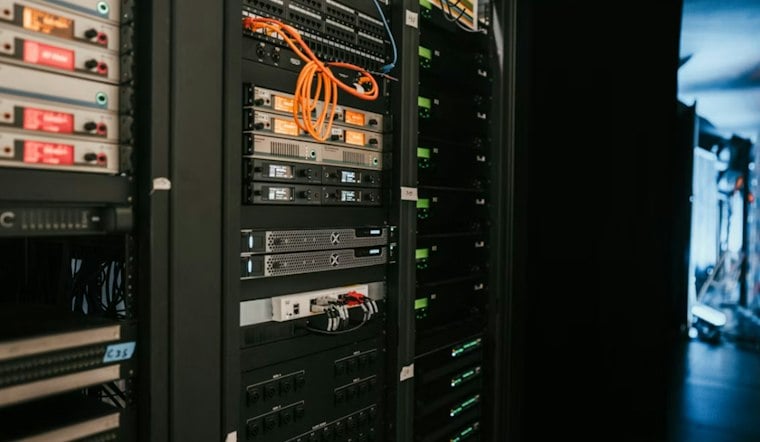
St. Louis aldermen returned early from their summer recess to pass sweeping new regulations on data center development, capping a year of public pressure over noise, land use, and tax giveaways tied to the booming industry. The package sets zoning limits on where new facilities can be built and bans the city from offering tax incentives to future projects, and it now heads to Mayor Cara Spencer's desk for her signature.
Board Bill 49, sponsored by Alderwoman Anne Schweitzer, establishes a three-tier zoning framework — Micro, Standard, and Major — based on a facility's electrical capacity, and it enforces a baseline 600-foot residential setback buffer for new data centers, according to Citizen Portal. As First Alert 4 reports, the measure also limits noise and heat emissions from facilities and mandates renewable energy requirements for data center operators. Schweitzer said residents have generally made their views about data centers clear, telling the outlet that representatives should listen to the people they represent, and that she hoped the new rules would address residents' concerns.
A Companion Ban on Tax Breaks
Aldermen didn't stop at zoning. The board also approved Board Bill 55, sponsored by Alderwoman Alisha Sonnier, which explicitly prohibits the city from granting local tax incentives or property tax abatements for future data center developments, according to STL.News. The move reflects public frustration over municipal subsidies for high-tech facilities, a theme that has surfaced across the region as similar deals drew scrutiny in nearby communities.
The regulatory push traces back to September 2025, when Mayor Spencer issued Executive Order 92, imposing temporary development restrictions after officials found the city's outdated zoning code treated high-density data facilities the same as standard offices or warehouses, per the City of St. Louis. That stopgap measure bought aldermen time to draft the tiered zoning and tax provisions that were perfected by the board in August 2026 ahead of this week's final passage.
The Armory Project That Started It All
Much of the public controversy that drove the reform effort centers on the Armory Innovation District, a planned $3 billion, 120-megawatt data center in Midtown that the Board of Public Service approved back in April 2026 — before the new zoning rules existed. Because of that timing, the project remains exempt from the regulations aldermen just passed, according to the St. Louis American.
The city already had 12 active data center facilities operating within its boundaries before the new rules took effect, per the City of St. Louis. For the Armory project specifically, officials negotiated ad hoc environmental terms in April 2026 requiring the developer to install a closed-loop cooling system to conserve municipal water and to source at least 50% of its electricity from renewable sources within five years.
Limits of the New Rules
Even with the new ordinances, city zoning cannot directly control potential electric utility rate hikes tied to grid expansion from regional utility Ameren Missouri, the St. Louis American notes — a gap that leaves one of residents' biggest worries about rising costs outside the city's regulatory reach. The rules also cannot be applied retroactively to already-approved projects like the Armory facility.
The tax-incentive debate isn't confined to city hall. State records show Missouri's Data Center Sales Tax Exemption program has already resulted in roughly $77 million in forgone state and local tax revenue, with Mastercard alone securing $55.6 million for two facility expansions, according to Hoodline.
A Regional Pattern Takes Shape
St. Louis isn't alone in tightening the reins. St. Louis County Executive Sam Page announced a formal review of county zoning rules in May 2026 to update regulations for data centers proposing to build in unincorporated areas across the county. In St. Charles County, the Wentzville Board of Aldermen approved a six-month moratorium on new large-scale data center applications in July 2026 to evaluate grid capacity, water usage, and noise impacts on local neighborhoods.
Ferguson has faced its own fight over a proposed data center deal, with residents recently shouting down the city council over tax breaks tied to the project. Missouri State Representative Tricia Byrnes has scheduled a public hearing in Jefferson City for Wednesday to gather public and expert testimony on potential statewide data center regulations, signaling that the fight over zoning, tax breaks, and utility strain may soon move beyond city limits entirely.




